Central europe

The Regime is bad eastern European pastiche

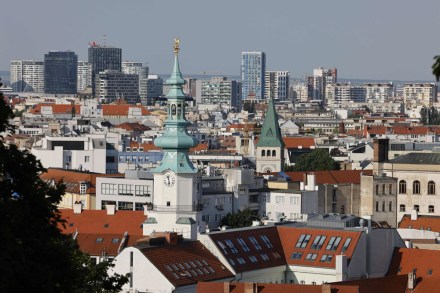
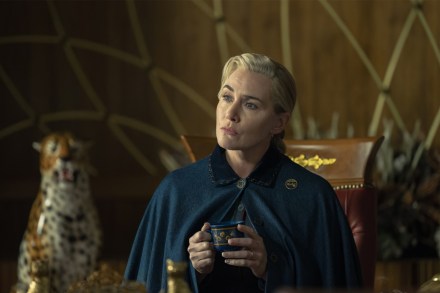
When you tire of trying to find the humor in The Regime, HBO’s new satire set in an unnamed “middle European” country, you can keep yourself occupied by trying to identify all of the historical references. The series was shot in Austria and the interiors have a dilapidated imperial feel, so perhaps we’re meant to think of one of the Visegrád countries — Czechia, Slovakia, Poland and Hungary — that inherited the heartlands of the Habsburg monarchy. The government, however, is led by a capricious and occasionally brutal authoritarian. Alexander Lukashenko of Belarus, often called Europe’s last dictator, immediately comes to mind. Chancellor Elena Vernham, played by Kate Winslet, is said to have studied medicine in Paris.

regime

Fortress Europe is dreading the Afghan migrant crisis

From our UK edition

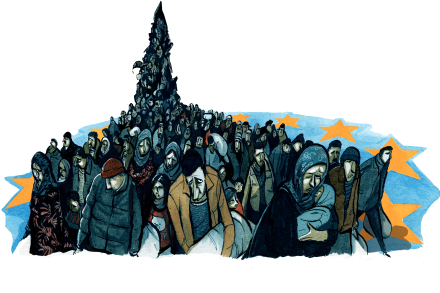
Fortress Europe is pulling up the drawbridge. The takeover of Afghanistan by the Taliban is likely to being about a new wave of refugees heading west, and so walls and fences are being hastily built around the borders of the Schengen Area. As scars inflicted by the last migrant crisis re-open, the possibility of a new influx of refugees is causing deep apprehension throughout the EU. At Usnarz Gorny, on Poland’s border with Belarus, the migrant crisis is already beginning. Twenty four Afghan migrants currently sit stranded in no man’s land between Polish and Belarusian border guards. Left without food or clean drinking water for weeks on end, their situation has become a no-win moral dilemma for the Polish government.

The criminal code of Rotwelsch deciphered

From our UK edition

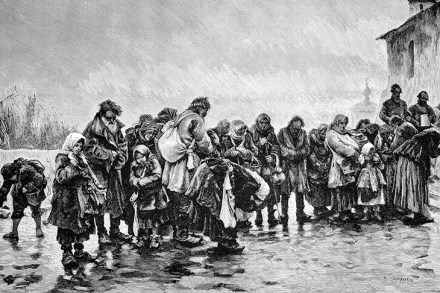
When Martin Puchner was a child, tramps would turn up at his family home in Nuremberg to be fed by his mother. His father explained that they were drawn by a zinken (sign) associated with Rotwelsch, a language spoken by vagrants and criminals whose name is derived from two terms: Rot (beggar) and Welsch (incomprehensible). The zinken, a cross within a circle carved into the house’s foundation stone, told them that lechem (bread) could be had there. Rotwelsch became Puchner’s key to unlocking a cupboard of family skeletons. His grandfather, Karl, the director of the Bavarian State Archive, was one of many unrepentant Nazis who benefitted from the swift changes in the status quo that followed Germany’s defeat in 1945 and the new threat from Soviet Russia.