Capitalism

Small but perfectly formed: the Royal College of Music Museum reopening reviewed

From our UK edition

Haydn is looking well — in fact, he’s positively glowing. The dignified pose; the modest, intelligent smile: it’s only when you squint closely at the portrait that Thomas Hardy painted in London in 1791 that you clock the full peachy-pink smoothness of his complexion. It’s curious, because Haydn suffered disfiguring smallpox as a child, and a contemporary waxwork bust in Vienna is cratered like a moon in a periwig. Hardy’s portrait is a promotional image, commissioned by the music publisher John Bland. This is the Georgian equivalent of a celebrity headshot: a photoshopped, endlessly-reproduceable selling tool, so potent that it’s still being used to shift recordings 230 years later. Well, of course it is.

Squid Game’s bloody attack on inequality and dehumanization

Netflix’s biggest hits to date have been solidly middlebrow fare with a contemporary twist: Bridgerton, The Crown, Lupin. It’s surprising, then, that its all-conquering new success is an ultraviolent South Korean thriller laced with social satire. Squid Game isn’t just the Battle Royale/Hunger Games rip-off that its premise suggests. Instead, it combines cartoonish brutality with provocative digs at a society in which the acquisition of status has become all-important. This is served up in an addictive, cliffhanging format, which allows the audience to gasp in surprise at each new twist, even as the net tightens inexorably on its hapless protagonists.

squid game

Can you afford AOC’s ‘Tax the Rich’ sweater?

The revolution may or may not be televised. But it will be turned into branded merch to be sold through an easy-to-use website. Because Change Takes Courage (Alexandria Ocasio-Cortez™️, 2018), the war against the system will be systematically transformed into cuddly swag for internet consumers because, well, capitalism is literally killing us. Reuters reports that AOC is ‘investing heavily in her online store’ in order to fundraise and build ‘the second-term lawmaker's profile nationally.’ See folks, she ain’t grifting — she’s elevating her profile, because clearly not enough people have heard of Alexandria Ocasio-Cortez, even if she is the most famous congresswoman in the world.

aoc merch

The economic illiteracy of anti-capitalists

From our UK edition

Back in October, World Bank chief economist Carmen Reinhart recommended that countries borrow heavily during the pandemic. ‘First, you worry about fighting the war,’ she said, ‘then you figure out how to pay for it’. As thousands of mask-free demonstrators took to the streets of London this weekend to campaign on issues ranging from Palestine to climate change, you have to wonder: are we still at war? And does anyone care about the economy anymore? It has been apparent for some time — though it may continue to confound psephologists — that issues such as identity, patriotism and culture are more important to the electorate than economic concerns.

china communism capitalism

Is communism authoritarian capitalism?

On July 1, 1921, the founding congress of the Chinese Communist party was held in Shanghai, when 12 men gathered in a villa in the richest part of the city. Today, the party has over 90 million members. It has transformed not only China but the history of the entire world. The main stages in its development are well-known. In late 1920, Mao Zedong took over and reoriented the party from city workers to poor farmers. In the mid-1930s, the Long March, although a retreat, established a link between the party and the people across China. In 1949, revolution won. From 1958 till 1975, the Great Leap forward and the Cultural Revolution tried to enforce fast economic and social change.

Why the West is best

‘Western civilization would be a good idea,’ joked Mahatma Gandhi, one of its most successful pupils. We are accustomed to hearing what is wrong with Western civilization: racism, sexism, colonialism and (gasp) capitalism. The world would be a kind of utopia, we are told, if only we could purge these sins from our societies. But if Western civilization is evil, what is the alternative? Four other -isms vie for our attention. The first is socialism. Its proponents include some old-fashioned Marxists, faithful to the old egalitarian nostrums, but most are pseudo- or neo-Marxists. The ‘woke’ activists fundamentally oppose capitalism and are aggressively committed to intersectionality, but they are vague on the alternatives. We can assume that they will not end in utopia.

western

Where did all those ‘capitalist pigs’ go?

'There are few ways in which a man can be more innocently employed than in getting money,' is an insight the famed biographer James Boswell attributed to Samuel Johnson. Clients of the late Bernie Madoff, however, might take issue. Over four decades, Madoff, acclaimed as the greatest fraudster of them all, ran a Ponzi scheme that swindled 40,000 people, including his closest friends, out of $65 billion. But if 'getting money' is among the most innocent of callings, America has more than its fair share of the goodly people who excel at it. According to Forbes's 35th annual ranking of billionaires, last year witnessed a population explosion. Some 660 new billionaires were added to the number for a total of 2,755. And more than one in every four billionaires is an American.

oligarchy tech capitalist pigs

Philip Green gave capitalism a bad name

From our UK edition

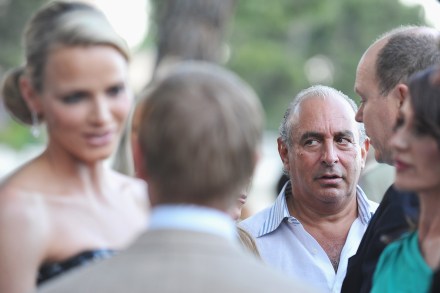
The giant drug companies that are on brink of delivering a Covid vaccine in record time? Well, that’s easy. The technology companies that have relentlessly innovated to transform the way we communicate with one another? That’s not too hard. The power generators, food manufacturers and automobile conglomerates that supply most of our daily needs? That’s a breeze. Heck, even the banks can justify their existence, at least in theory. Most entrepreneurs and businesses are fairly easy to defend. But Sir Philip Green? Errrrr… The free market needs defending, perhaps more now than at any time in the last 50 years Of course it was just about possible to explain his vast wealth.

There’s nothing wrong with profiting from a vaccine

From our UK edition

A couple of shots to the arm and this will all be over. With today’s news from Moderna, last week’s from Pfizer, and with a potential update from AstraZeneca in the next few days, we may soon have three vaccines against Covid-19 (and if you add in candidates from Russia and China perhaps more). And yet, it turns out, that some people are already fretting about potential side effects from that. And they don’t just mean a mild fever or muscle ache. They mean something far, far nastier. Profits. While most of us have been feeling a lot better about the epidemic over the last week, Jeremy Corbyn seems most worried that — once a vaccine has been approved and the virus eliminated — a big company might make some money from it.

What angry young French men want

From our UK edition

Chatting on the café terrace with my new friends Didier and Emile made me aware that certain political ideas, which before the Covid-19 pandemic I had comfortably assumed belonged on the wilder shores of political discourse, are now mainstream among the under thirties. I felt a little envy, perhaps, for Didier’s undoubting conviction that questions of equality, gender, race and white supremacy were the ultimate verities for humankind. But a single word often betrays a great design, and his supplementary advocation of voluntary euthanasia for the chronically sick and elderly indicated all too clearly in which direction his ideal post-Covid society would be headed.

Have we reached the end of ‘The Great Acceleration’?

From our UK edition

Ah well. It was a nice try. A few years ago I wrote a book called The Great Acceleration, arguing that the world around us is speeding up and that this is on balance a good thing. Enter Danny Dorling with a new book called Slowdown: The End of the Great Acceleration and Why it’s Good for the Planet, the Economy and Our Lives. Cue a mischievous commission from The Spectator’s literary editor, doubtless hoping for a good old-fashioned nerdfight. The problem with this cunning plan is that Dorling, an Oxford geography professor and demographer, has written a very strange book indeed — and one that shows the extent to which the modern left has driven itself into an intellectual cul-de-sac. Let’s start with the part that’s relatively uncontroversial.

Left-wing feminism is no ally of women

From our UK edition

It’s increasingly popular to say feminism can never be capitalist; no exceptions. Capitalism, by its nature, supposedly exploits women. But if feminism cannot be capitalist, how does one explain Katharine McCormick, the woman who single-handedly financed the development of the pill? McCormick was a committed feminist, a campaigner for women’s voting rights, and a signed-up member of the National American Woman Suffrage Association. In the 1950s, when the U.S. government would not invest in contraception research, McCormick used her own capital to advance the studies eventually leading to the pill. Is this the kind of story that today’s feminists would sweep under the rug, in order to advocate for socialism above all else?

In this instance, greed isn’t good: Greed reviewed

From our UK edition

Greed is Michael Winterbottom’s satire on the obscenely rich and, in particular, a billionaire, asset-stripping retail tycoon whose resemblance to any living person is purely intentional. (Hello, Sir Philip Green.) Plenty to work with, you would think. Low-hanging fruit and all that. But as the characters are so feebly sketched and the ‘jokes’ — ‘jokes’ in quotation marks; always a bad sign — are so heavy-handed it drags (and drags) rather than flies. Greed is good, greed works, Gordon Gekko famously said in Wall Street. But in this instance it isn’t. And doesn’t. Greed is good, Gordon Gekko famously said in Wall Street.

Bastard capitalism

‘If we will not endure a king as a political power,’ Sen. John Sherman of Ohio said in 1890, ‘we should not endure a king over the production, transportation, and sale of any of the necessities of life.’ These words helped drive through the Sherman Anti-Trust Act that saved early American capitalism by breaking up Standard Oil and the robber barons’ fiefdoms.A long line of Anglo-Saxon dragon slayers straggles behind the senator, all the way back to King John at Runnymede. Over-mighty kings and industrial barons get short shrift in Britain and America. This isn’t mere resentment. It is a philosophy of power and knowledge, and the principle behind democracy and free markets.

capitalism