Business

Covid has become the go-to excuse for shoddy service

From our UK edition

When we were hit by Britain’s biggest crisis since the war, some people behaved like heroes, laying their lives down to fight coronavirus. Others made their excuses, put their feet up and had a good long six-month snooze. My favourite Covid excuse came from Eurostar, which declared in August that, ‘As a result of coronavirus, we are only able to offer wifi in our Standard Premier and Business Premier carriages’. Wireless broadband was duly disabled in its standard-class coaches — until, besieged by complaints, the company conducted a full reverse--ferret operation and turned the wifi back on. Again and again since the virus struck, companies and institutions, big and small, have pounced on Covid as a wonderful excuse to be lazy — or ruthless.

Can cinemas survive a year of Covid restrictions?

From our UK edition

Cineworld is to close its 128 cinemas - saying that the Covid restrictions have made its business "unviable". It's terrible to see that word applied to the cinema industry - and even worse to think of the 5,500 jobs this will impact. But the truth is that many businesses can’t survive what will be a year’s worth of restrictions - based on PM’s timeline where he's talking about some kind of scientific breakthrough by Easter. The final straw for Cineworld was the delay of the new 007 film No Time to Die, now due out next April on the logic that this would maximise takings.  https://twitter.com/007/status/1312122931879632897?

How the New York Times profits from self-censorship

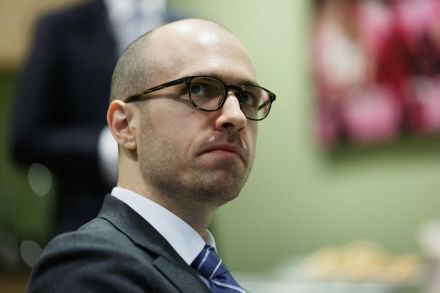
The recent high-profile departures at the New York Times of editorial page editor James Bennet and opinion writer Bari Weiss have left some on the business side of the news industry scratching their heads. Both exited amid ideological turmoil that Weiss detailed in a letter of resignation to the Times’s publisher A.G. Sulzberger, describing the 'hostile work environment' she endured at the hands of fellow editors and staffers. They were wholly intolerant, she said, of her role as a ‘centrist' at the paper. Bennet, said Weiss, had led the effort after President Trump’s election in 2016 to bring in 'voices that would not otherwise appear' in the Times.

new york times

Media referees PPP loans

No single industry was happier to see the government release Paycheck Protection Program (PPP) data Monday than the media. While there wasn’t any sort of significant media bailout, journalists successfully turned the news of the program into profitable clicks of their own. Newsweek: ‘Religious Organizations Receive $7.3 Billion in PPP Loans, Megachurches Amass Millions’ Forbes: ‘Vocal Opponents Of Federal Spending Took PPP Loans, Including Ayn Rand Institute, Grover Norquist Group’ Associated Press: ‘Kanye West? The Girl Scouts? Hedge funds? All got PPP loans’ Deadline: ‘Who Got PPP Loans?

ppp Treasury Sec. Steve Mnuchin and President Donald Trump

Foreign takeover bids prove Brexit Britain is flourishing

The Hong Kong Stock Exchange has tabled a $37 billion bid for its London rival. Li Ka-shing is buying the pub chain Greene King for $3.3 billion. The American buy-out firm Advent has offered $5 billion for aerospace supplier Cobham. On an almost weekly basis, foreign predators are swooping on one British company after another. But hold on: the UK is meant to be plunging into an economic abyss. A chaotic departure from the European Union, a political system in meltdown and the looming threat of a Marxist hard-left government have made Britain the one country that investors don’t want to touch. To many, the ZAVs — Zimbabwe, Argentina, and Venezuela  — look attractive by comparison. And yet, the flurry of buyouts by foreign firms is not as odd as it may seem.