Business

Mark Carney, the mischief-making pin-up

From our UK edition

Well, would you look at Mark Carney. Just three months ago I described the incoming prime minister of Canada and former governor of the Bank of England as ‘a fish-out-of-water technocrat’ who made little public impact over here and was swiftly forgotten after he left in 2020. When I once came across him hunched and dark-suited in the Pret queue at King’s Cross, midway through his Bank tenure, I actually felt sorry for him. But here he is, beer-swigging in an Ottawa bar with Sir Keir Starmer; cutting Donald Trump short in a press call before the G7 meeting; shedding his eco-credentials to champion Canadian oil and gas; and generally looking the statesman at ease with his people. What happened?

It’s time to get rid of the Rich List

From our UK edition

Here’s a takeover tale that captures the zeitgeist. It involves two FTSE 250 companies and some deep-pocketed US investors – and I’ll explain it as simply as I can. In essence, how would you feel if your GP surgery fell into the hands of American investors associated with the book title Barbarians at the Gate? The first of the two London-listed companies is Assura, which owns 600 NHS surgeries and diagnostic facilities and has accepted a cash offer of £1.6 billion from a pair of New York investment giants.

If the numbers add up, Shell should bid for BP

From our UK edition

A hangar full of analysts and investment bankers must have spent the long weekend formulating advice for Shell chief executive Wael Sawan for and against a takeover of BP. On the plus side, Shell’s strong share performance, reflecting its undiluted focus on oil and gas and boosting its market value to £150 billion, makes a bid look almost bite-sized – BP’s value having shrunk to £56 billion over the past two years as investors decried the commitment to renewables that its board has belatedly reversed. And the addition of BP’s assets in North America and the Gulf of Mexico would turn Shell into a carbon-fuel giant to challenge the likes of Exxon and Chevron in the US.

Save London’s black cabs!

From our UK edition

Donald Trump’s Soprano-like threat that the ‘termination’ of Federal Reserve chairman Jerome Powell ‘cannot come fast enough’ has been headlined as one of his wildest thrusts to date, but is actually one of his most conventional. Prickly politicians always resent unelected central bankers, though they also see them as useful scapegoats for economic trouble. Liz Truss longed to fire Andrew Bailey from the Bank of England; Gordon Brown gave Eddie George’s Bank its ‘independence’ but took away so much of its power that George nearly resigned; Margaret Thatcher never accepted the most potent modern governor, Gordon Richardson, as ‘one of us’.

Why the restaurant world hates beer drinkers

From our UK edition

I’ve always thought working in hospitality is like getting a free MBA – but one rooted in the real world rather than theory. So it didn’t surprise me to discover a brilliant business idea in a book about the restaurant trade. In Unreasonable Hospitality: The Remarkable Power of Giving People More Than They Expect, star restaurateur Will Guidara describes his quest to take Manhattan’s Eleven Madison Park from number 50 in the San Pellegrino restaurant rankings in 2010 to the number one spot in 2017. To check out the competition, Guidara takes a group of employees to the top restaurant on the list. Unsurprisingly, the experience is superb, and his team busily spot ideas they could copy. But Guidara isn’t interested in these.

UK tax on US tech is a useful bargaining chip

From our UK edition

The Digital Services Tax (DST) is a relatively easy bargaining chip to give away in a last-ditch bid to appease Donald Trump, whose final menu of tariffs on UK exports to the US is expected imminently. First tabled by Philip Hammond as chancellor in 2018 and enacted by his successor, Sajid Javid, two years later, this 2 per cent levy on tech multinationals with more than £25 million of UK digital revenues was always seen as a raid on the likes of Apple, Amazon, Netflix, Google, Meta and Microsoft,  though it must by now also catch Shein and other Chinese operators – and was always a provocation to the White House. Within months, there were rumours that Boris Johnson’s government was ready to scrap DST to secure a longed-for UK-US trade deal.

Masa Son: the world’s most reckless investor

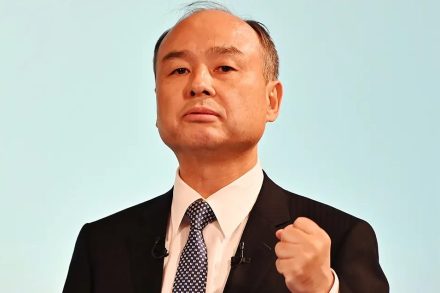
For a few days in February 2000, Masayoshi Son was the richest person in the world. A risk-taker and showman, universally known as Masa, he had long been disdainful of Japan’s staid "salaryman" business culture and was riding the wave of dot-com mania. His company SoftBank, founded in 1981, had bet big on the growth of online shopping. The bullish mood didn’t last, and Masa slunk away from the limelight — but only for a while. A techno-optimist, the now sixty-seven-year-old has repeatedly reinvented himself, urging doubters to see beyond the immediate: "You’re limiting your field of vision to thirty years… Start bold and think 300 years ahead.

Masa

Where have all the new businesses gone?

From our UK edition

The Chancellor’s appeal to regulators last month for suggestions to boost growth was mocked as evidence that the government itself is hopelessly bereft of ideas. Might as well ask traffic wardens to devise urban regeneration schemes, we scoffed, or food safety inspectors to plan state banquets. But it made sense to the extent that smarter regulation really should have the potential to boost economic activity – and there are signs the message has got through. Bank of England governor Andrew Bailey speaks of using Brexit freedoms to shield smaller UK banks from ‘Basel rules’ that would require them to hold larger reserves.

Rachel Reeves owes Brompton bikes an apology

From our UK edition

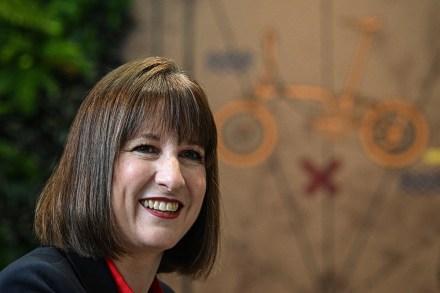
I long to write less about Rachel Reeves and more about world-beating British businesses – such as Brompton, the folding bicycle maker whose fortunes I have followed since I bought the product and interviewed the founder-designer, Andrew Ritchie, 20 years ago. The latest Brompton news was that profits collapsed from £11 million in 2023 to breakeven for the year to March 2024 in the teeth of a post-pandemic demand slump; and that additional hiring has been put on hold after Labour’s NI increase added ‘hundreds of thousands of pounds’ of extra costs. A move from cramped west London premises to a new base at Ashford in Kent, with room for big increases in output and skilled jobs, had already been deferred to 2029.

My business predictions for 2025

From our UK edition

Headed for ‘the worst of all worlds’ is not where any of us would wish to find ourselves at the start of the new year. But that was the phrase used by the CBI economist Alpesh Paleja to sum up the predictions of member businesses – of reduced hiring and output, rising prices and weak growth. Since that survey, a revision to zero of the official growth figure for the third quarter of 2024 and reports of depressed pre- and post-Christmas consumer spending have provoked even darker whispers of a return to recession. Whence cometh such pessimism? Has it bubbled out of the Tories’ black hole of fiscal shame? Can we blame the Bank of England and the Treasury ‘blob’? Or the rare alignment of planets that’s expected in three weeks’ time?

The marketing genius of Jaguar

From our UK edition

Woke it may be, but Jaguar’s ‘Copy Nothing’ video is a work of marketing genius. With its ungendered models, ungrammatical slogans (‘live vivid’, ‘delete ordinary’) and strange absence of cars, the 30-second ad has brought global attention to a brand that was dying for want of a new generation of customers, in an auto industry in turmoil over its stalled transition from carbon fuel to battery power. And a week later comes the reveal in Miami of the futuristic Type 00 electric concept car that the fuss was really about.

Letters: In defence of Radio 3

From our UK edition

Vote of no confidence Sir: Rod Liddle is too harsh on those calling for another general election (‘I hope you didn’t sign that petition’, 30 November). You do not have to be a Trumpian denialist to believe the result in July raised serious concerns. Labour received just 33.7 per cent of the votes cast, yet won 411 of the 650 seats in the Commons. Labour’s total votes amounted to 23,622 per MP elected. The figure for Reform UK was 823,522. First past the post in individual constituencies works well with two major parties. But when support is significantly more divided, it is not fit for purpose. The petition was surely born out of signatories’ frustration that their votes were not fairly reflected in the new membership of the legislature.

The Ginger Rogers theory of information

From our UK edition

I had a friend whose approach to entrepreneurialism was to take two separate things that seemed stupidly popular and somehow find a way to combine them. He thought karaoke was ridiculous; his friend thought 24-hour rolling news channels were daft. The two of them created a 24-hour karaoke channel in Asia – and sold it at a sizeable profit. The idea of gynogenic climate change holds that the planet is warming up, but that it is women who are to blame Following this model, I wondered if it might be a useful thought-experiment to contrive political theories which are annoying to people on both the left and the right.

In Mumbai, everyone asks about Rishi and Boris

From our UK edition

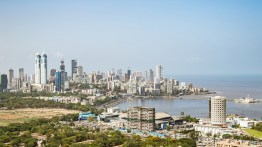
Mumbai is my kind of town, a party town. In my first weeks living here, I was out most nights with new friends half my age, inevitably resulting in many unproductive mornings. This culminated with me waking from my slumber as the sun rose, contorted uncomfortably on the back seat of an auto-rickshaw parked on the edge of a slum under the hostile gaze of an unimpressed cheroot-smoking driver. I was so inexplicably far north of my south Bombay apartment that it took me two hours to get home, which in itself was no mean achievement given my wallet was empty of cash and my phone battery dead. Still, in many Asian cities both items would have been gone rather than just depleted, and their owner likely to be the one who was dead.

Innovator of the Year Awards: The winners

From our UK edition

16 min listen

On November 7th, the finalists for the 2024 Innovator of the Year Awards joined The Spectator and Rathbones at a gala evening in central London. There, they found out the regional and category winners for this year's awards. In this episode, our business editor Martin Vander Weyer, one of the founders of the awards, announces the winners for listeners who've followed our previous episodes in this year's series.

The dark side of Black Friday

From our UK edition

How is it possible that we’re still reading headlines about the £4 billion fundraising from the Gulf that saved Barclays from a bailout in 2008? It’s not too sweeping to say that most of the financial world smelled something fishy in the undisclosed £322 million of advisory fees that were paid to Qatari investors – and that whiff never went away, despite the collapse of criminal charges against individuals at Barclays in 2019. The Financial Conduct Authority has called the behaviour of Barclays ‘reckless and lacking integrity’, while recognising that the bank ‘is a very different organisation today’.

Should Starmer be worried about this petition?

From our UK edition

13 min listen

Today is the Confederation of British Industry (CBI) conference, at which Rachel Reeves has laid out her plan to 'Get Britain Working' and prove Labour as the party of business ... despite what the recent Budget and the employers national insurance increase might suggest. What's the mood of big business today?  Also on the podcast, a petition has gone viral over the weekend calling for a general election. Various people have signed it, from Nigel Farage to Michael Caine. But should Labour actually be worried? Oscar Edmondson speaks to Katy Balls and Isabel Hardman.  Produced by Oscar Edmondson.

What does the City really think of the Chancellor?

From our UK edition

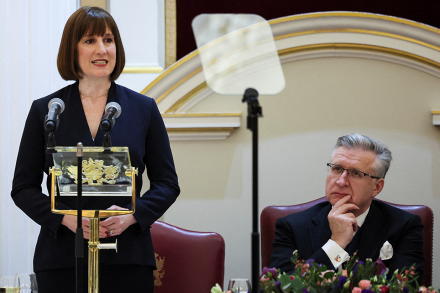
Regular invitations to Mansion House banquets petered out after I asked a shifty-looking waiter for a glass of champagne and he told me he was a deputy governor of the Bank of England. So I can’t report firsthand whether last week’s speech by Chancellor Rachel Reeves was greeted by assembled financiers with napkins on their heads or cries of ‘By George, I think she’s got it!’. What I can say is that – her text having been largely leaked beforehand – she was well upstaged by Governor Andrew Bailey’s unexpected attempt to reopen the Brexit debate; and that she seems to ‘get’ the City a lot better than she understands business owners, start-up entrepreneurs, shivering pensioners, aspirational parents and angry farmers. A low bar, but be thankful for small mercies.

My run-in with Greta Thunderpants

From our UK edition

The anger management counsellor stormed through the door and shouted at me to turn the heating up. Hello to you too, I thought, but I was polite because I realise we are going to get difficult customers doing B&B in West Cork, where tourists come from all over the world. At first, however, I didn’t know that this woman storming round my house was a psychotherapist. I just thought she was spectacularly rude. She was wearing a woolly hat and big coat, even though it was a typically mild West Cork autumn day, about 17°C. She got right in my face as she declared the house too cold at 11 a.m., having demanded at the last minute to check in four hours early. ‘What’s your heating system?’ she barked, eyeing the brand new radiators in the hallway.

Is No. 10 coming for game shooting next?

From our UK edition

I confess I was lunching at L’Escargot in Greek Street as Rachel Reeves delivered her Budget. My excuse was that I thought I already knew what was in it – but in reality the package was even more anti-business than I feared. My punishment was a risotto too glutinous to finish, but the Chancellor’s 76-minute sermon proved just as indigestible when I tuned in later. Like the wild mushrooms in my dish, the more pungent Budget measures had to be picked out of a blander mass – and I was roused from postprandial torpor by a call from a veteran entrepreneur, regularly quoted here under a variety of disguises, in a fury at one such small-print item.