Bureaucracy

A sinister strangeness: City Like Water, by Dorothy Tse, reviewed

From our UK edition

In Dorothy Tse’s City Like Water the location is never named. Anonymous, mutable, it slips from normal into nightmare, strangeness signalled from the opening lines: ‘In the place I used to live, my rusty top bunk rocked like a boat. Night after night, it carried me off towards a secret crevice.’ This is a novel written out of sorrow and anger: the pain of recalling sweeter times. It’s not the boy narrator who is unreliable; it’s the city itself. When, in Invisible Cities, Italo Calvinodescribed Marco Polo’s travels, he named 55 settings – each delineating an aspect of Venice. Tse has acknowledged Calvino as a major influence, and the locus of City Like Water, in all its bewildering manifestations, its beauty and squalor, can only be her own city – Hong Kong.

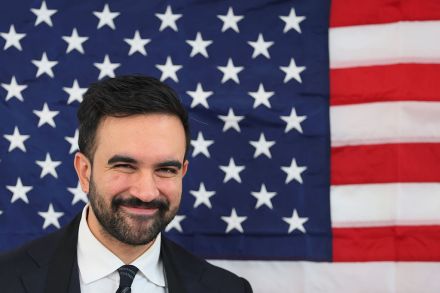
Mamdani’s People’s Republic of New York

Proudly displayed in the window of my local Barnes and Noble are copies of a children’s book called Zohran Walks New York. It’s a graphic novel that shows our city’s new perma-grinning mayor meeting residents who are overwhelmingly happy to see him. A more instructive text for the children of Park Slope was tucked away in the corner of the basement: Animal Farm. I bought it for my 11-year-old daughter at the weekend. She’s into dystopian novels.  More people will become hooked on state benefits and more staff will be needed to shove piles of cash towards them I thought of Orwell’s allegory of the Russian revolution this week when our mayor threatened to increase property tax to pay for his huge $127 billion budget.

The real cost of the bureaucratic mindset

From our UK edition

If you ever want to drive online commenters insane, all you need do is write an article headlined ‘Why it’s often right to drive in the middle lane of the motorway’. Many people insist that there is a clear-cut rule. These motoring Prussians claim that, unless overtaking a slower vehicle, you must drive in the left-hand lane at all times. But if you think about it, this rule only works if some people break it. The modern organisation is in thrall to a tight fitness function that leaves little room for inventiveness In reality, if everyone followed this keep-left rule assiduously, then at busy times traffic in the left-most lane would become excessively dense, forcing everyone to slow down, causing frequent braking and uneven use of the road.

Cut the bureaucracy — and the chainsaw

I retain a requisite amount of contempt for government-run institutions and the bureaucrats with whom I have to deal on occasion. Every interaction with them makes me want to pull my hair out. Government websites function as if they haven’t been updated since dial-up. I would rather go to the dentist than the DMV. It’s as if each employee has been specially hand-picked to make you hate the government more. These are features of the system, not bugs. Take the TSA, the organization which seems to derive the most joy out of making things difficult for parents flying with toddlers. In an effort to thwart these desperate adults chaperoning tiny terrorists, the agency will inexplicably change up the protocol for strollers every single time.

government

Reliving the terror of the Bataclan massacre

From our UK edition

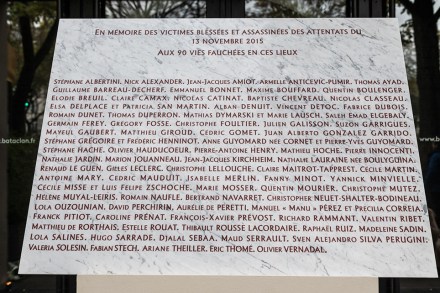
On Friday 13 November 2015 France suffered the deadliest terrorist attack in its history. In quick succession, gunmen and suicide bombers struck the outer concourse of Paris’s Stade de France; then the pretty canal-side cafés and restaurants of the tenth arrondissement; then, most notoriously, the Bataclan theatre, where the doors were blocked and, over the course of an hour, 90 people massacred. The subsequent trial was not just a gargantuan administrative undertaking (20 defendants faced around 2,000 plaintiffs, and the proceedings occupied the purpose-built courtroom for the best part of a year); it was a cultural phenomenon.

Why state bureaucracy is crucial to our happiness

From our UK edition

Most days, outside the local courtroom where I live in Finchley Central, a man holds up a placard that says in big black capitals: ALL OUR BRAINS ARE MICROCHIPPED BY THE SECURITY SERVICES. It’s a foolish conspiracy theory, of course, but it’s also a symptom of the fear and loathing of the state which has grown in recent years and which, according to this lucid and persuasive book, threatens to return us to a time when we were governed by the whims of a monarch whose wishes were implemented arbitrarily by his family, friends and flatterers. The problem, say Stephen E. Hanson and Jeffrey S. Kopstein, is not that this presages an end to democracy.

Saying yes slowly is what’s hampering progress today

From our UK edition

One of my long-held beliefs is that evolutionary biology should be taught extensively in schools. There may be some objections from religious fundamentalists, but these are silly. Evolution does not tell you anything about whether or not God exists; it simply proves that, if he does exist, he really hates top-down central planning. In any case, it would pay to teach evolution in schools even if evolution were not true — for the simple reason that by understanding evolutionary mechanisms, you are gifted with an entirely new way of looking at the world. In the words of the computer scientist Alan Kay: ‘a change in perspective is worth 80 IQ points.

The sad death of the pony ride

From our UK edition

Pony rides were once a staple of every village, church and primary-school fête. A brusque, horsey mother would swing you up into the saddle, and the patient pony would trudge up and down while you clung to its mane, before it was the turn of the next child in the queue. No one ever plonked a hard hat on your head. There were certainly none of those restrictive body protectors that children are encased in now, bundled up like scarab beetles. These days, I am that horsey mother. When we moved to the country from London after the lockdowns, ponies were top of my shopping list – above a replacement for the wheezy boiler and a fancy range cooker. We now have a miniature Shetland pony called Ollie and a donkey called Mouse.

What I learned from being debanked

From our UK edition

My own debanking story concerns a card rather than a bank account. Not the same degree of inconvenience as Nigel Farage, but a similarly telling insight into modern administrative culture. I feel awkward writing this, because in the 30 years I have used American Express, including an enjoyable decade when I also worked for the brand as a copywriter, few companies have impressed me more. They are unfailingly courteous and responsive. On many occasions, such as when arriving at an airport to discover I had to pay £4,000 for an unratified airline ticket, my card has been invaluable; I willingly follow their advice not to leave home without it. But one evening last year Amex didn’t do nicely. There’s a special feeling to having a Platinum card declined.

A Scotsman’s home is no longer his castle

From our UK edition

If you suggest to an English politician that your home should be your castle to use as you like, he will probably nod. Tell that to a member of the SNP ruling class in Bruntsfield or Kelvingrove, however, and they will take any such view as a challenge to be overcome. A couple of years ago, following a public consultation answered by a whacking 122 respondents, the SNP quietly changed Scottish building regulations. The new rules allow the government at a future date to order every homeowner in Scotland to install smoke detectors and other safety devices of a type dictated by it, whether they liked it or not. That date is now set for February 2022. Last week Scots householders were given their orders in the unequivocal, if bossy, style typical of the new model Scots bureaucrat.

Vladimir Putin, deep statist

Vladimir Putin's brutality in Ukraine is only going to get worse. The Ukrainians have fought valiantly, far better than anyone expected, but then that only means the Russians will have to up the slaughter in the coming days. As for Putin, he's reportedly fuming over his army's setbacks, threatening reprisals, while hunkering down in — I'm not making this up — his "mountain lair" deep in the Urals. If that makes Putin sound like a Bond villain, then that's just one of the many images of him that's emerged in recent days (the most popular is Putin as Hitler). The seemingly insane nature of his Ukraine invasion has left observers grasping for a reference point. Is Putin addled by cabin fever? Under the sway of extremists? Mentally ill? Who is this Vladimir Putin anyway?

Must we always be treated as infants by a monstrous regiment of scolds?

From our UK edition

What an awful title. Something we hacks are forever saying (along with ‘Make mine a double’ and ‘Is it still plagiarism if I change the names and set it in Singapore rather than Sheffield?’) is: ‘WE DON’T WRITE THE HEADLINES.’ How much worse, then, when it’s a book, and such an excellent one to boot: a right robust romp of a read — short but perfectly formed essays on how everything from bats to Best Picture has been weaponised by the monstrous regiment of modern scolds. Of course, nagging is nothing new. Quentin Letts believes it came to this country with the Norman Conquest, remarking on ‘the centralised bureaucracy of the Domesday Book... an explosion of red tape from which England has never quite recovered’.

Will video-calling kill bureaucracy?

From our UK edition

Having grown up in a family business, my earliest exposure to corporate life was often baffling. I remember the first time I presented some work in a client’s office 30 years ago. He suggested some small edits, and asked that they be enacted before he presented the work to his superior, who was called Dave. ‘I’ve got a window in Dave’s diary next Wednesday to present the work on up to him, so I’d like to have the changes made by then.’ Fair enough, I thought. Perhaps Dave was flying in from Chicago. Or maybe Dave was a highly elusive figure who only appeared in the building on Wednesdays during the hours of darkness. We agreed to the changes and I left his office.

After the virus, the tedium

A few days ago, the French novelist Michel Houellebecq rubbished the idea that the world would change after the pandemic. He wrote: ‘We will not wake up after the lockdown in a new world. It will be the same, just a bit worse.’ The virus, according to him, was ‘normal’, even ‘banal’. As always with Houellebecq, his brand of pessimistic candor made a change from the rolling stream of predictions issued by pundits and academics, who’ve glimpsed in this virus the dawn of everything from renewed hope for a Green New Deal, to the onset of neo-feudalism.Still, it is worth thinking about what a ‘bit’ worse means.

tedium