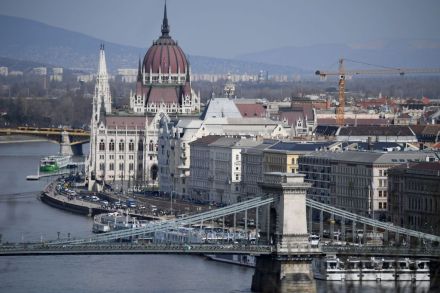
Budapest

Budapest is nice but it’s no Birmingham, Alabama

From our US edition

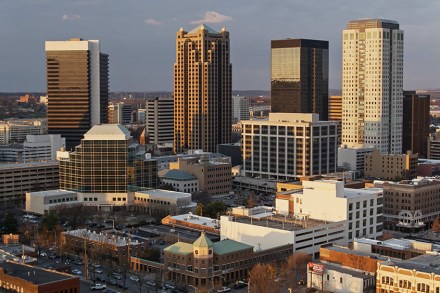
I am shocked by how serene I am since moving back to America – to Birmingham, Alabama – from Budapest. Everything I love about life in general is in Europe. But to my surprise and regret, it’s not home. I don’t know why I was wrapped so tight by anxiety in Budapest, but I was. I had a great life there, no complaints – except for no church community, which wasn’t Budapest’s fault, just a matter of my inability in local languages. Being back in the US, in a place where I have access to an Orthodox church in my own language – well, I can literally feel the anxiety uncoiling within me. I can’t explain it, but I’m not going to think about it, just be grateful. I went to church yesterday at St. Symeon, the Orthodox Church in America parish in town.

No Hungarian rhapsody: Lázár, by Nelio Biedermann, reviewed

Few first novels, let alone literary debuts in translation from German, arrive with quite so many plaudits – or better covers for those who like horses – as the 23-year-old Nelio Biedermann’s Lázár, which sold more than 200,000 copies on its release in Germany and Switzerland last year. ‘A truly great writer steps onto the stage,’ trumpets Daniel Kehlmann, who is no stranger to great writing: his latest novel, The Director, is on the International Booker Prize longlist. To Patti Smith, Biedermann is ‘gifted’. He is also a scion of the eponymous Lázárs, an aristocratic Hungarian family, making this first foray into fiction a personal project.

Things Fall Apart: Flesh, by David Szalay, reviewed

London and the South East, The Innocent, Spring, All That Man Is, Turbulence – the titles of David Szalay’s first five novels, which won a flurry of prizes, are all captured, in a sense, by Flesh, his sixth. Much of the latest book is set in Britain’s capital, and the innocent frequently lose that tag as its protagonist battles to advance his position. When we first meet him, Istvan is 15, living with his mother in Budapest in the dying days of communism and being introduced to sex by a neighbour. Having served a jail sentence for killing the woman’s husband, this ‘solitary individual’ joins the army and, after tours in the Middle East, heads for London – only to be stuck on the door of a strip club.

Reminders of the Cold War in Vienna and Budapest

From our US edition

Apparently an acquaintance has dubbed me the “Kremlinologist of the right.” Redolent as it is of the Cold War-era drama surrounding the Kremlin, when the West was desperately trying to suss out what Winston Churchill called a riddle wrapped in a mystery inside an enigma, I could hardly object to this quip upon learning of it. Indeed, I recently traveled to two hot spots of the Cold War, Vienna and Budapest. I went full immersion in Vienna, where I attended a screening of Orson Welles’s The Third Man, a humdinger of a movie if there ever was one. Graham Greene set it in postwar Vienna, which was divided between the four occupying powers, France, Great Britain, America and the Soviet Union.

Cold War