Brutality

Warnings, omens and the end of days: the surreal times of the Emperor Charlemagne

From our UK edition

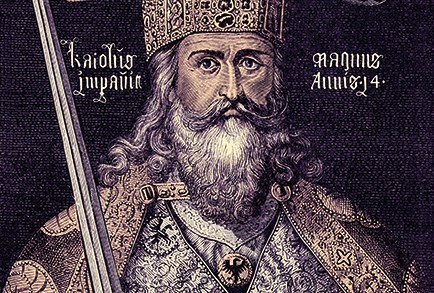
I don’t know if it is still the case, but there was a time in London when the ring of a doorbell on Saturday morning could only mean the Jehovah’s Witnesses and another copy of Watchtower. They all made for some pretty dotty reading in those days, but there was one article that has stuck in the memory – a piece that asked, and predictably answered, the question: ‘How Great was Charlemagne?’ The article concluded: ‘Though then known as Charles the Great, he was great neither in God’s eyes nor in the eyes of those whose standards are set by God’s Word.’ If it is not an attractive judgment, it is one that needs thinking about, because if anyone is equipped to enter into the mind of 8th- and 9th-century Man it is very possibly the Jehovah’s Witness.
From housemaid to monster: The Mare, by Angharad Hampshire, reviewed

From our UK edition

In 1957, Russell Ryan, an American is holidaying alone in Austria. There he meets a young woman called Hermine Braunsteiner. They fall in love and Russell takes Hermine back to America where they marry and set up home in the suburbs. All goes well until 1964, when a New York Times journalist knocks on the door and tells Russell that Hermine is a former concentration camp guard. In writing this novel, Angharad Hampshire is drawing on the couple’s real-life story, and the reader is captivated from the outset. What exactly did Hermine do? How will Russell react to the accusations against her, and can he ever forgive her? Hampshire writes in short chapters, weaving together scenes from past and present, moving fluently between Austria, Germany and the US.

Horoscopes and horror – the reign of Septimius Severus

From our UK edition

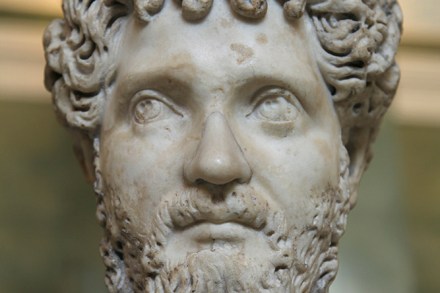
Rome’s first African emperor, Septimius Severus, was renowned during his reign (193-211 AD) for the mass killings of his rivals (ruthlessness even by ancient standards); for his genocide against the Scots (a rare recourse, despite Rome’s bad reputation as imperialists); and his budget-stretching generosity to his soldiers. He had an unusually glamorous Syrian wife, Julia Domna, who indulged her pet philosophers and her husband’s superstitions while setting a hairstyle trend. He had women Christians thrown to wild animals. His two sons, Caracalla and Geta, notoriously hated each other.

The hell of the antebellum South: Let Us Descend, by Jesmyn Ward, reviewed

From our UK edition

Jesmyn Ward, America’s only female two-time National Book Award winner, has had more than her share of hellish experiences to fuel her literary life. Her Mississippi-based family endured Hurricane Katrina. Salvage the Bones (2011), set during the catastrophe, was Ward’s response. Her memoir, Men We Reaped (2013), tackled her grief at losing five men close to her, including her brother, who was killed, aged 19, by a drunk driver. In January 2020, Ward’s husband died of acute respiratory distress syndrome. Ward recreates the hell of the antebellum South for the ‘stolen’ people forced into chattel slavery Hell is very much the context for her fourth novel, Let Us Descend.