British airways

London can’t lose easyJet

From our UK edition

Of all the disturbing news out there at the moment, up there is some American company's possible takeover of easyJet. Last week we learned that the budget airline had agreed in principle to a £5.7 billion takeover offer from US asset management firm Apollo – days after accepting a bid from rival firm Castlelake. What? Good old sleazyJet exiting the London market? Just when it was becoming really, really good? Alright, I may be exaggerating slightly here – budget airlines never get really, really good (that is why they are called budget, dear). But there is budget and then there is budget. Who can forget when Ryanair CEO Michael O’Leary floated the idea of standing seats on flights and a £1 ‘pay-per-pee’ fee to use the lavatory in 2010?

Farewell to the final phone-free haven

From our UK edition

Shortly before Christmas, I visited Australia for the first time. It’s quite some journey but I was fortunate enough to fly business class with Cathay Pacific – and very plush it was, too. On the first leg to Hong Kong (a mere 12 hours or so), I was just settling into my pod (they don’t call them seats) and was about to nod off when there was something of an altercation across the aisle. ‘I understood that wi-fi would be available for the entire journey,’ said a grumpy middle-aged man, who looked like he was from the Middle East. He might well have owned much of the Middle East for all I knew. ‘We’re sorry, sir,’ said the air hostess. ‘It should be up and running shortly. One of the crew is looking into it.

In defence of BA’s new loyalty scheme

From our UK edition

One of my favourite cartoons shows a couple sitting in luxury at the front of a plane, the wife peeking through the curtains to the cabin behind. ‘I’m so glad we’re in business class, darling,’ she says to her husband. ‘There seems to be some sort of hijacking happening in economy.’ People who have learned to play a game by one set of rules are bitterly affronted when the rules change Because we must consort with strangers for several hours, planes and airports amplify the normal human sensitivity to status. And so the media furore created by British Airways in revising the status thresholds for its loyalty programme is valuable fodder for students of psychology.

In defence of Amazon

From our UK edition

We should take heart from BP’s £5.1 billion second-quarter loss, accompanied by a halving of its dividend. What’s good about that? Nothing — except that the loss reflects a write-down of the value of oil and gas assets that shifts the company to a more realistic footing for an extended period of low oil prices and reduced demand, indicating resilience rather than impending doom. In recent times, BP has lived through Deepwater Horizon, history’s most politicised oil-rig disaster, and extricated itself from TNK-BP, history’s nastiest Russian joint-venture. It operated when oil was below $20 a barrel in 2001 and when it hit $147 in 2008. It has plans to achieve net zero carbon by 2050.

Now is not the time to throw money at airlines

From our UK edition

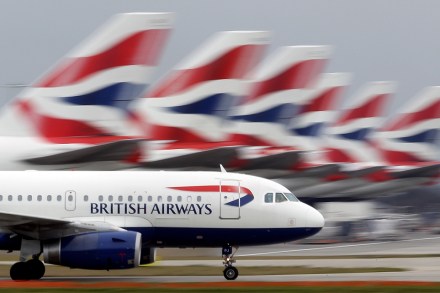
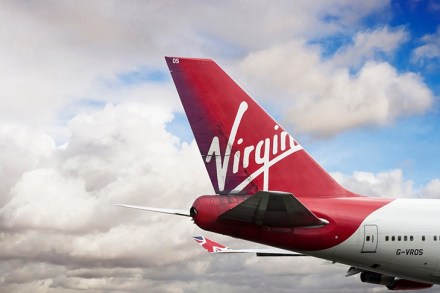
British Airways warns of 12,000 redundancies. Ryanair announces 3,000 job losses as ‘a minimum to survive the next 12 months’; Virgin Atlantic adds 3,000 more. The aero engine makers Rolls-Royce and GE talk of more than 20,000 job losses between them. Of all the sectors hard hit by pandemic, aviation is one whose prospects look blighted as far as the horizon. What should governments do about it? Global trade will return to pre-crisis levels, but business travel may never do so: why would companies bear the risk and expense when video-conferencing is so cheap and efficient? Even if vaccines against Covid-19 are available by next year, international travel will be constrained by fear of the next virus.