Boris johnson

How will Greening deal with the airports issue?

From our UK edition

One Cabinet minister fretted to me yesterday about the implications of Justine Greening’s appointment as Secretary of State for Transport. Their worry was not Greening’s position on the Tory ideological spectrum but her views on aviation. This minister worried that Greening, who helped lead the opposition to a third runway at Heathrow, would be against any expansion in airport capacity. In recent months, opinion has been shifting at the top of the Tory party on the airports issue. People were increasingly coming round to the view that there was need for an extra airport or at least an extra runway somewhere close to the capital.

Another voice: Five lessons from Conservative party conference

From our UK edition

Here's the latest in our Another Voice series of posts, which give prominence to viewpoints outside the normal Coffee House fold. This time it's the IPPR's Associate Director, Will Straw, with his five-point take on the fringe events of Tory conference, and the lessons that might be learned from them: 1. The Tories know that winning a working majority in 2015 is no easy task. The most popular fringe event according to Fringelist.com was ConservativeHome’s event on ‘How the Conservatives can win the next election.' Reflecting his remarks from the panel, YouGov’s Stephan Shakespeare wrote yesterday that, “today's electoral maths makes an overall a majority a mountain to climb”.

Good Boris

From our UK edition

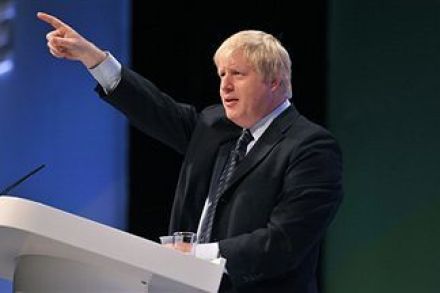
Boris Johnson must be one of the very few politicians in the world to make the audience laugh before they even start their speech. Just by walking on stage, he has the effect of a good comedian: the punters start to smile, in anticipation of some good one-liners. In today’s case, Boris got a standing ovation before he opened his mouth. Here is the man judged by Ladbrokes as the most likely next Conservative leader, but he had not come to stir. The Prime Minister – who lavished praise on the Mayor last night – was in the hall. It was all Big Society (BoJo division): affordable housing and a reprise of his January speech about restoring London’s identity as a union of villages.   But, he sounded several clear notes of defiance.

The Tories await Boris

From our UK edition

In just over an hour, Boris will make his first appearance in Manchester. The Tory hierarchy is acutely aware that for at least the next 18 hours or so this will be Boris’ show. There’s a certain nervousness about what might be in Boris’s speech. One MP close to the leadership just came up to me and asked, "You guys don’t have any idea what he's going to say, do you?" Boris has, apparently, being telling people that he hasn’t written his speech yet, which is only increasing the anxiety that he might make some fruity comments on Europe or tax. One thing that’s certain is that the hall will be packed for Boris. The activists’ seem to love him more than ever this year.

From the archives: Plan B for Boris

From our UK edition

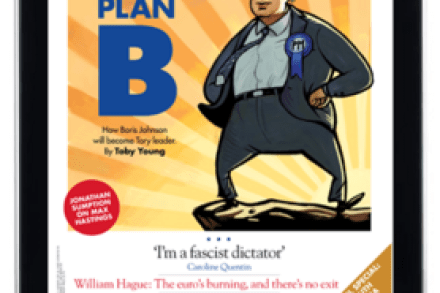
The great pastime of Tory MPs is leadership speculation. Who’s up? Who’s down? Who’s in? Who’s out? Who succeeds Cameron? Simple, says Toby Young in our cover piece this week, it has to be Boris. Toby’s confidence in Boris is such that he once bet Nigella Lawson £15,000 that blond bombshell would lead the party one day. Subscribers can read about that story here, and non-subscribers can subscribe to the Spectator for just a £1 an issue. In the meantime, here’s a cover piece from the archives on this same theme: Boris is hot on Dave’s heels.

A preview of just how personal the Boris Ken struggle will be

From our UK edition

If anyone had any doubts about just how personal the 2012 London mayoral campaign is going to be, they should have been dispelled by Ken Livingstone’s speech to Labour conference today. Ken claimed that the Mayor had ‘got what he wished for’ in above average unemployment and accused him of standing for a ‘privileged minority’. He then went on to draw an equivalence between Boris’s student antics and those of the rioters: “What is the difference between the rioters, and a gang of over-privileged arrogant students vandalising restaurants and throwing chairs through windows in Oxford? Come on Boris – what’s the moral difference between your Bullingdon vandalism as a student and the criminality of the rioters?

Boris’s last chance to show imagination

From our UK edition

Back in 2008, one Mayoral candidate explained that it would require imagination to solve London's housing problems. The candidate developed a manifesto that suggested a new form of “democratic” home ownership, which which would "help build stronger communities", and which would allow houses to "remain affordable for future generations". He said he would "create a network of Community Land Trusts, managed by cooperatives to give homes to people who are indispensable to this city." His name was Boris Johnson and since he was elected not a single Community Land Trust has materialised in the capital. This is a quiet tragedy. Just like Ken Livingstone, Boris has spent huge amounts of time and resources promoting New Labourish 'affordable housing'.

Boris’ long-game strategy

From our UK edition

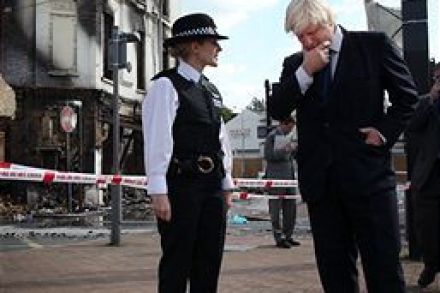
Has the sheen come off BoJo? The question is echoing around some virtual corridors in Westminster this weekend. The Mayor of London was caught off guard by the recent riots and his initial decision to remain en vacances made him look aloof and remote, a sense that grew during his disastrous walkabout in Clapham. Then he joined Labour in calls for cuts in the police budget to be reversed, a decision that reeked on opportunism, superficially at least. The FT’s Jim Pickard has an excellent post on these matters and he reveals that Boris Johnson has been voicing these concerns in private for months and that he has a brace of Cabinet allies: Liam Fox and Michael Gove.

Coalition united in restoring law, order and property

From our UK edition

David Cameron’s convictions are best expressed in anger. Cameron exuded an air of the patrician yesterday with his righteous moral certainty. This may have made some observers squirm, but others would have seen this seething performance as the essence of leadership in crisis. Cameron is likely to sustain this tone in parliament today. He will say that there is a “sickness” in our society and set out his plan for curing the malaise. The political class has already offered the government a panoply of options to pursue, but the coalition is expected to stand by its current course of education and welfare reform; if anything, these riots confirm their necessity.

The politics of police cuts

From our UK edition

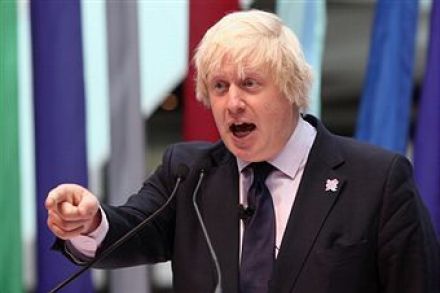
Wow, that was a howitzer of a performance from Boris Johnson on the Today Progamme earlier. And all his shells were aimed at Downing St. Not only did the Mayor of London slander Cameron’s Broken Society thesis, not only did he support Diane Abbott against the jibes of Tory HQ, but he also committed the gravest act of all, given the current climate. He lined up with Labour in attacking the coalition's police cuts. "This is not a time to think about making substantial cuts in police numbers," said BoJo. "I think it would be a good thing if the government had another look," he added, for emphasis.  There's little doubt that Boris has hit upon a potent attack here.

The Met is struggling to cope — it needs support

From our UK edition

It's a gloomy sort of morning ritual, posting on the riots of the previous night. I'm sure CoffeeHousers have seen and heard the specifics already: further burning and looting in parts of London such as Ealing, Croydon and Hackney, as well as bursts of violence in Birmingham, Liverpool and elsewhere. Businesses and livelihoods have been obliterated, areas set back years. Among the few mercies is that no-one, so far as we know, has yet been killed as a result. One thing that's becoming clearer through the smoke is that the Met Police are overrun, unable to properly deal with criminality at hand. The arrest figures tell a story by themselves.

Cameron to return to London as the riots spread

From our UK edition

There we have it: David Cameron is to return to London tonight, and chair a meeting of Cobra in the morning. There was an inevitability to the decision even earlier today, with the news that both Theresa May and Boris Johnson had curtailed their own holidays. But the fact that the riots have spread — starting in Hackney this evening, and erupting even in Birmingham — served to underline the point. It is the right decision, in any case. Cameron's ability to control the situation may be limited, but his continued absence might only have inflamed things further. There are a lot of people scrabbling around for a grievance to bare and exploit tonight. The Prime Minister's holiday can no longer be one.

Syria and Libya overshadowed by London riots as Boris comes home

From our UK edition

President Assad’s tanks are still doing murder on the streets of Syrian, but the dictator’s isolation grows. After weeks of prevarication, several Gulf States have closed ranks against the Syrian regime. Saudi Arabia, Bahrain, Jordan and Kuwait have all recalled their ambassadors from Damascus, and King Abdullah of Riyadh has led the Arab League’s condemnation of Assad’s ‘death machine’. Better late than never, the international consensus says. Compassion for the oppressed is not a familiar trait among Arabian princelings, but their reticence on this occasion was particularly surprising given that Assad’s Syria is no friend of the Arab League, preferring to side with Iran in most things.

The politics of our discontent

From our UK edition

Even by the normal standards of Monday mornings, this one reeks. Just sniff around you. That burning smell, it's either coming from the global stock markets as they strain against the US downgrade, or from those places in London where the rioting spread last night. Although the destruction in Brixton, Enfield, Walthamstow and Waltham Forest didn't match up to that on Saturday in Tottenham, it still involved fires, missiles and clashes between rioters and the police. Reading the reports and watching the footage online, looting appears to have been one of the most popular sports of the evening. In terms of the short-term politics — as opposed to the slightly more medium-term politics of what can be done to properly fix these problems — two issues stand out.

One year to go, but the public aren’t convinced

From our UK edition

Boris may think next year's London Olympics will be "the most exciting thing that's happened in the eastern part of the city since the Great Fire", but - according to a slew of new polls - he's got some way to go to persuade the rest of the country. Here's an opener from YouGov:   In the same poll, there's also widespread scepticism over what benefit the Olympics the bring to Britain:    The clearest perceived benefit is for London's sporting facilities, with 54 per cent agreeing that they will be much better "not just for the games themselves but for years afterwards". However, when it comes to London's public transport, only 32 per cent think it will see significant improvement, while 41 per cent disagree.

Boris to the fore

From our UK edition

Politics has a big, blond hair-do today, with Boris wiff-waffing all across the airwaves. The Mayor of London has already, this morning, called on George Osborne to do more to cut taxes, specifically the 50p rate and national insurance. And he will be leading a series of events, throughout the day, to mark the fact that the Olympic Games are exactly one year away. The Aquatic Centre will be baptised, the medal designs revealed, and general celebration staged across the city. It's difficult not to see all this as part of Boris's re-election bid, and perhaps as a marker for his wider ambitions. Although London's Olympics have not been an unambiguous positive so far, they still give him a bigger and friendlier platform than most politicians will enjoy over the coming year.

Yates goes as Boris stands by

From our UK edition

Yates of the Yard has gone as the phone hacking scandal claims yet another scalp. Yates walked after being told he would be suspended. Yates’ departure was necessary given the appalling mistake of hiring Neil Wallis, a former editor at the News of the World, while the Met was investigating — or supposed to be investigating — phone hacking at the paper. There will, though, be particular pleasure in Blairite circles at Yates’ departure. They remain furious with Yates for his behaviour and tactics during the cash for honours investigation. The talk is of appointing a new Met Commissioner by the autumn.

Quizzical eyes turn on Yates

From our UK edition

The phone hacking saga is now moving at such pace it threatens to engulf the political establishment (whether it is a sufficiently serious story to do so is another matter). After Sir Paul Stephenson’s theatrical resignation, timed to upset newspaper deadlines and plotted to embarrass the Prime Minister, attention has now turned to John Yates. Boris Johnson has said that Yates has ‘questions to answer’; and Brian Paddick argues that Yates should fall on his sword too. The Metropolitan Police Standards Committee meets this morning, and, as Laura Kuenssberg notes, it may discuss John Yates’ conduct.

Now Sir Paul Stephenson resigns

From our UK edition

This story just keeps speeding up. Paul Stephenson, the commissioner of the Met, has now resigned because of his links to Neil Wallis. Wallis is the former News of the World journalist arrested recently as part of the investigation into phone-hacking; he was hired by the Met to offer media advice from autumn 2009 to 2010. The New York Times today claims that Wallis was reporting back to News International during this time. Boris Johnson and the Home Secretary will now have to agree on a replacement for Stephenson. Given what we have learnt about the Met in recent days, I suspect it will be an outsider. Bernard Hogan-Howe, the former chief constable of Merseyside who was a finalist when Stepehnson was appointed, will, I expect, be the early favourite.

Boris’s star turn

From our UK edition

By rights, Labour ought to walk next year’s mayoral election. But all is not going to plan. The latest polls put Boris ahead; one conducted at the end of last month even had him 7 points clear. Labour's problem is Ken Livingstone. As Jonathan found recently, a full fifth of Labour voters in London say they would prefer Boris to be mayor rather than Ken, an extraordinary statistic. Livingstone is also seen as dishonest in comparison to Boris. His opportunism often contributes to that perception — for instance, his attempt to tar Boris with the filthy Murdoch brush earlier this week was the most transparent piece of hypocrisy. Andrew Gilligan has more news on that front; news that illustrates why Boris also leads Ken in the charisma stakes.