Bordeaux

Together and apart: How to Make a Woman, by Marie Darrieussecq, reviewed

From our UK edition

Two girls in Basque south-west France in the 1980s have been best friends since early childhood. Rose is the good one, studious and kind, with a sweetheart she plans to marry. Solange is the wild child: rebellious, dishonest and pregnant at 15. How to Make a Woman might sound like a Gallic take on Elena Ferrante territory, but it’s much more than that. Visceral and cerebral, with echoes of Simone de Beauvoir, it describes what it means to live in a world apparently created by and for men. The novel unfolds as a triptych: Part One ‘According to Rose’; Part Two ‘As told by Solange’; and, finally, ‘Together’. Typically, while Rose goes on a school trip to Madrid, Solange survives a horrific birth, described in unflinching detail.
Won’t someone please think of the French wine?

From our UK edition

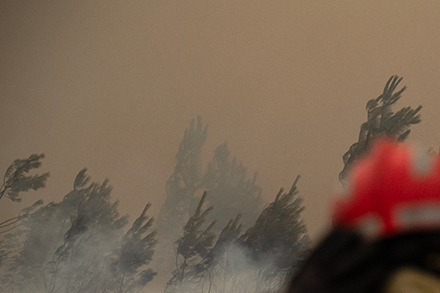
There was something surreal about my visit to La Cité du Vin, Bordeaux’s wine museum, last Saturday. From the top floor, with its panoramic view of the city, you could see the smoke from the Gironde wildfire turning the sky yellow, yet none of the staff seemed remotely concerned. This was in spite of the fact that the conflagration had already triggered France’s largest evacuation since the second world war and was getting closer to Bordeaux every hour. OK, maybe they thought it unlikely they’d be asked to leave their homes, but weren’t they worried about the region’s vineyards? These people worked at a museum dedicated to celebrating wine, for Christ’s sake.

The best winter wines

Winter is a natural moment for a little recherche du temps perdu. For my band of serious thinkers, the usual aides-mémoire are not petites madeleines dipped in tea but some of the various wines the holidays afforded us. Wordsworth said that poetry “takes its origin from emotion recollected in tranquility.” The jury is still out on the accuracy of that neatly phrased observation. But regardless of its pertinence to the art of poetry, its pertinence to the art of wine appreciation can hardly be gainsaid. With that in mind, I offer, as a minor public service, a brief recollection of some of the wines that a beneficent providence vouchsafed us as the winter solstice came and went and the house was redolent of evergreen and wood fires.

winter

There’s more to Bordeaux than fine wine

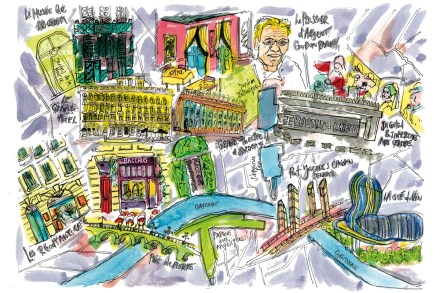
In the seminal Casablanca, there is a classic moment when the Humphrey Bogart character is asked how he ended up there. Bogie, doing laconic and world-weary as only he could, replies, “My health. I came to Casablanca for the waters.” When Claude Rains’s iconic Captain Renault purrs, “Waters? What waters? We’re in the desert!” Bogart’s response is simple. “I was misinformed.” This exchange occurred to me when I recently visited Bordeaux, a city with awe-inspiringly beautiful architecture, some of France’s most stylish places to shop and eat, situated teasingly close to the beaches of the Atlantic coast. Yet if you attempted to tell anyone that you’d come to Bordeaux for history, couture or coastline, you’d get the Bordeaux version of “What waters?

Bordeaux

The thoroughly underrated Pessac-Léognan

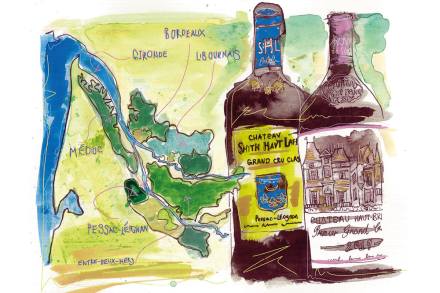
When someone says “Bordeaux wine” most of us think first of wines from the Médoc, home of Pauillac, Saint-Julien, Saint-Estèphe, Margaux and other celebrated names. For some reason — marketing prowess, perhaps — the great region of Pessac-Léognan, directly to the south in Graves, cheek by jowl with the town of Bordeaux, comes up mostly as an afterthought. This is both odd and regrettable. It is odd because, as a matter of history, Pessac-Léognan takes precedence. I suppose the story begins with the marriage of Eleanor of Aquitaine to the future Henry II in 1152. Eleanor brought vast lands from that region of France to the marriage, so there is a sense in which the French wines the English have loved since the Middle Ages were originally English.

Pessac-Léognan

Born Toulouse: varietals, vermouth and verse

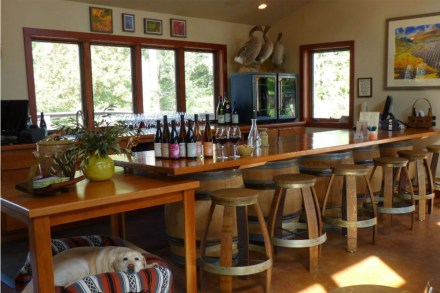
I like vintners with a sense of humor. When Vern and Maxine Boltz retired — he from the Oakland Fire Department, she from flying the friendly skies of United — they decided to try their hands at making wine. That’s intrepid, not necessarily funny. But in 1997 they found a sweet parcel of 160 acres above the Navarro River in the Anderson Valley of Mendocino County and started planting. ‘Go forth and multiply,’ they said to the grapes and the grapes (Pinot Noir, mostly) did just that. In 2002 they produced 400 cases for sale and Toulouse Vineyards was launched. ‘Toulouse’? Yes, they reasoned, ‘What to do we have to lose?’ Fair warning: their publicity deploys variations of that homophonic witticism early and often.

toulouse