Books

Inside Thomas Pynchon’s most underrated novel

Atop the Almaden Tower in downtown San Jose — the world headquarters of Adobe Systems Inc. — sits a singular art installation. Four amber wheels rotate every few seconds in a seemingly innocuous and frankly nonsensical digital display. The installation, known as the “San Jose Semaphore,” is the brainchild of the data-driven media artist Ben Rubin and first appeared — or began transmitting — in August 2006 to the mass bamboozlement of passersby. What was going on, they cried? Was it that most millennial of things — a sign? For those less likely to be beguiled by some concealed piece of chicanery, the circles were little more than frivolous decoration, another example of Adobe splashing the cash on some geometric garnishing.

Pynchon
Lodge

David Lodge, the master of Anglo-American campus humor

"Literature is mostly about having sex and not about having children.” So said the British novelist, occasional screenwriter and literary critic David Lodge, who died at the beginning of 2025 at the age of eighty-nine. Lodge, who had suffered from encroaching deafness for several decades, had not, in truth, been a major literary figure for a considerable period before his death. This retreat into obscurity had not been helped by a trio of memoirs, beginning with 2015’s Quite a Good Time To Be Born, which perplexed critics — including this one — with their dour, downbeat and decidedly un-humorous tone. Few would have known, from reading them, that their author had once been regarded as one of the late twentieth century’s most accomplished comic novelists.

Lost in Mexico: in the stumbling footsteps of Malcolm Lowry

From our UK edition

I had been kicking my heels in a dusty two-star hotel on a dual carriageway in Leon, central Mexico, for days. One afternoon, I spotted a battered old English language hardback in a junk shop window: Under the Volcano by Malcolm Lowry.  I had read the book before, half a lifetime ago, in maybe 1985, when I knew nothing about Mexico, failed relationships or alcoholism. Almost 40 years later, with a more than working knowledge of all three, I felt better placed to appreciate Lowry's 1947 masterpiece. With nothing else to do or read, I bought it. I haggled the shopkeeper down to 100 pesos – about £4. Barely 24 intense hours later – the same time span that the novel unfolds in – I had finished it. Or had it finished me?

Are these performances of the Bach cantatas the best on record?

From our UK edition

Three projects shedding light on the sacred music of J.S. Bach are nearing completion. The first consists of an epic 25-year project to record all the composer’s vocal works – passions, masses, motets and more than 200-odd cantatas – in electrifying performances supplemented by lectures and workshops. At the helm is a Swiss choral conductor renowned for his improvisatory skills – and surely the only baroque specialist to have played Sidney Bechet on a chamber organ. The second project is a guide to Bach’s church cantatas tailored at ‘cultural Christians’; that is, music lovers intrigued but intimidated by their Lutheran theology, unsure how to approach this treasure trove of, at a conservative estimate, more than 100 masterpieces of western civilisation.

Never write a book

From our UK edition

I have just finished writing a book and am moping about the house at a loose end. The conventional advice to anyone thinking about writing a book is: don’t. Unless you’re one of the 1 per cent of authors who make 99 per cent of the money, it’s a mug’s game as far as making a living is concerned. Your cleaning lady earns more per hour. So my advice is only write a book if you have an alternative source of income. One of the hardest things about writing a book is stopping. The temptation to tinker persists until the publisher screams at you to stop and mutters that publishing would be a good business if it weren’t for the authors. Still, the end is in sight, and now I need something to do.

The delightful melancholy of an antiques shop

From our UK edition

Antique shops are melancholy places. The deep leather armchairs, Anglepoise lamps and bamboo bookshelves. They ask questions: who sat, worked or read using these? Banal questions, possibly, but life is generally banal, and no less poignant for that. It’s not an unpleasant sort of melancholia. Quite the opposite. If I had to create a word to describe the feeling, I’d say it was melanphoria: ‘a state of intense excitement arising from a feeling of deep sadness’. One feels both a nostalgia for the lives of strangers and a sense of life’s possibilities. If this is abnormal, I would ask any amateur psychiatrists to write to The Spectator offices. I am physically unable to go into any antique shop without buying something. It is rarely a grand purchase.

Ali Smith’s latest novel falls flat

"Gliff" is a word which can mean "a short moment," "a wallop," and "a post-ejaculatory sex act;" to "dispel snow," "to frighten," and to "escape something quickly." It’s "really excitingly polysemous," says one of Ali Smith’s characters. It’s certainly an apt title for a book which can’t seem to define itself. At its center are two children, Briar and Rose, who have been abandoned. Their mother is absent, caring for a sick sister, and their other responsible adult leaves to find her. The children exist in a stock dystopian world (people are surveilled by CCTV cameras and zombified by screens) with a twist: they repeatedly wake up to find that a red line has been painted around their house or camper van. They are on a list of "Unverifiables.

Gliff

The enduring charm of King Solomon’s Mines

From our UK edition

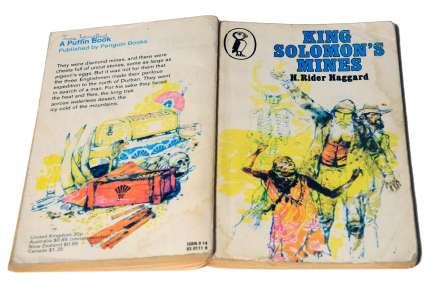
How many people under 40 in Britain today do you think have read H. Rider Haggard’s King Solomon’s Mines? Five, six… 50? It’s hard to know. If you’re lucky – or unlucky, depending on your point of view – you might have bumped into the 1985 film version with Richard Chamberlain, Sharon Stone and Herbert Lom in the unloved crevices of the TV schedule when only insomniacs or household spiders are deemed to be a risk. I ask the question because this year marks 100 years since the death of Sir Henry Rider Haggard as he was then, having been knighted in 1919, apparently for services to the British Empire – and things have obviously moved on a bit since then. Except, of course, they haven’t changed in his famous tale of adventure and lost treasure in Africa.

Is the tide turning on restitution? 

From our UK edition

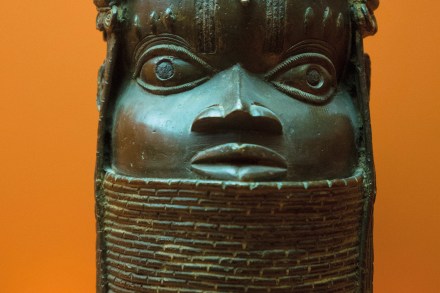
When passions are aroused, all of us are liable to overstate our case. Dan Hicks, a curator at Oxford’s extraordinary Aladdin’s Cave of anthropology, the Pitt-Rivers Museum, is perhaps a case in point. A Swedish academic, Staffan Lunden, has convincingly argued that Hicks is guilty of ‘distortion’ when writing about the British raid on Benin in 1897, which brought several thousand objects, including finely wrought brass statuettes, to museums across the world. Hicks published his uncompromising views in 2020 in a prize-winning book, The Brutish Museums: The Benin Bronzes, Colonial Violence and Cultural Restitution.

What makes a good title?

From our UK edition

Liszt’s compositions tend to have descriptive titles – ‘Wild Chase’; ‘Dreams of Love’ – whereas Chopin avoided titles. Thomas Wentworth Higginson wished titles on Emily Dickinson’s poems, opposed by his fellow editor Mabel Loomis Todd. They didn’t stick. Maybe this is why Dickinson is acclaimed but unread. ‘I heard a Fly buzz’ is easier to remember than 465. We can express this truth by quoting Dickens on the Bible in Little Dorrit: ‘such hiccupping reference as 2 Ep. Thess. C. iii, v. 6 & 7.’ Or by remembering how often we forget our several PINs. For poets, titles can be a resource, a useful press release before the actual poem Titles are important. Titles are useful.

One hundred years of Theodore Dreiser’s An American Tragedy

The high-water mark of the American naturalist novel lasted for about forty years — the period bookended by Frank Norris’s 1899 McTeague and John Steinbeck’s 1939 The Grapes of Wrath, taking in along the way such highlights of the form as Upton Sinclair’s 1906 The Jungle, Sinclair Lewis’s 1920 Main Street and James T. Farrell’s Studs Lonigan trilogy of 1932-35. But these are all subsidiary crags on the path to Mount Olympus, for the novel that towers above them all and draws each of them — to mix the metaphor a little — into its remorseless slipstream is Theodore Dreiser’s 1925 An American Tragedy.

Dreiser

What Spectator writers read in 2024

From our UK edition

Rod Liddle The angels in Jim Crace's Eden are tetchy and petty authoritarians, apart from one who can't fly properly. This dissertation on freedom and mortality is rather wonderful – published two years ago but I caught up with it only this year. The best non-fiction book of the year is David Goodhart's The Care Dilemma: Caring Enough in the Age of Sex Equality, which has the temerity to suggest that divorce rates and broken families might just have something to do with our epidemic of mental illness. How dare he? Lionel Shriver I’d recommend the novel Havoc by Christopher Bollen, set in an Egyptian hotel to which westerners have fled to avoid the tyrannies of Covid regulations.

Paris

Is Paris the world’s most bookish city?

After I ventured to New York in May 2024, bound for a discerning literary journey round the city’s bookshops, libraries and hotels, I received some lively and constructive feedback from Spectator readers. Many, thankfully, agreed with my arguments about its bookish charms, but a consistent theme in the comments I received was, “How can you claim that New York is the quintessential literary city? Have you forgotten Paris?” To which my reply was reasonably simple: “What about Oxford, London, Rome, Edinburgh, Dublin, Santiago or San Francisco?” All of them hugely distinguished citadels of the written word, both present and historic alike. Yet I felt uneasy at my response.

How my father’s bedtime stories shaped my life

From our UK edition

It’s half an hour before lights out when my dad arrives at my bedroom door holding Roald Dahl’s Danny the Champion of the World. He kicks off his shoes, loosens his tie and wedges himself next to me in my small single bed, his toes waggling in their socks as they regain freedom after a long day in the office. In the evening he smells of the menthol toothpicks he always carries in his top pocket (in the morning, when he drops me off at school, he smells of the spicy pink toothpaste which I once tried and which burned the roof of my mouth).

Advent is the season for revelling in fine wine

From our UK edition

Crime. Fear not: none of us was planning to break the law, with the possible exception of hate speech. Where that is concerned, how would one start? But we were more concerned with crime and literature, and a fascinating perennial question. What is the distinction between crime fiction and novels? In the 1990s, I introduced one of the loveliest girls of the age to the delights of proper wine Crime and Punishment: no problem. So what about The Moonstone? There are very many supposed novels which I would rather read. Moving nearer our own day, we have Dorothy Sayers or P.D. James. More recently, Reginald Hill, Susan Hill and Ian Rankin. Victorian ladies were not supposed to read novels before lunchtime.

Pat Barker dives into the first part of Aeschylus’ Oresteia

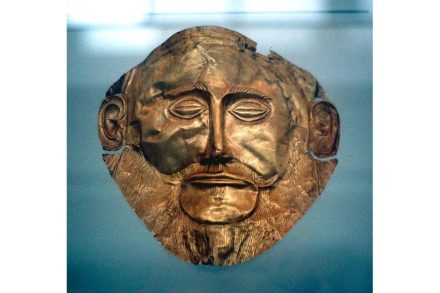
Emily Wilson, the distinguished translator of Homer, has remarked that Pat Barker’s The Silence of the Girls about the Trojan War is a distinctly feminist book. Renowned for her first world war Regeneration trilogy, Barker has now written The Voyage Home, a powerful novel about the first part of Aeschylus’ Oresteia. She takes the infrastructure of legend and invests it with brutal realism. Agamemnon’s return home to Mycenae after ten years of war is told entirely from the points of view of women. The narrator is Ritsa, Cassandra’s maid, her intimate “catch-fart.” (There is no reticence throughout about the use of crude colloquialisms.) Agamemnon the victor becomes the victim.

Barker
wood

Imperfections in wood lead to perfection in carvings

I am married to a wood snob. When we bought our house in 1999, my husband insisted that all the shelves (he is an antiquarian book dealer, so there are miles of them) should be made of “real” wood, with not an inch of Medium Density Fibreboard. The price made me squeal. But a quarter of a century on, while friends’ MDF shelving droops like cables between telegraph poles, ours remains beautifully strong and straight. Callum Robinson would understand why this matters, and he demonstrates it in his new book, Ingrained.

My picks for Cheltenham and the Twelve

From our UK edition

With farmers outraged, the nation’s biggest employers warning the Budget will bring increased prices and lost jobs and growth out of sight, Rachel Reeves has certainly confirmed that economics is the dismal science. It hasn’t got any easier either finding winners. For the previous two Flat seasons this column’s Twelve To Follow showed profits of £59 and £157 to a £10 level stake. The jumpers last winter rewarded us with a handsome £246. But currently I’m like a US senator unseated at an election. He called in his staff and declared: ‘That was an unmitigated disaster: so get out there and mitigate.’ Soaking wet gallops and soggy tracks didn’t help. King of Steel and Classical Song were injured and didn’t see a racecourse.

The Spectator’s 2024 Books of the Year

William Boyd It makes grim, compelling and minatory reading, but Hitler’s People (Penguin, $35) by Richard J. Evans is not only the only book you ever need to read about Nazi Germany but a salutary example of what happens when crazed populist leaders win power. Twenty-two short portraits of the key players and lesser apparatchiks of the Nazi years manage to encompass the whole history of the Third Reich and its baleful legacy. Evans’s hundred-page chapter on Hitler — the “Boss” — is masterly. Evie Wyld’s fourth novel, The Echoes (Knopf Doubleday, $28) with its edgy and moody supernaturalism (the narrator is a ghost) establishes her growing reputation as one of our finest young writers.

books
kosinski

Reassessing Jerzy Kosinski

At the conclusion of Hal Ashby’s remarkable Being There, which celebrates its forty-fifth anniversary this month, comes a scene that has only acquired greater resonance and relevance since it first appeared. At the funeral of the plutocrat Ben Rand (Melvyn Douglas), the US president (Jack Warden) is delivering a heartfelt but somehow trite eulogy. As the pallbearers march away with Rand’s casket, which will be buried in the family mausoleum, talk turns to who should replace the president; the film has already suggested that he is suffering from erectile dysfunction and, wickedly, equates this with his falling popularity ratings.