Books of the year

The Spectator’s 2024 Books of the Year

William Boyd It makes grim, compelling and minatory reading, but Hitler’s People (Penguin, $35) by Richard J. Evans is not only the only book you ever need to read about Nazi Germany but a salutary example of what happens when crazed populist leaders win power. Twenty-two short portraits of the key players and lesser apparatchiks of the Nazi years manage to encompass the whole history of the Third Reich and its baleful legacy. Evans’s hundred-page chapter on Hitler — the “Boss” — is masterly. Evie Wyld’s fourth novel, The Echoes (Knopf Doubleday, $28) with its edgy and moody supernaturalism (the narrator is a ghost) establishes her growing reputation as one of our finest young writers.
books
books

The Spectator’s 2022 Books of the Year

William Boyd Writing effective comedy is very difficult. True comic genius, the ability to create a unique tone of voice — deadpan, perfectly timed, self-deprecating, abjuring all whimsy (the British disease) and grandstanding — is extremely rare. One thinks of S.J. Perelman, Peter de Vries, the Grossmiths and P.G. Wodehouse amongst very few others. One name that can be added to this tiny and exclusive club is Theo Fennell who has published, this year, his memoir I Fear For This Boy: Some Chapters of Accidents (Bloomsbury, $35). It relates incidents in Fennell’s life where everything that could go wronnd Catholic Churches as he veered between them.

The Spectator’s 2023 Books of the Year

Andrew Roberts America’s Collection: The Art and Architecture of the Diplomatic Reception Rooms at the US Department of State (Rizzoli, $100) is beautifully written by the director and curator of the State Department’s truly extraordinary collection, Virginia B. Hart. It is a sumptuous volume chronicling the US government’s huge collection of American art, furniture, porcelain, maps, prints and drawings, compiled over a quarter of a millennium. Thirteen other writers and experts, including David M. Rubenstein, have also contributed to what is a genuinely remarkable as well as gorgeous-looking book. James B.

books

Books of the year I: a choice of reading in 2023

From our UK edition

Andrew Motion Something old made new: The Iliad in Emily Wilson’s muscular and moving new translation, the first by a woman, is truly what it claims to be – a version for our time (Norton, £30). And something new made immediate: Hannah Sullivan’s second collection of poems, Was It For This (Faber, £12.99), ambitiously extends the already considerable range of her first book, Three Poems. She’s the cleverest poet of her generation and also one of the most deep-feeling. Clare Mulley Vulnerability, strength and defiance this year, starting with Daniel Finkelstein’s Hitler, Stalin, Mum and Dad (William Collins, £25), which caught me up in its humanity as it testified to the importance of bearing witness to extremism.

Books of the Year 2021

Matt Labash I read a lot of books. Probably well over sixty in the last year. I’m not saying that in some little-kid braggadocious way. After all, I’m fifty-one years old. Though some have said I read on a fifty-two-year-old level. In addition to the couple of books I have open at any time, a good deal of my book consumption comes via audio: I have an audiobook going in my car or on my MP3 player at all times. And at my advanced age, if I don’t dog-ear and underline a book, it’s lost down the memory hole forever, no matter how much I liked it. But one I do remember liking so much that it bears mentioning, is John Green’s The Anthropocene Reviewed: Essays on a Human-Centered Planet (Penguin, $28).

books

Books of the year, chosen by our regular reviewers

From our UK edition

Clare Mulley In the past I have sometimes wondered how many books I would read if only someone had the kindness to lock me up. It turns out, this Covid year, not to be so many — but the quality has been high. Amelia Gentleman’s brilliant and devastating The Windrush Betrayal: Exposing the Hostile Environment (Guardian Faber, £10.99) fuelled me with an outrage in no way diminished by David Olusoga’s masterful and hugely compelling Black and British: A Forgotten History(Pan, £12.99). I know I was late to the party for that book but, as statues tumbled, I enjoyed Keith Lowe’s very timely and thought-provoking Prisoners of History: What Monuments Tell Us About History and Ourselves (William Collins, £20).

The Spectator’s Books of the Year 2019

Andrew J. Bacevich I have reached the age when it seems important to give attention to the books I ought to have read long ago but skipped past. As an American born in the middle of the 20th century, I’m drawn to the literature of that era. Lately, I have been reading for the first time John Steinbeck’s The Grapes of Wrath (Penguin, $18), published during the Great Depression. Of course, I have seen John Ford’s gripping interpretation of the novel, starring Henry Fonda as Tom Joad. It’s a great movie. In my estimation, the novel itself is also a masterpiece. Of course, it is necessarily a product of its time, saturated with a sentimental depiction of those dispossessed by massive economic upheaval.

books of the year 2019

Spectator USA’s Books of the Year 2018

A silence descended on the Spectator USA library as our writers composed their Books of Year. It was the silence of deep thought, broken only by the clink of ice in tumblers, the gentle whoosh of the Juul pipe, and snoring from the armchair by the fire. At dawn, the editors unlocked the library doors. Our writers stumbled out, blinking in the bright sunshine. We gathered their shoddily written copy, and watched through the library windows as they gamboled in the snow. They looked like children, only with hip flasks and cigars.   Daniel Akst Any gift can be a burden, and no gift is more potentially burdensome than a book. That’s why any books you give ought to be brief, unexpected and absorbing – the opposite, in other words, of homework.

spectator usa books of the year

Spectator Books of the Year: The biography of a man who prayed he’d never have one

From our UK edition

‘I pray I shall not find a biographer,’ said Steven Runciman, eminent historian of Byzantium and the Crusades, Grand Orator to the Patriarch of Constantinople, Astrologer Royal to King George II of the Hellenes, Laird of Eigg, screaming queen, howling snob and honorary whirling dervish. His prayer has been denied, but he could not have found a better biographer than Minoo Dinshaw, whose Outlandish Knight (Allen Lane, £30) is monumentally impressive: scholarly, witty and gorgeously written. When Runciman was in charge of the British Council in Athens after the war he dismissed Patrick Leigh Fermor from the only job he ever had, having tired of ‘Paddy’s little irregularities’, such as drinking too much and not paying his debts.

Spectator Books of the Year: The myth of meritocracy

From our UK edition

I must admit that I write a beautiful essay about my dad in My Old Man: Tales of Our Fathers (Canongate, £14.99, edited by Ted Kessler), but it would be nearly as good without me. James Bloodworth is one of the most elegant and passionate (not an easy combo) writers about politics in this country today, and in The Myth of Meritocracy (Biteback, £10) is especially eloquent on the way the diversity divas have diverted attention from the lack of opportunities for a whole swathe of underprivileged children put beyond the pale of pity by their risibly named ‘white privilege’. We Don’t Know What We’re Doing (Faber, £7.

Spectator Books of the Year: Philip Hensher on a good year for novels

From our UK edition

A good year for novels. Rachel Cusk’s Transit (Cape, £16.99) is a brilliant and original enterprise, as well as a hymn to the joys of the good story. Elizabeth Strout’s My Name is Lucy Barton (Viking, £12.99) shouldn’t work, but its frail texture was a triumph of tenderness, and sent me back to her excellent Olive Kitteridge. And I loved David Szalay’s scabrous, intelligent and hugely engaging All That Man Is (Cape, £14.99). My major discovery, though, was Joy Williams, whose collected stories, The Visiting Privilege (Tuskar Rock, £16.99), proved an electric and dangerously human volume. Not making sense, and making too much sense, is Williams’s alarming territory.

Spectator Books of the Year: The novel that Netflix should snap up

From our UK edition

Kate Loveman’s Samuel Pepys and his Books (Oxford, £60) abounded in memorable touches: Pepys buying a Mass book in 1660 and reading it aloud late into the night ‘with great pleasure to my wife to hear that she long ago was so well acquainted with’; or Pepys writing handy memos to self: ‘Consult Sir Wm Petty about the No. of Men in the World &c’. I like the ‘&c’. From The Making of the Oxford English Dictionary by Peter Gilliver (Oxford, £40) I learnt that Charles Onions, 1872–1965, the OED’s fourth editor, pronounced his name like the vegetable and, on a larger canvas, of the stupendous struggle to wrestle millions of pen-and-ink quotations from 1,000 years into a history of the language.

Spectator Books of the Year: How Ali Smith’s Autumn captures the best in human nature

From our UK edition

Easily the most original novel of the year was Charlotte Hobson’s The Vanishing Futurist (Faber, £16.99). It tells the story of an English governess who finds herself caught up in the Russian Revolution; but instead of retreating to the safety of Cornwall, she stays on in order to join a sort of prototype commune run by the charismatic Futurist Nikita Slavkin. Entirely sui generis, it also boasts the year’s best cover design. This is the book I’ll be giving people for Christmas. World events were gloomy when Ann Patchett’s Commonwealth (Bloomsbury, £18.99) and Ali Smith’s Autumn (Hamish Hamilton, £16.99) appeared. Each of these books describes the best in human nature: our capacity for love and loyalty and kindness; our love of storytelling.

Spectator Books of the Year: The man who stole Captain Cook’s thunder

From our UK edition

Hot on the heels of his books about the Bible and the Queen comes A.N. Wilson’s witty, learned, utterly self-possessed novel Resolution (Atlantic, £16), about the turbulent life of George Forster. He was the Polish-born, Warrington-raised, multi-lingual Enlightenment scholar-scientist who, aged 18, was appointed botanist on board the Resolution. His popular account of the voyage pipped Captain Cook’s own book to the post. So Wilson’s Forster is a guilty man, a protégé who murdered his master: ‘It now amazes me that I had the gall, the sheer cheek, to write my Voyage book. I wrote it fast. We finished it before Cook. It sold well — only now do I see how justifiably angry the Captain must have been! I’d done more than jump the gun.

Spectator Books of the Year: A death row dispatch

From our UK edition

As events unfolded this year, it was reassuring to read superb non-fiction that celebrated expertise. Two stand out. Trials: On Death Row in Pakistan (Penguin, £16.99) tells how Isabel Buchanan, fresh from a law degree, applied her feeling and intelligence to apprentice in a jurisdiction which, by 2014, saw a person executed every day. Ed Yong’s magnificent revaluation of bacteriology, I Contain Multitudes (Penguin, £20), counsels humility for student doctors like me: modern medicine’s pathogens may be the future’s therapeutics. And then there is Mark Greif’s Against Everything (Verso, £16.99), which — as its title suggests — matches brilliant critique with improbable optimism.

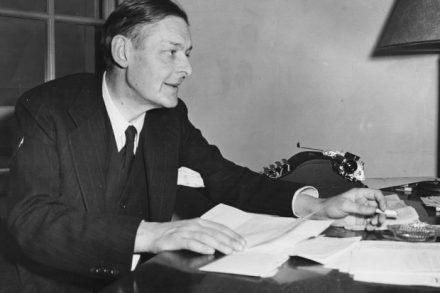
Spectator Books of the Year: A T.S. Eliot collection to stand the test of time

From our UK edition

Best novel: no question, Razor Girl by Carl Hiaasen (Atlantic Books, £13.50). A Florida comcrime (I just made that word up) which makes you feel better about the US in a year when that’s been tricky. You can be sexually saucy and inoffensive — a lesson Donald has never learned. It’s been a crowning year for our best living literary critic, Sir Christopher Ricks. His long campaign for Bob Dylan to be taken seriously in a literary way has triumphed. His edition of The Poems of T. S. Eliot with his co-editor Jim McCue, (Faber, two volumes, £26 each) is (literally) monumental and will last for as long as poetry is read. Peter Parker’s Housman Country: Into the Heart of England (Little Brown, £19.99).

Spectator Books of the Year: Why Martin Luther was an extraordinary and unpleasant man

From our UK edition

Lyndal Roper’s Martin Luther: Renegade and Prophet (Bodley Head, £30) is an impressive and fascinating read. I have no idea what Lutherans have made of it, but for those of us who have harboured an irrational dislike of this extraordinary and unpleasant man, it’s a comfort to know we weren’t completely wrong. It’s taken me a long time to come across her, but it’s hard to imagine there is a better short-story writer than Deborah Eisenberg. All unmistakably hers, all intriguingly different, and almost all brilliant, her Collected Stories (Picador USA, £17.75) brings together 30 years’ work that shows no sign of going off in quality.

Spectator Books of the Year: An autobiography that makes the mundane seem outlandish

From our UK edition

My novel-reading year has been dominated by Barbara Pym, starting with Excellent Women (Virago, £8.99). Pym is usually likened to Jane Austen, but her hilarious situation comedies and recurring characters constantly reminded me of Balzac. Island Home: A Landscape Memoir (Picador, £12.99) is an all-too-brief autobiography by the novelist Tim Winton. He sees Europe with the eyes of an extra-terrestrial, finding nature ‘impossibly fertile’ and the Alps ‘claustrophobic’. As an unhappy schoolboy in Western Australia, he explored the violent, delicate landscapes which cars have erased, rendering ‘the outlandish mundane’. Winton’s dry, physical descriptions have the opposite effect.

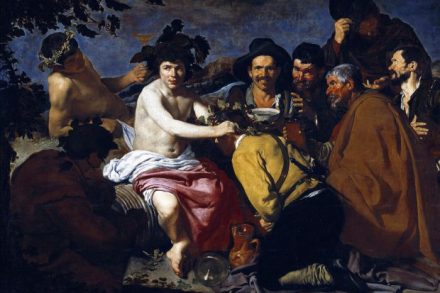
Spectator Books of the Year: An impassioned celebration of Velázquez

From our UK edition

The Vanishing Man (Chatto, £18.99) by Laura Cumming is a moving memorial, written in the wake of the death of the author’s father. An impassioned celebration of Velázquez and a snapshot of the snobberies of the art world in the mid-19th century, it’s a cracking good story to boot. By contrast, a slow read rather than a page-turner, Ann Wroe’s Six Facets of Light (Cape, £25) is a compendium of art, literature and science that takes you from Fra Angelico and Eric Ravilious, Milton and Gerard Manley Hopkins to Einstein, Newton and Clerk Maxwell. A book for winter.

Spectator Books of the Year: The dangers of unrequited love

From our UK edition

My novel of the year was What Belongs to You (Picador, £12.99), Garth Greenwell’s slender, poised, clear-eyed and devastating account of the depths to which unrequited sexual obsession can lead you, particularly if you become entangled with a rent-boy in Sofia. I also enjoyed and admired Aravind Adiga’s funny and touching Selection Day (Picador, £16.99), in which cricketing prodigies in Mumbai face googlies from both bowlers and life. And Tom Bullough’s densely and thrillingly written Addlands (Granta, £14.99), which traces the lives of a farming family on the Welsh borders through 70 years.