Book review

The big steal

From our UK edition

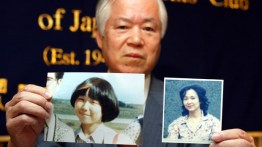
In recent weeks, North Korea allegedly developed a hydrogen bomb and hangover-free booze. This would be a worrying combination in any government not widely thought to have the force projection of an aggressively drunk toddler with a bag on its head. North Korea is often portrayed as a cartoon state — something sustained by Kim Jong-un’s propensity to execute rivals using anti-aircraft guns. Announcing the discovery of unicorns in 2012 didn’t help, though it was comparatively mild for a state media agency partial to statements like: ‘South Korean President Lee Myung-bak is a rat who should be struck with a retaliatory bolt of lightning.

Sixty years on

From our UK edition

The book of the year has long been a favoured genre in popular history, and is a commonplace today. While a book of hours endlessly recycles, the point of the book of the year is change, the more the better. There is an implied contest between years — you say 1917 is the most important; I trump you with 1940, or 1968 or 1979…. It is at once a rather silly genre, potentially nothing more than a dreary compendium of novelties, and one with distinct possibilities, as illustrated by both these books taking on 1956, one globally, one for Britain. Simon Hall’s approach is to write the story of a year in global history, by moving through the Americas, Africa and Europe, taking up the story of particular events as they happen at the rate of over one a month.

The trouble with mothers

From our UK edition

For a child, the idea of ‘knowing’ your mother doesn’t compute; she’s merely there. As an adult, there may be the curiosity — who is this person who gave me birth and brought me up? — but also some kind of resignation: you’ll simply never know. Better, even, not to know. So long as she’s alive. Once she’s dead, you will regret it everlastingly; but you also know it could not have been otherwise. It’s a handy argument. Five days in a Manhattan hospital, as a grown woman with children of your own — now you are a mother, too — with your mother sitting across from you, may thus be a gorgeous opportunity, something to savour when everything else about you is shaky.

Frozen beards and hot tempers

From our UK edition

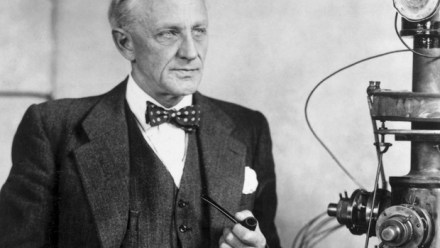
Born in New South Wales in 1888, George Finch climbed Mount Canobolas as a boy, unleashing, in the thin air, a lifelong passion. When he was 14, the family emigrated to Europe. There, as a young man, Finch excelled both as an alpinist and a student, enrolling at the prestigious Zurich Federal Institute of Technology, where he won a gold medal which he subsequently melted down to buy ropes and belays. He was six feet two, with broad shoulders and blue eyes, and he played the piano beautifully. In 1912 he moved to London to work as a research chemist, joining the Fuel and Refractory Fuels team at Imperial College the following year. From the outset, he upset convention in the climbing fraternity.

Stop calling me ‘Goat’

From our UK edition

The title of Tim Parks’s 17th novel is false advertising, because Thomas and Mary: A Love Story is barely a love story, and it’s certainly not about Mary. The intended effect is irony: the dust jacket promises ‘a love story in reverse’, and the opening chapter describes Thomas Paige losing his wedding ring on Blackpool beach during a family holiday. The next few chapters are reasonably successful. Parks opens little windows on to the Paiges’ dying marriage. ‘Bedtimes’ takes us through a week of evenings, with the Paiges always going to bed at different times. ‘Goat’ explains the nicknames they’ve had for one another over the years, ending with a painful scene in which Thomas asks Mary to stop calling him ‘Goat’.

A people horrible to behold

From our UK edition

The much-lamented journalist and bon viveur Sam White, late of the rue du Bac, The Spectator and the Evening Standard, who lived in Paris for over 40 years, once wrote an affectionate portrait of his adopted home that opened with the defiant words, ‘Yes: I like it here.’ As a short review of the city it was perfect. Longer accounts that say less are published every year and must run by now into thousands of volumes. A glance at the map shows why Paris — ‘most sublime of cities’, as Luc Sante terms it — continues to attract such devotion.

A plague on all P-words

From our UK edition

This isn’t a book to read before lights out. It’s about a mentally ill man whose mother exiles him from rural Ireland after years of rumours and reprisals related to his habit of startling passers-by with his bared erection. She has tried strapping him to a chair and bolting the door, but all that did was give him a fetish for not emptying his bladder. Now Martin John is flat-sitting in south London, working as a nightwatchman and hoarding old Eurovision tapes and lists of words beginning with P. But menacing this toehold on equilibrium is the arrival of an ill-disposed male lodger, who swiftly becomes the object of his paranoia. Martin John’s fevered brain (it’s always ‘Martin John’) gives the novel its jagged rhythm.

Voices of St Joan

From our UK edition

I don’t know if this counts as name-dropping, but I recently interviewed a boyhood friend of Elvis Presley’s in Tupelo, Mississippi. The interview required a bit of patience, because his memories of the young Elvis appeared only intermittently amid a lengthy ramble through more or less anything that crossed his mind. But, as it turned out, it was also good preparation for reading Stop the Clocks. Joan Bakewell published her autobiography in 2003 and this, as the subtitle suggests, is intended to be a far looser set of reflections.

Raptor rapture

From our UK edition

The fewer birds there are, the more books about them, particularly of the literary kind. Helen MacDonald’s H is for Hawk swept all the prizes; and James Macdonald Lockhart has already won a £10,000 Royal Society of Literature Award for Non-Fiction to fund research for his debut. It is of the quest variety, recently popularised by William Fiennes, Horatio Clare, Mark Avery and others. J.A. Baker, who wrote the one-hit Sixties wonder The Peregrine, is modern father of the genre. Macdonald Lockhart describes his aim: Fifteen birds of prey, 15 different landscapes. A journey in search of raptors, a journey through the birds and into their worlds. That is how I envisaged it. Beginning in the far north, in Orkney, and winding my way down to a river in Devon.

A box of delights | 11 February 2016

From our UK edition

How could you possibly justify a whole book about buttons? How could the mention of a humble wooden toggle, a diamond clasp, a ‘blue side buckle’ inspire such an unusual and irresistibly delightful account of more than a century’s worth of women’s lives? You might wonder. But as Lynn Knight sorts her way through her Victorian grandmother Annie’s old treasures, a rich hoard of buttons of infinite shapes, sizes and textures, all packed into an old sweet tin, the smell of the lemon-scented geranium in Annie’s house comes hurtling through the door of her mind and returns her with a technicolour clatter to childhood. This is a book to make you smile, a story luminous with nostalgia.

Riddles in the sand

From our UK edition

When the Saqqara pyramids were opened in 1880, the chamber walls were found to be covered in hieroglyphic writings, and these texts have been a subject of discussion among Egyptologists ever since. What do they mean? What do they represent? What do they tell us about the religion or the cosmology or the worldview of a culture that can sometimes seem incomprehensibly far from our own? Taking issue with the scholars that have come before her, Susan Brind Morrow uses this fascinating, challenging book to demonstrate her view that the message on the walls is poetic, timelessly meaningful and sophisticated.

Muskets v. the Highland charge

From our UK edition

What a wretched lot the Stuarts were, the later ones especially, the males at least. James II fled England without a fight in 1688, and the battlefield of the Boyne in 1690 earning him the unaffectionate nickname Séamus an Chaca, ‘James the Shit’. During the Jacobite rising of 1715 on the death of Anne and the accession of George I, his son Prince James Edward, coming late to the fight from France, fled Scone palace, telling his hapless supporters to ‘shift for themselves’ after the defeat at Sheriffmuir. In turn his son, Charles Edward, the Bonnie Prince, brought up in Rome, hurried from the field at Culloden in 1746, the culminating battle of the second major rising, the ‘Forty-five’, having mismanaged the whole affair.

From surgeon’s scrubs to patient’s gown

From our UK edition

Who would you trust to take a blade to your brain? Medical schools and hospitals, arbiters of this outrageous intimacy, select the steadiest hands and the steadiest temperaments. Neurosurgery has an almost religious aura, an intellectual status approaching quantum physics and a work ethic of unforgiving precision. Most elusive of all, this elite should be able to express the pleasures and pains of being human. Ian McEwan’s fictional neurosurgeon, Henry Perowne, is suspicious in his indifference to literature, whereas Henry Marsh, neurosurgical consultant and author of Do No Harm, has earned respect through his elegant prose. To take care with words is invaluable in the heroic efforts of preserving personhood. Paul Kalanithi was to become one of these rare surgeon-storytellers.

We are not all in this together

From our UK edition

Not so long ago I stumbled into a little pop-up in Hoxton: a delightful tearoom hardly bigger than a walk-in wardrobe, all 1940s home-craft ‘boutique’ style. Nice table linen, a ‘make-do-and-mend’ tea service with artfully mix-matched china, victoria sponge slices, and the strains of some popular bygone tune in the background. I’m not sure I got much change out of a crisp new tenner, but retro heaven, right? Before I’d even got my hands on Owen Hatherley’s The Ministry of Nostalgia (nice austerity-era block-red dust jacket) I had the feeling — call it gut instinct — that this sort of austerity chic might not be quite the author’s thing.

Humboldt’s gift

From our UK edition

The Prussian naturalist Alexander von Humboldt was once the most famous man in Europe bar Napoleon. And if you judge a man by his friends (as you should), how about Goethe, Schiller, Simon Bolivar, Cuvier, Lamarck, Laplace, Guy-Lussac and Jefferson? And that is only the start of the supper list. So what happened? Why is he forgotten? For the best of reasons: because he contributed so much to so many fields of intellectual interest that are now separate scientific disciplines. And also because most of his ideas that were once startlingly original are now commonplace. We take it for granted that there are vast rivers running through the seas (but at least the Humboldt Current is named after him). He was the first oceanographer. He was the first ecologist.

Down and out in Park Lane and Plaistow

From our UK edition

‘I was born in London,’ Ben Judah tells us early in this vivid portrait of Britain’s capital, ‘but I no longer recognise the city.’ London has become a building site where dirty money is converted into gleaming blocks of bullion. The smartest parts of town are lined with empty houses owned by foreign plutocrats, and London’s spirit is embodied not so much by the bearded hipster brewing your £3 cup of coffee as by the Shard, a soaring monument to wealth and inequality. Judah isn’t all that interested in the well-shod hirelings who lubricate this shiny capitalism. We’re halfway into the book before we encounter anyone who could be described as privileged (other than the widely-travelled, Oxford-educated Judah).

Escaping the Slough of despond

From our UK edition

Most spy novels have a comfortable air of familiarity. We readers can take moles in our stride. We have grown up with cut-outs and dead letter boxes. There’s little we don’t know about angst-ridden, morally fallible spooks in raincoats and sharp-suited, gun-toting agents in casinos. Mick Herron, however, takes a different approach from most other espionage writers. Real Tigers is the third novel in his ‘Slow Horses’ series. Its predecessor, Dead Lions, won the CWA Goldsboro Gold Dagger as the best crime novel of the year. The Slow Horses are a department made up of MI5 rejects — officers who have committed gross errors of judgment or made enemies of powerful figures in the organisation. (‘Persona non grata,’ muses one character.

Odi et amo

From our UK edition

Reading Daisy Dunn’s ambitious first book, a biography of the salty (in more ways than one) Roman poet Catullus, it struck me how lucky we are: only one copy of his collection of poems survived the ages, hidden under a bushel in Verona. Catullus might have gone the way of his contemporaries, such as Cinna, whose lynching is immortalised in Julius Caesar, and whose poems are now dust. Happily, we have Catullus’s small, polished oeuvre, varied and ravishing: there are squibs, lambasting his fellow Romans (‘The father has the filthier right hand/ But the son’s anus is the more voracious’); fascinating mini-epics traversing all of Greek myth; beautiful marriage hymns; and the ‘Lesbia’ poems, recounting his affair with the aristocratic Clodia Metelli.