Book review - poetry

How Wilfred Owen became a poet

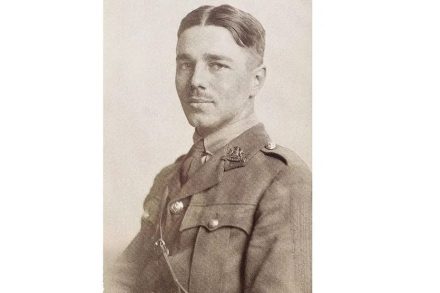
Here is the opening of a sonnet written by Wilfred Owen in the spring of 1911: “Three colors have I known the Deep to wear;/ ’Tis well today that Purple grandeurs gloom.” Owen was eighteen and had just been on a pilgrimage to Teignmouth in England, where his hero John Keats had once stayed. The kindest thing to say about this poem is that it is heavy with the influence of Keats. Six years later, in a seaside hotel requisitioned by the army and waiting to be sent back to the Western Front, he begins a poem like this: “Sit on the bed. I’m blind, and three parts shell.” This looks so simple. The monosyllables carry the meter without fuss; “shell” here means both munitions and protection.

Owen

Ernest Hilbert weathers the storms of life and fatherhood

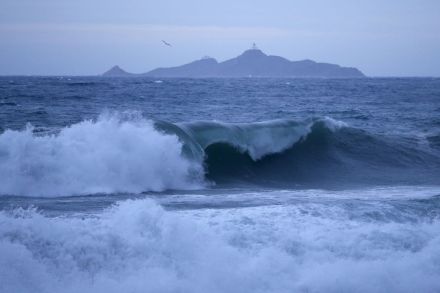
Storm Swimmer, Ernest Hilbert’s fifth collection of poems and winner of the 2022 Vassar Miller Prize in Poetry, is obsessed with bodies of water, especially the ocean. Even before the book begins, Hilbert declares this preoccupation through three sea-based epigraphs, running a wide gamut from Apollonius of Rhodes to Rachel Carson and Iris Murdoch. Over the forty-four formally various and adept poems that comprise this ninety-page, seven-section text, Hilbert engages repeatedly with different aspects of the oceanic to dazzling effect. Often he effects our encounter with the sea through the experiences of the swimmer, who almost always is a struggling figure. Sometimes — as in the case of the title poem — he must contend with the weather: “Without the sun the sea is tangled steel.

Hilbert

A quiet delight

What would you do if you looked out of your window expecting to see the neighbor’s cat, and instead were presented with a groundhog in its place, “waddle-thieving” your tomatoes and “taking such/ pleasure in the watery bites”? Ada Limón’s speaker, in the opening poem of her new collection, The Hurting Kind, is not angry at this “all muscle and bristle” tomato-thief. The groundhog is an embodiment of all she cannot have: an animal, natural freedom that inspires her to ask, “Why am I not allowed/ delight?” ...A stranger writes to request my thoughts on suffering. Barbed wire pulled out of the mouth, as if demanding that I kneel to the trap of coiled spikes used in warfare and fencing.

limón

A gay fandango

Usually, it’s poets who chance their arm with a novel. Rare is the established novelist who switches to verse. This could be because, while poetry is technically daunting with its rhyme and meter, the novel is apparently the easiest of all forms, without even the conventions and directions of the most basic screenplay. In the nineteenth century, Thomas Love Peacock was the most successful poet to turn to fiction, but in our own times poet-novelists rank among the most talented: Sylvia Plath, Ben Lerner, Vikram Seth, Craig Raine, Grace Nichols. Now, after half a century of writing superb novels, the English author Paul Bailey, well into his eighties, is publishing his second book of poems.

Bailey

Who knew that Arabic has more than 30 words for wine?

You know you’re in good hands when the dedication reads: ‘To the writers, drinkers and freethinkers of the Arab and Islamic worlds, long may they live.’ Abu Nuwas was all three, and a complete hoot. Why he is so little known in Britain should be a mystery. But outward-looking as we are as a nation, we remain peculiarly parochial in our literary tastes outside the Western canon. Born in the late 750s in Ahvaz, Abu Nuwas came to Baghdad during the reign of the Abbasid caliph Harun al Rashid in what was Islam’s golden age. In and out of favour as much as he was in and out of prison, he led a free-spirited, wine-drenched, sex-filled life, recorded in electrifying verse.