Book review – letters

Battling the elements – Claude Monet’s litany of anguish

From our UK edition

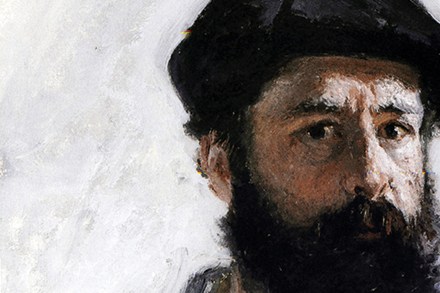
For a painter we acknowledge as a master of atmospheric effects and ever-changing light, whose early work ‘Impression, Sunrise’ sparked the artistic revolution that became Impressionism, Claude Monet (1840-1926) spent an awful lot of time complaining about the weather. He was obsessed by it, cowed and crushed by it, inspired by it to flights of genius, and its vagaries would become the intrinsic focus of his art: ‘I have just returned, covered in mud and soaking wet, the weather is so awful it is impossible to do any work’ is a constant grizzle. He seethes with frustration as he is forced to make constant changes as everything keeps growing and getting greener... In brief, because of these changes, I am following Nature without being able to capture her...
John Updike’s letters overflow with lust, ambition, guilt and shame

From our UK edition

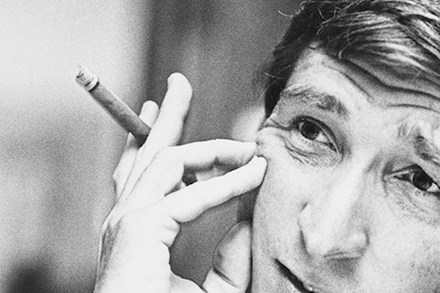
When John Updike died in 2009, aged 76, he left behind the last great paper trail. Novelist, short story writer, poet, essayist and art critic, he published with unstoppable fluidity in every genre. The sheer tonnage of his 60-odd books has now been augmented by A Life in Letters, a comparatively small sampling of the 25,000 or so epistles he sent out over the course of his life. This unwieldy volume serves up about 700 of them. I say he wrote with unstoppable fluidity (it was David Foster Wallace who dangled the question ‘Has the son of a bitch ever had one unpublished thought?’), but I should add that the letters and postcards (Updike loved a postcard) contain more than just pretty phrases.

The making of William Golding as a writer

From our UK edition

It is hard to believe that the 1983 Nobel Prize in Literature would have been awarded to the author of titles such as The Chinese Have X-Ray Eyes, Here Be Monsters or – yes – An Erection at Barchester. But if William Golding had had his way, so it might have proved. Charles Monteith, his loyal editor at Faber & Faber, saved him from himself; and thus it was that those books were called instead Pincher Martin, Darkness Visible and The Spire. For whatever reason, Golding thought himself a monster and his journals seethed with self-disgust Even Golding’s first and most famous novel, Lord of the Flies (1954), started life as Strangers from Within. Its publishing history is almost as well known as its plot (of boys stranded on an island turning savage).