Bolivia

Bolivia votes for ‘capitalism for all’

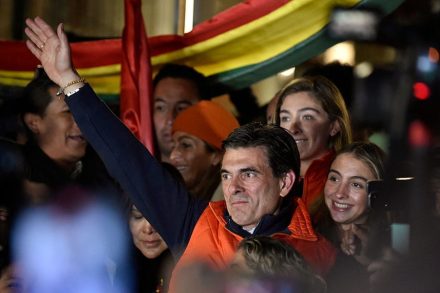
Bolivia has taken a decisive turn to the right after the Christian Democratic Senator Rodrigo Paz won the second round of the presidential election after years of left-wing rule left the country’s economy in chaos. Paz, 58, narrowly beat another right winger, Jorge "Tuto" Quiroga by 54.6 percent to 45.4 percent to take the presidency in the second round run off. He will be inaugurated on November 8. The landlocked country had been ruled by the leftist MAS (Movement Towards Socialism) party since 2006, which enjoyed enormous support from Bolivia’s indigenous Indian majority.
Bolivia

Trump’s big Bolivia opportunity

After nearly two decades of reign over Bolivia, the Movement Toward Socialism (MAS) party was banished at the ballot box on August 17. Its fall is a dramatic political realignment to the right for Bolivians, and a rare opportunity for the United States to reform relations with a geopolitically critical nation. As one expert, Leonardo Coutinho, told us, “The Trump administration can not only contribute to the restoration of democracy but also play a central role in dismantling a fully functioning narco-state.” Despite its 25 percent inflation rate and a 93 percent debt-to-GDP ratio, Bolivia is rich in natural resources, boasting some of the world’s largest lithium reserves, making it an attractive target for both American and Chinese grand strategies.

Socialism ends in Bolivia after two decades

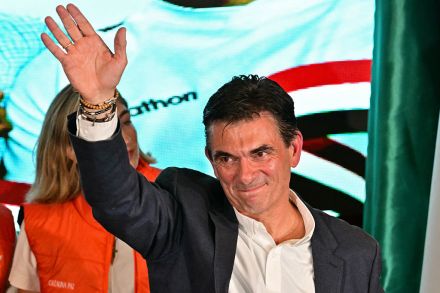
Bolivia is to be treated to a nail-biting run-off this autumn between two conservatives in the race to be the next president after the spectacular collapse of the socialist movement that has dominated the landlocked state for the past twenty years. A presidential race between two right-wingers is unusual in Latin America whose countries in recent years has been largely run by democratically elected leftists after the fall of the brutal military dictatorships that ruled so many states in the 1970s and 1980s. The second round of Bolivia’s presidential race will be decided on October 19th between the veteran former President Jorge "Tuto" Quiroga, 65, who gained 26 percent of the poll, and his center-right rival Rodrigo Paz Pereira, 57.

The Pink Tide returns to Latin America

As the dust settled on Jair Bolsonaro’s seismic victory in Brazil back in 2018, one might have spared a thought for those dedicated to the cause of international socialism. Having bathed in the glory of the so-called "Pink Tide" and the commodities boom of the early 2000s that allowed socialist governments such as Hugo Chávez's Venezuela to seemingly prosper, any hopes that Latin America would forever unify in the cause of left-wing anti-imperialism seemed well and truly dashed. In many of the continent’s wealthiest countries, right-of-center politicians had swept to power with a view to restoring their nation’s former glory. These included Bolsonaro in Brazil, Sebastian Piñera in Chile, Ivan Duque in Colombia, and Mauricio Macri in Argentina, among others.