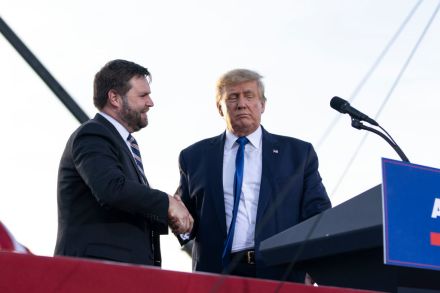
Blake Masters

Will Republicans learn from the midterms?

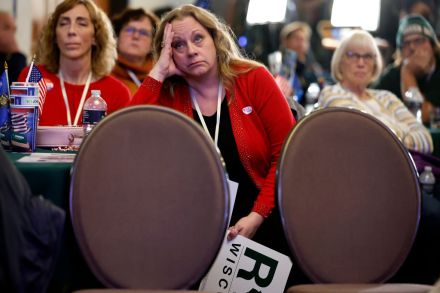
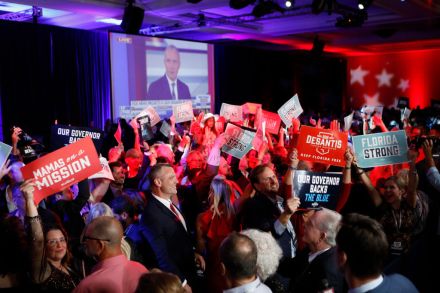
The 2022 midterm elections consumed more than 16.5 billion real American dollars. They featured thousands of candidates and the most expensive Senate race in history, resulting in the election of Democrat John Fetterman from Pennsylvania. Millions of viewers across the country tuned in to watch election-night returns in anticipation of a promised red wave that never came. The 2022 midterms were the political equivalent of the Red Queen’s race — a massive effort, all to end up pretty much back where you started. Post-election recriminations were complicated by how well Republicans actually did. They massively increased their turnout and won the House of Representatives. They saw wide margins of victory by incumbent governors in Florida, Georgia, Ohio and Texas.
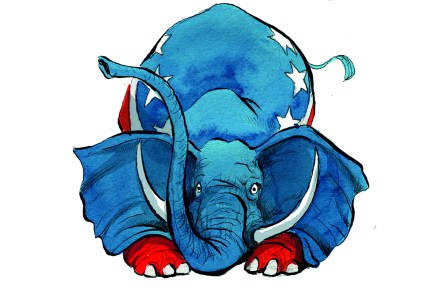
republicans

One failed Republican autopsy was enough

The news that Republican National Committee chairwoman Ronna Romney McDaniel is planning on conducting an "autopsy" of the 2022 election brought horrible political flashbacks to a decade ago. That was when the post-2012 election autopsy of Mitt Romney's failure gave the GOP all the wrong lessons about what was making them lose. You might remember that 2012 autopsy. It was the one that prescribed moving left on immigration policy as essential to appealing to Hispanic voters. As a now-infamous three sentences put it: We are not a policy committee, but among the steps Republicans take in the Hispanic community and beyond, we must embrace and champion comprehensive immigration reform. If we do not, our party’s appeal will continue to shrink to its core constituencies only.

Why the counting in Arizona is taking so long

“What’s the problem with Arizona?” I’ve been asked this question countless times in the past week, as I was after Election Day 2020. That year, it took nine days for major media organizations to call my home state for President Joe Biden. This time around, the major races were called after six, but several down-ticket contests still hang in the balance. Friends as far away as Hungary and Brazil asked how their entire nations can count votes in a few hours, while it takes Arizona a week or more. Not to mention Floridians, where races were called an hour after polls closed. Back in 2000, the Sunshine State was the electoral laughing stock. Now, it’s Arizona’s turn. Boy, did we earn it. Two decades ago, Florida’s presidential tally between George W.

arizona

This election was no loss for Trump

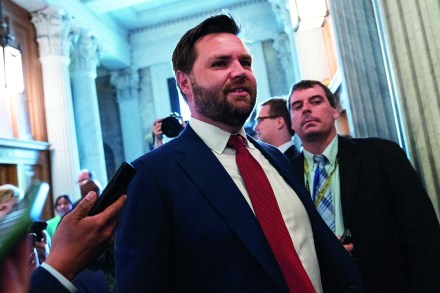
If conservatives interpreted Barry Goldwater’s defeat in 1964 the way Trump supporters are being told to interpret the 2022 midterms, there would be no conservative movement today. Of course, the 1964 election was an actual defeat, while this year’s elections were an advance for the new Republican right, which succeeded in its first task — gaining power in the GOP — and has strengthened its hand in Congress. The right has picked up a Senate seat with Ohio’s J.D. Vance, and Republicans look likely to control the House of Representatives come January. The GOP won the majority of votes cast in House races, nearly 52 percent overall. The official narrative of the election is meant to drive the right to suicide.

mitch mcconnell

We can blame Mitch McConnell, too

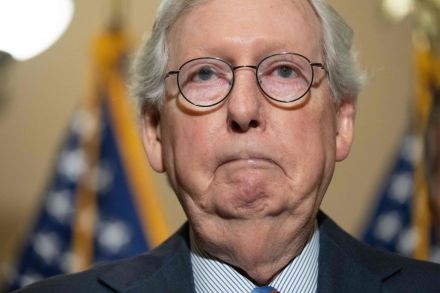
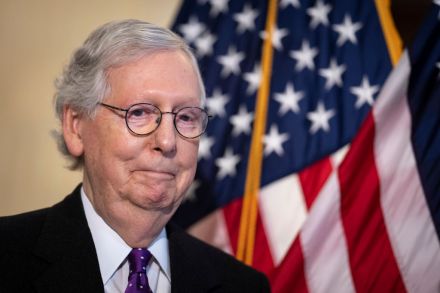
So now it's time to figure out who to blame. The post-election spin from the world of Mitch McConnell is that the GOP's failure to flip the Senate is on Donald Trump and National Republican Senatorial Committee head Rick Scott, and that candidate selection and expenditures are the reason that we don't have a Republican majority in the upper house. For anyone who paid attention, this doesn't pass the smell test. In the wake of a number of fractious primaries, GOP Senate candidates essentially went dark in the summer, their ad budgets expended and without the resources to get back on the air. Meanwhile, Chuck Schumer and the DSCC defined the Republican outsiders for a new audience of general election voters.

How did I get the midterms so wrong?

How wrong can you be? About as wrong as I was about the character of the midterm elections. I thought there would be a red wave, fueled in part by high-octane orange fuel. Clearly I was wrong. It is no consolation to know that I was hardly alone in my assumptions. Nor is it much consolation to hear from Donald Trump that it was a “GREAT EVENING” because there were “174 wins and nine losses.” I didn’t check his math, but even if accurate it is obvious that there was no red wave. Several of his high-profile candidates lost, most conspicuously Mehmet Oz in Pennsylvania. The fact that he lost to a man who is ostentatiously a mental incompetent added insult to injury.

midterms

Blake Masters grows up

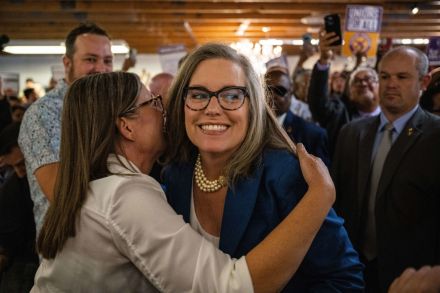
In the clusters of billboards at intersections in Phoenix, positioned to grab the attention of drivers waiting for the lights to change, one candidate’s signs stand out. In a familiar red-white-and-blue collage of names, stars and stripes, the crisp bold-type white lettering on a black background reads: “BLAKE MASTERS FOR SENATE.” The monochrome placards are one of many conspicuous displays of disruption by Masters, the thirty-six-year-old Peter Thiel acolyte hoping to topple Arizona Democrat Mark Kelly. The video with which he launched his campaign last summer was starkly shot and melancholic: the Sonora desert at dawn and a synth-y soundtrack, not the in-your-face, truck commercial aesthetic that is par for the course on the right these days.

blake masters

How the midterm polls became Democratic fan fiction

Psephologists of the world unite: you have nothing to lose but your fibs! I write toward the end of September, when many pollsters are still treating their prognostications as a form of fan fiction. For example, one poll has star trooper Mark Kelly ahead of Blake Masters by 6.2 points in the Arizona race for US Senate. That, ladies and gentlemen of the jury, is ridiculous. Punditry isn’t prophecy, but mark my words: Blake Masters, absent some intervening catastrophe, is going to win that race and win convincingly. I am going to stick my neck out and say the same about John Fetterman and Mehmet Oz in the Senate race in Pennsylvania. “The polls” have Fetterman ahead by 4.5 points.

pollsters

Where the Tea Party went wrong

In the world of American politics, 2010 feels like a very long time ago. The wave of Tea Party candidates swept into office in response to the overreach of Barack Obama belonged to a party that had as its champions the likes of George W. Bush, John McCain and Mitt Romney — all people who would ultimately be rejected by its nominee in 2016. The Republican Party of 2010 nominated and elected a swath of candidates bent on changing Washington. They were elected in states as diverse as Kentucky, Florida, Wisconsin and Utah. And they represented a push designed to shift the party, to transform what it did in the capital. They advocated for change that would be long-standing, not just a brief change in personnel.

tea

Trump flails around for a lifeline

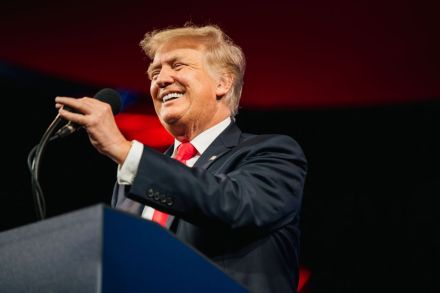
So the big guy wants a donnybrook then. It began with Lindsey Graham announcing on Fox News a day or so ago that there will — not may — be “riots in the streets” if Donald Trump is indicted by the Justice Department. Trump then reposted Graham’s remark on his badly failing social media outlet Truth Social, which, like most of his ventures, appears to be headed for bankruptcy, only this time there’s no Papa Trump to show up at the casino to buy a stack of chips to bail out the scapegrace son. Now, Trump has gone on something of an internet bender, indulging his thwarted Twitter impulses by posting over sixty times on Truth Social. If the venture goes belly up, it won’t be because Trump ignored it. As Trump tries to seize the spotlight, the GOP is squirming.

Mitch McConnell isn’t going anywhere

Just a few months ago, Blake Masters was strongly criticizing Republican Leader Mitch McConnell, expressing hopes, as other conservative candidates have this cycle, that he would receive a viable challenge to his Senate leadership after November. But on Friday, Masters was sounding a different tune, outright hoping that McConnell would back his campaign in the Arizona Senate race as the Senate leader has for J.D. Vance in Ohio. “I’ll tell Mitch this to his face,” Masters said during a GOP primary debate in June. “He’s not bad at everything. He’s good at judges. He’s good at blocking Democrats. You know what he’s not good at? Legislating.” On Friday, Masters predicted McConnell will get another term as GOP leader and no Republicans will challenge him.

A GOP of Trump’s choosing?

With the collapse of Liz Cheney's political career in Wyoming, Donald Trump's supporters are fully ensconced in the vast majority of critical candidacies headed into November. He and his supporters have remade the GOP, at least for the moment, into a party devoted to the Trumpian America First agenda and running on that set of priorities — at least when it comes to the lip service they give to border concerns, trade, anti-globalism and culture war issues. But will this be a Republican Party that actually delivers on these priorities should they receive voters' endorsement in November? That’s a more questionable proposition. The core problem that many traditional GOP forces have with a Trumpian agenda is one of prioritization, not of positioning.

gop

Republicans want populism but how much?

With last night's primary elections, the story of the Republicans' risky approach to the 2024 election is clear: GOP voters want a party that is populist, but they are at odds over what kind of populist that needs to be. The media's framing of the 2024 narrative has been clear from the outset, and as per usual it's the framing preferred by the Democratic Party. The entire lens of definition is Donald Trump. His endorsements supposedly reign supreme over a beholden GOP electorate, and this is leading them to nominate extreme, flawed, "election-denying" candidates who put their chances of taking the Senate and key battleground governorships at risk, even in what more honest pundits allow will be a wave year for Republicans in the House.

Meet the CRT grifters

The American right nominally has the support of half the country, but it is its own persistent self-inflicted curse that it appears far weaker and smaller than that. Despite having more than 70 million voters, the right struggles to get them outdoors holding a sign for virtually any cause. At the drop of a tweet, 5,000 liberals can be mustered in almost any city for even the most insane of causes: abolishing police, abolishing Trump, abolishing the internal combustion engine, pretty much anything. If you can think of it, a liberal has probably marched over it. Conservatives, on the other hand, are rather languorous even for important issues and those that directly impact their lives. Cities turning into vast homeless camps? Illegal immigration?

crt matt walsh

Blake Masters: ‘Experience holding elected office forever is overrated’

Another right-wing populist funded by Peter Thiel is trying to reach the halls of Congress by 2022. Blake Masters, the COO of Thiel’s investment firm, announced his candidacy for the US Senate in Arizona last week. Masters wants to take action against ‘Big Tech’ and corporations that ‘think they’re too big for America’. Masters's populist agenda is similar to that of another Senate candidate, Hillbilly Elegy author J.D. Vance, who reportedly received $10 million from Thiel. In an interview with The Spectator, Masters explained how he intends to reform US manufacturing policy, prioritize onshoring, restrict legal and illegal immigration and engage in a trade war with China, if necessary.

blake masters