Birth rates

The rise of toxic femininity

From our UK edition

At the end of last year, the government announced a programme designed to tackle the radicalisation of young men in schools. Teachers will be trained in how to spot misogyny in the classroom and children deemed to be at fault sent on ‘toxic masculinity’ courses – an attempt to ‘re-educate’ white working-class boys that’s guaranteed to spawn 1,000 memes. It was billed as a key component of the government’s strategy to halve violence against women and girls by 2035. Don’t worry about the grooming gangs – the real predators are the knuckle-dragging teenagers, as per Adolescence, which was festooned with Golden Globes by the Hollywood Foreign Press Association last week.


Letters: Israel’s attack on Iran was no surprise  

From our UK edition

Moral support Sir: All of Tim Shipman’s reasons for the PM’s reluctance to support Israel sound outwardly plausible, though, from my experience, the spook excuse, ‘The CIA wants us to keep the embassy open’, is plainly specious. Mossad is clearly all over Iran and they’re not relying on an embassy (‘Starmer’s war zone’, 21 June). There is concern over what might follow a regime change, but no one is asking what happens if we don’t support Israel and the US. Instead there is some cobbled-together ‘de-escalation’ which leaves a diminished but still viable theocratic terror regime in place, but one now consumed by a desire for existential revenge.

There will never be a Trumpian baby boom

The Trump administration has been tossing around the idea of a $5,000 “baby bonus” to help encourage young marrieds to have kids. Elon Musk’s Genghis Khan-like IVF efforts aside, the national birthrate is in decline, leading to bureaucratic fears of a population collapse. If this bonus were to happen, it would give fresh meaning to the term “stimulus.” But there will never be a Trumpian baby boom.   You hear all kinds of excuses for our procreative decline: rampant pornography, sex robots, institutionally encouraged gender dysphoria, microplastics in the water. But the major reason that American people aren’t having kids? They’re too expensive. The baby bonus floated this week is supposed to address that, but there’s one problem: it’s not nearly enough.

gender reveal baby boom

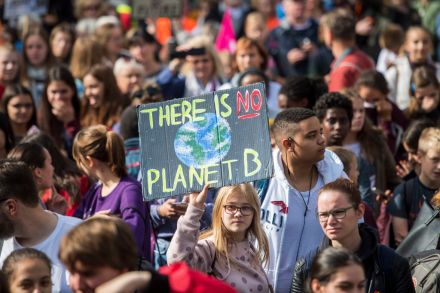
Panicking over the planet and population is pointless

One sign of moral panic is that when the facts change, the fears remain the same. In the 1970s, the Washington Post, TIME and Newsweek stoked fears of “a new ice age.” As soon as scientists updated their models to show a trend in the other direction, “global warming” became as threatening as global cooling. And when winters stubbornly kept happening and the direst predictions of new-age prophets like Al Gore failed to come to pass, the whole thing was rebranded as “climate change.” Whatever the label, and whatever the underlying phenomenon was thought to be, the moral implication remained the same — human beings were ruining the earth and must curtail their comforts to save the planet. Bad weather used to be God’s punishment for human sinfulness.

panic

Who’s afraid of population growth?

From our UK edition

In ten years’ time, there’s a good chance that the main concern in the western world will be the threat of population collapse. Fertility rates are falling everywhere and no government has found a way of reversing the trend. Plenty have tried. South Korea has so far spent $200 billion on tax breaks and lowering childcare costs and has succeeded only in beating its own record for the world’s lowest birth rate, year after year. In Italy, the situation is close to a crisis, and in France it’s not much better. If this continues, the welfare state model, which depends on a decent worker-to-pensioner ratio, will collapse. There will not be enough tax revenue to finance pensions.

The African exception to the population bust

Earlier this year, New York Times columnist Ross Douthat wrote a provocative piece making the case that there are two kinds of people in the world: “Those who believe the defining challenge of the twenty-first century will be climate change, and those who know it will be the birth dearth, the population bust, the old age of the world.” Douthat made this bold claim not just because he believes the population bust is the more important of the two challenges, but because, in his view, it is being comparatively neglected due to all the attention paid to irrepressible climate doomsayers.

african population

My role in our demographic disaster

When you come from a family of a certain size — in my case, one with eight children — you often get asked: ‘How many kids do you want?’ Innocent on its face, this question is carefully phrased in terms of my personal preferences, and I’m happy to answer: I’ll take what I can get! It’s an easier question every year, because biology has largely made the decision for me. My mother had four kids by the time she was my age, and as of this writing I don’t even have a boyfriend. Childlessness at 30 has its inadvertent blessings, of course: I get lots of rest and exercise; I spend my disposable income on haircare and loungewear and coffee, and the most stress I regularly endure is over WiFi connectivity.

children