Betting

High stakes and chips

From our UK edition

According to the subtitle, this is a collection of ‘short stories of long nights at the poker table’. Were that the case, this would be a more enjoyable book, but there are too many stories here that stray from the baize. As a game, poker is relatively simple. The deal gives you your ‘hole’ cards, the ones you and no one else can see. They determine whether you play the hand or not. The betting follows as cards are further distributed. One by one players drop out, hopes dashed. Finally someone wins, not necessarily with the best hand. Beginning, middle, end. Poker has a richer literature than any other card game. Its attraction to writers is in its inherent suspense and the tension that creates. An old poker saw maintains that you play the players, not the cards.

The turf | 28 September 2017

From our UK edition

Racing is an expensive sport to stage. Courses and grandstands have to be maintained, health and safety regulations have to be observed. Human and horse ambulances have to be provided, turnstiles have to be manned and, to maintain the ‘integrity’ of a much gambled-on sport, stables have to be guarded, and photo-finish and race-patrol cameras have to be provided. Recognising this, as they sought to clean up gambling laws in the 1960s, our politicians introduced a rare example of ring-fenced taxation: they sanctioned a levy system on bookmakers to make them responsible for producing a significant contribution to racing’s costs. By 1978 the Gambling Commission was complaining that racing had become ‘addicted to subsidy’.

Jeremy Corbyn is now bookies’ favourite to be next UK Prime Minister

From our UK edition

Well, this is going well. As the Tories pretend that all will be well under a reprogrammed Maybot, the expectations outside SW1 are rather different. Let's say someone moves against her, the other candidates start to move too – and before you can say Boris the party has formed another circular firing squad. What happens? What if the Tories can't keep it together and there's another general election? The bookies have decided: Jeremy Corbyn is more likely than anyone else to succeed Theresa May. Now the bookies get things wrong almost as regularly as pollsters, but expectation matters a lot in politics – and business. If most Tories think Corbyn is close to power, then this explains their good behaviour.

Low life | 9 February 2017

From our UK edition

Dr Ivan Mindlin was the in-house casino doctor at the Stardust in Las Vegas in the early 1970s. Mention any of the main characters in Nick Pileggi’s true-crime classic Casino: the Rise and Fall of the Mob in Las Vegas and the Doc knew them well, including the central characters Lefty and Geri Rosenthal. The mob monster Tony ‘the Ant’ Spilotro he didn’t know personally. He went out of his way to avoid him in fact, he says. But he and Spilotro shared a maid who was forever complaining about the mess Spilotro and his Hole in the Wall gang made when they were relaxing at home. Doc took me as his guest to the splendid Blue Waters resort in Antigua last week while he negotiated a property lease with members of the government.

The turf | 19 January 2017

From our UK edition

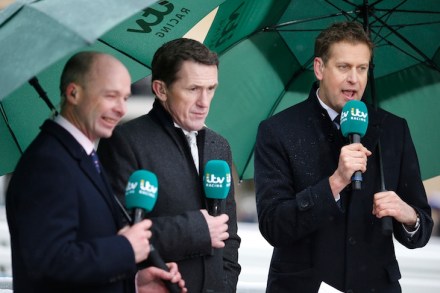
You had to feel for ITV’s new racing team on their opening day at Cheltenham. It was cold, wet and utterly miserable but they opted not to take refuge in a warm studio but to stay close to the action under their brollies, putting a brave face on things. During what I nowadays look back on as my misspent youth as BBC political editor, I once did the same. As I began a live interview for the Nine O’Clock News from an outside balcony at a Labour party conference, bursting to reveal some exclusive information, the heavens opened. I was drenched within 30 seconds but continued, only for the newscaster to cut me off after just one question with a brisk ‘Thank you, Robin Oakley in Brighton.’ Furious, I called the programme editor: ‘What the hell were you doing?

Old-fashioned values

From our UK edition

Bookmaking’s image has changed. Alongside the arrival of the betting exchanges, the evolution of the big names like Hills, Coral, Betfred and Ladbrokes into gaming operators rather than old-style bookmakers has seen the decline of the family firms where clients could be sure of the personal touch, total discretion and often half a point or so above the generally quoted odds. Most of the big firms have decided too that telephone betting is not for them, which is how I have (part accidentally) become — to Mrs Oakley’s surprise and potential alarm — a client of Fitzdares, a bespoke operation catering mostly for high-rollers and happy to be described as ‘the Annabel’s of bookmaking’.

The perks and pitfalls of Twitter for political gamblers

From our UK edition

On Sunday morning Channel 4’s Michael Crick put out the following Tweet about Steven Woolfe, the Manchester-born barrister and MP who was then the hot odds-favourite to become the next UKIP leader. https://twitter.com/MichaelLCrick/status/759749009992880128 As a political gambler this was massive news with the potential for relatively risk-free profits. For at the time Woolfe was rated as 72 per cent chance on the online Betfair betting exchange which, unlike traditional bookmakers, offers the opportunity to bet that a particular outcome will not happen. In effect you can become the bookie laying bets that others want to place.

On the money | 22 June 2016

From our UK edition

Forced to depart Ascot earlier than usual to fulfil a cruise lecture booking on the fjords, I hadn’t reckoned with June in Norway. It turned out to require anoraks and sweaters rather than shorts and suntan oil, although Mrs Oakley and I were better prepared than one lady passenger: having travelled without a scarf, she confessed that it was indeed her deftly folded nightie she had wrapped around her neck for warmth. At least a bit of book-signing went without a hitch, better than the time a young lady asked me to write ‘To Bubbles with love and kisses’ and then, when asked to pay for the signed volume, demurred, saying that she thought the books came free with the talk.

Brexit odds – live updates on percentage chance of UK leaving the EU

From our UK edition

With opinion polls showing dazzling range - from Leave being 4 points ahead to Remain 13 points ahead - it's worth looking at the betting markets. The below is a live chart, which will update every time you revisit this page. It updates several times throughout the day. At the time of writing, the graph underlines a basic point about referenda: no matter what the polls say, the status quo has a huge in-built advantage. Or, at least, a lot of people are betting that voters will stay with the status quo. Mind you, this time last year, the betting markets gave David Cameron a 10pc chance of winning a majority. Greater than the 0.

Low life | 23 March 2016

From our UK edition

I shared a taxi from Cheltenham station to the house party in an outlying village with a stripper. Finding a taxi in Cheltenham during the Festival is as difficult as picking a winner in the Bumper, and we were amazed and pleased to have got one so easily. One wouldn’t have guessed that the dark, petite young woman, thickly wrapped against the cold night air, was a stripper, but she was proud enough of her occupation to talk about it on the seven-furlong ride between the station and the ‘gentleman’s club’ where we dropped her. She’d come all the way from Cardiff, she said, to dance in a cage from 10 p.m. until 6 a.m., and she very much hoped it was going to be worth the effort financially.

In the know

From our UK edition

Master golfer Gary Player had the perfect retort when a 19th-hole pundit on his fourth G&T declared, ‘It’s all down to luck really.’ ‘Of course,’ replied Player. ‘But it’s strange: the harder I practise the luckier I get.’ Betting is much the same: a bit of luck helps but good information can improve your luck. When it comes to food I have access to the top gen: Mrs Oakley may be pencil-slim but she devours the writings of top chefs, cooks like an angel and sniffs out good new restaurants like a truffle-hound after a tuber.

My afternoon in a Gallic version of Betfred

From our UK edition

For the Cheltenham Festival I received the customary tipster circular from my pal Soapy Joe. Soapy’s most convincing credential as a horse-racing tipster is that he is banned from every high street bookmaker in the land because he takes too much money off the poor souls. I slept with him once. I woke up in an upstairs bedroom of a Gloucestershire stately home on the second morning of our week-long Cheltenham Festival house party, pieced together where I was, and why, and saw, sitting up in the next bed, Soapy in his stripy pyjamas listening to the commentary of a horse race in Dubai or somewhere on a pocket radio. ‘Good morning, Soapy,’ I said. ‘How did you get on yesterday by the way?

It’s about time a man won the Booker again

From our UK edition

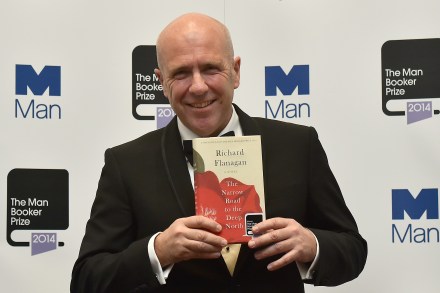
I bet fifty quid on Howard Jacobson winning the Man Booker. My original bet was actually on a ‘Yes’ vote below 40 per cent in the Scottish referendum and Bet365 then gave me £100 to bet on something else. I spent half of it on Jacobson and the other half on the Conservatives winning the last by-election. The less said on that the better. My reasoning for plumping for Jacobson made more sense. Anti-semitism is in fashion at the moment, so a novel about a mysterious holocaust seems timely; he's a tried and tested literary heavyweight, so there'd be no accusations of dumbing down; and he’s a man - and after wins from Hilary Mantel and Eleanor Catton, it felt time to redress the gender balance.

Labour’s sports betting levy will hit poor punters

From our UK edition

Harriet Harman has set the hare running this morning by proposing a levy on sports betting. The shadow sports minister Clive Efford said: ‘We believe it is right that businesses that make money from sport should contribute to sport. We are consulting on whether we should introduce a levy on betting, including online betting, to fund gambling awareness and support for problem gambling but also to improve community sports facilities and clubs.’ Harman and Efford have also singled out the Premier League. They propose that its voluntary levy on broadcast deals (worth £5.5bn) be turned into a ‘proper tax’, which would raise £275m for grassroots football. The improvement of grass roots sport is a noble ambition, and one supported by the gambling industry.

Uxbridge set to be destination Boris?

From our UK edition

Mr S likes a flutter. His eyes were drawn to the latest speculation about Boris’s return to the Commons. Ladbrokes are offering 3-1 that the Blond Bombshell will be selected in Uxbridge, which is to be vacated by John Randall at the next election. Uxbridge is hardly K&C (Mrs S is agin it); but, it is a safe Tory seat in the capital: Ladbrokes have it 1/50 on for the Tories. Perfect for Boris, you might think… Here are the latest odds on Boris, courtesy of Ladbrokes: Where will Boris stand in 2015?

How to win the World Cup (in the betting shop)

From our UK edition

Summer is a difficult time for serious investments — it’s hard to be rational when hot — so why not try betting on the football world cup instead? Thanks to technology, sports gambling can feel a lot like investing these days. Internet betting exchanges are not bookmakers, but trading platforms. Any adult can buy or sell a bet — or position, if you prefer — and ‘trade out’ at a profit or loss before the match, race, or tournament even begins. Which means you are gambling less against sporting chance, more against the human whims of the market. Let me give you an example.

How to beat a robot bookie

From our UK edition

What does it mean these days to beat the bookie? Many of us like to imagine that winning a bet still involves trumping some wizened geezer and his chalkboard. In most cases, however, today’s successful punter has had to get the better of a mega computer. Gambling markets, like financial ones, now run on Automated Trading Systems. These are outrageously sophisticated algorithms which mine billions of pieces of information in order to calculate, with depressing accuracy, the probability of various outcomes. Sports ‘books’ are markets made by software programmers and managed by traders. And the traders just sit and watch the screens, like air-traffic controllers, only intervening if the system malfunctions.

Who would benefit from a ban on FOBTs?

From our UK edition

I wrote a piece about the Fixed Odds Betting Terminals uproar in the magazine this week, and it has prompted some angry responses by email and over social media. I'm told that I didn't treat problem gambling with sufficient seriousness. I'm not sorry about that, I'm afraid: I think it's silly to be too serious about the vices of others. My point was that the political and the media classes are having something of a moral panic about FOBTs  — and as always with moral panics, the political and media classes don't really know what they are talking about. I doubt Ed Miliband or Tom Watson, who both seem dead against FOBTs, have ever spent more than 10 minutes in a bookie.

A FOBT ban could be terminal for high-street bookies – and great for a Labour donor

From our UK edition

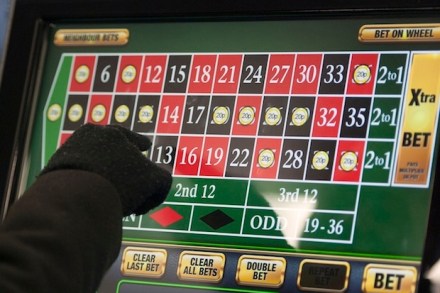
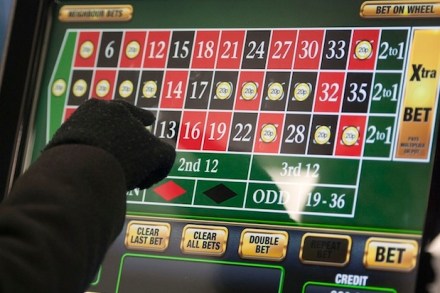
Hands up: who knows what a FOBT is? It stands for fixed odds betting terminal. No? Well, you should, because they are a serious menace to society. That’s what Ed Miliband says, anyway. FOBTs, you see, are those souped-up slot machines one can find in bookmakers’ shops all over the country, especially in deprived areas, usually next to Poundland. The most popular ones offer casino-type games, such as roulette, and have become notorious because of the speed with which they enable punters to lose large sums of money: up to £100 every 20 seconds, apparently. The Daily Mail likes to call FOBTs the ‘crack cocaine of gambling’, which makes them sound much more fun than they are.

Betting on the future of Scotland — Parris vs. Massie

From our UK edition

How would you bet on the outcome of the Scottish independence referendum? With Ladbrokes offering odds of 1/5 on a ‘No’ vote, its a much better return than any savings account. But should writers put a wager on something they can possibly influence? Matthew Parris discussed how he might bet with Alex Massie on our podcast last week — a conversation that has stuck in his mind. This was what Parris says on the matter in his Times column today (£): ‘Something came over me. Last Wednesday, in the middle of a debate about Scottish independence with Alex Massie, a Scottish columnist who writes for The Spectator and The Times, I was asked how I’d bet on the result of the September referendum. Obviously, I said, I’d bet on a No to independence.