Berlin Wall

John F. Kennedy’s trip worth remembering

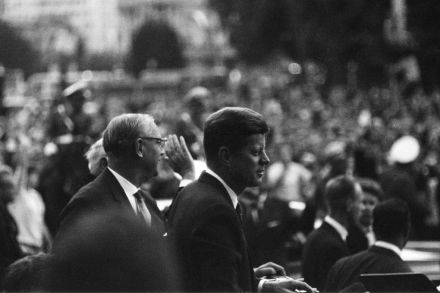
Sloppy Joe Biden may face strong political headwinds with just seven months to go before the first presidential primary, but at least he’s in good company. Assessing the Washington landscape in mid-June 1963, when John F. Kennedy set off on a European tour designed to bolster not only the NATO alliance but his own poll numbers, the British ambassador David Ormsby-Gore cabled back to London: He will be leaving behind a disquieting domestic situation, [with] economic troubles to the fore... The Negro leaders are beginning to talk about large scale civil disobedience on a nation-wide basis... Moreover, the racial crisis is causing new difficulties for [Kennedy’s] legislative program...

Kennedy in Berlin

Berlin as the unreal city

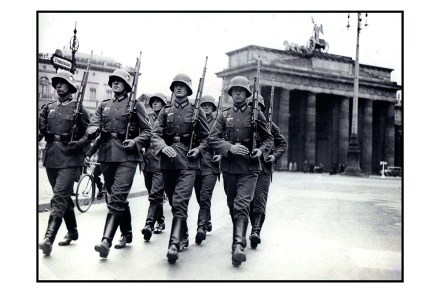
"Berlin has too much [history]." Sinclair McKay cites this rueful observation in the preface to his new book about the city. Given that he is not simply discussing Berlin between the wars, or during the second of those wars, or in the Cold War that followed, but all of it, this may come off as a cry for help. History may — in those words attributed to, well, take your pick — be “one damned thing after another,” but when it came to Berlin, those things hurtled through time in a horde, colliding, overlapping and refusing to form an orderly line. And, in Berlin’s case, they had a way of mattering. Not for nothing does this book’s subtitle refer to Berlin as “the city at the center of the world.” Bad news for a writer aiming, presumably, at a degree of concision.

berlin

Digging it

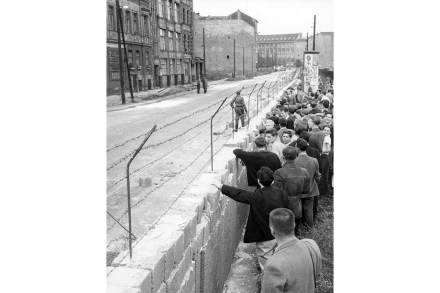
Censorship is censorship, whether it is the firing of a libidinous cartoon skunk or the starting of yet another Satanic panic over music videos that don’t promote Christian dogma. But when an authoritarian, militarist government imposes the censorship, it is far worse, making “Cancel Culture” look like Champagne problems. Tunnel 29, a podcast that chronicles a harrowing and heroic story of an escape underneath the Berlin Wall, renders hyperbolic any comparison of Soviet censorship to current American censorship, be it left-wing or religious. You don’t have to dig an underground expressway to watch old episodes of Looney Tunes while refilling your now-vintage bottle of Aunt Jemima with new syrup.

tunnel

Berlin has always been a Faustian metropolis

Each time I return to Berlin, the wonderful, awful city where I spent the best days of my misspent youth, I pay a sentimental visit to Grolmanstrasse, where my German grandparents used to live. There isn’t much left to look at. Their apartment block was destroyed in 1945 in the Battle of Berlin. The site where it stood is now occupied by a children’s playground. For me, that empty space seems to symbolize the way Berlin has changed — mainly for the better, but at enormous human cost. So much has vanished — not just the buildings, but also the people who inhabited them. For my children’s generation, Berlin is a party town. For me, it’s a city full of ghosts. It is these ghosts that keep bringing me back to Germany’s battered, bombastic capital.

berlin