Benito mussolini

The troubled relationship between Mussolini and his son-in-law

Like those of his wartime ally Joseph Goebbels, the diaries of the Italian fascist foreign minister Count Galeazzo Ciano (1903-44) have proved a mainstay of academic research into the frequently banal inner workings of the Axis dictatorships. Both men were entirely aware of their journals’ historical and commercial value. In 1937, Goebbels struck a lucrative deal with Max Amman, the Nazi Party publisher, for the release of his warped musings on race and politics twenty years after his death, which in the event came sooner than he might have imagined. Ciano in turn used his diaries to barter unsuccessfully for his life when arrested on charges of treason.

ciano

A tinpot Caesar

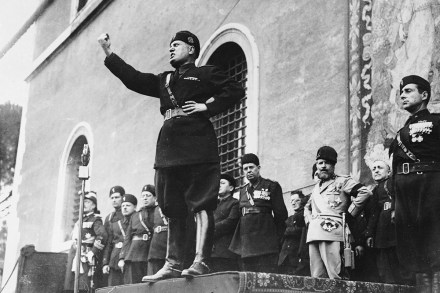
In 1919, an obscure political agitator called Benito Mussolini assembled a ragbag of Blackshirt diehards in the Lombard capital of Milan and launched the movement that was to become, two years later, the National Fascist party. The party took its name from the classical Roman symbol of authority — an ax bound in rods, or fasces. Once in power, Mussolini introduced the stiff armed Roman salute after the handshake was deemed fey and unhygienic. At times he wore a richly tasseled fez and thrust out his chin pugnaciously for the cameras. For all his posturing and demagoguery, Mussolini was widely admired in pre-war Britain, where Lord Rothermere’s Daily Mail routinely carried flattering portraits of him.

mussolini

Kingdoms of the wicked

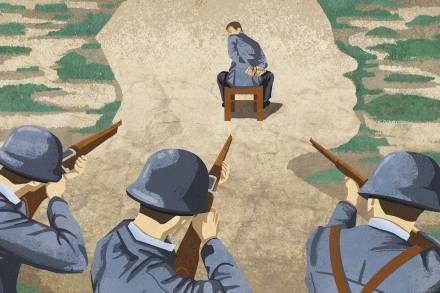
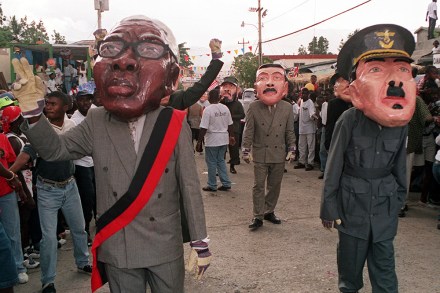
This article is in The Spectator’s January 2020 US edition. Subscribe here. Frank Dikötter has written a lively and concise analysis of the techniques and personalities of eight 20th-century dictators: Mussolini, Hitler, Stalin, Mao Zedong, Kim Il-sung (North Korea), François ‘Papa Doc’ Duvalier (Haiti), Nicolae Ceausescu (Romania) and Mengistu Haile Mariam (Ethiopia). As a comparative study of those individuals, it is enlightening and a good read. The title and parts of the foreword indicate that it aspires also to be a guidebook of dictator tactics. There are some weaknesses in this broader ambition. These eight men were not altogether uniform in their methods of obtaining, retaining or losing power, and certainly not in their abilities.

dictator

Impeach Boris Johnson

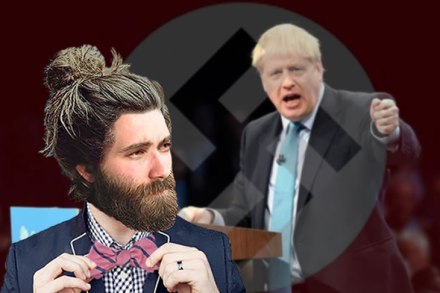
The UK has been plunged into further chaos under the fascist regime of Boris Johnson. He is our Trump. The similarities between these two dictators are staggering. Boris Johnson is a white male who comes from a privileged background, has an unruly mop of blonde hair, and blue eyes. These three aspects alone, like Drumpf, make him an ideal Aryan Poster Boy for the alt-right. Aside from the physical resemblance, Boris often wears suits along with a shirt and tie. He’s been known to stand in front of a podium and make speeches to large crowds. He uses Twitter. He travels in cars and planes. He appears on television and is often featured in the news. Now, tell me these things are ALL pure coincidence, I honestly dare you.

impeach boris

‘I’m fascinated by Mussolini’

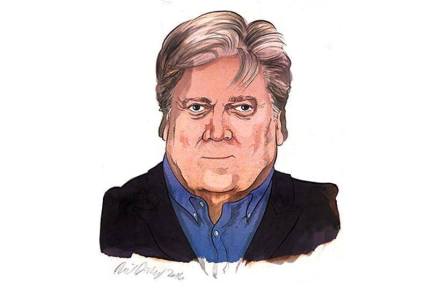
We are in a hotel suite at the Park Hyatt Hotel in Zurich when Stephen K. Bannon tells me he adores the fascist dictator Benito Mussolini. But let’s be clear. Bannon — as far as I can tell — is not a fascist. He is, however, fascinated by fascism, which is understandable, as its founder Benito Mussolini, a revolutionary socialist, was the first populist of the modern era and the first tabloid newspaper journalist. Il Duce, realising that people are more loyal to country than class, invented fascism, which replaced International Socialism with National Socialism. He was thus able to ‘weaponise’ — to use a favourite Bannon word — what the people wanted. Bannon is now touring Europe to weaponise what lots of European people seem to want, which is national populism.