Benefits

Ed Miliband vs the working class

From our UK edition

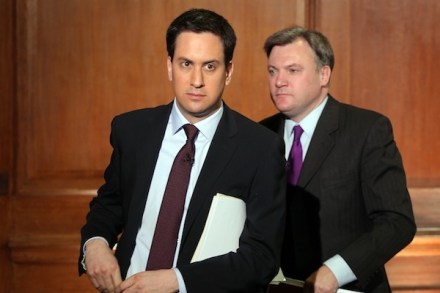
Who's on the side of the strivers? Is it George Osborne, who's cutting benefits in real terms for the next three years, which he defends as 'being fair to the person who leaves home every morning to go out to work and sees their neighbour still asleep, living a life on benefits'? Or is it Ed Balls, who's opposing the move as Osborne 'making striving working families pay the price for his economic failure'? Both men are convinced that their stance will help win the votes of low- and middle-income workers. At least one of them is wrong. Isabel has explained the sources of Labour's confidence. One is a YouGov poll released on Sunday, showing 42 per cent of 'C2DEs' (working class and lower) think benefits should rise at least in line with inflation.

Why Ed Balls is so confident about benefit wars

From our UK edition

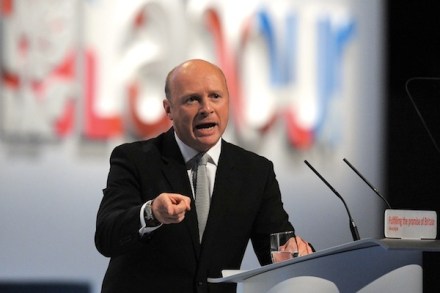
The debate over benefit uprating will run and run because both sides think they are winning. George Osborne thinks the public resent generous benefits rises. Liam Byrne and Ed Balls want to call this a 'strivers tax' and think blue collar workers will fall into their arms. Byrne told Coffee House yesterday that Labour will be hurt opposing to the Welfare Uprating Bill. I understand that the Shadow Cabinet reached its decision after YouGov's polling showing C2DE  voters  - the three lowest socio-economic groups - saying benefits should have been increased in line with inflation. Osborne's Bill would increase welfare by 1pc, behind expected inflation.

Liam Byrne interview: The welfare system is ‘completely out of whack’

From our UK edition

Liam Byrne is a modernising, Blairite Labour MP, and in case you were in any doubt about that, he conducts his interview with Coffee House sitting next to a framed photograph of him with Tony Blair. The party's Shadow Work and Pensions Secretary is well known for his modernising zeal, which has sometimes led him onto a collision course with his party grassroots and other MPs on the left. This week, though, he's on a collision course with the Conservatives, who hope they've managed to corner Labour into admitting it hasn't quite modernised its welfare policy enough to win voters back. The Welfare Uprating Bill, launched in last week's Autumn Statement, will see benefits rise by 1 per cent, rather than in line with inflation.

Will he, won’t he? Ed Miliband makes noises about benefits war

From our UK edition

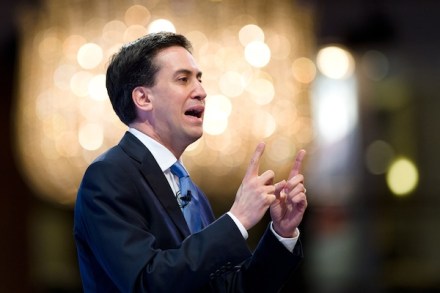
Ed Miliband is ready to wage war with David Cameron and George Osborne over the Welfare Uprating Bill, which will see benefits rise by 1 per cent a year, rather than in line with inflation. The Labour leader has been talking tough in the papers this morning, with a piece in the Sunday Mirror in which he says: 'We should be tough on the minority who can work and try to avoid responsibility. But there comes a moment when a government is exposed for who they are. That happened to David Cameron and George Osborne this week. 'They showed they are not fit to govern because they played political games with people's livelihoods. They said they were cutting benefits for the next three years and the mood music was that it was a way to punish the 'shirkers and scroungers'.

The strivers vs scroungers battleground

From our UK edition

Welfare will be one of the key battlegrounds at the next general election, and George Osborne's Welfare Uprating Bill will certainly be one way the Conservative party can prod Labour on what is a hugely awkward policy issue for the party. It accelerates the internal debate about how Labour can appeal to the electorate on the issue of welfare while staying true to its own core beliefs, and, Tory strategists hope, will cause some ructions. While the party appeared united in Manchester at its autumn conference in September, it faces hard times ahead as it tries to answer some of the big questions about what a Labour welfare state would look like.

A black, bloody insurrection of the hard-working, over-taxed and unbenefited

From our UK edition

If you want to understand the mood of modern Britain, James Hawes’s novels of middle class fury are not a bad place to start. Hawes’s heroes are middle-aged men, whose dreams have collapsed. They want the nice, “normal” middle-class homes and secure jobs their parents received as a matter of course. But Britain is not offering them normal anymore. Normal is a foreign country to which they can never return. They are harried and broke. They work in dead end teaching jobs, as Hawes once did. Their homes are in rundown streets, where they must pay vast amounts of money to live in a pokey dump. The moral of Hawes’s stories is that the puritan virtues of hard work and thrift offer no chance of escape.

The fiscal nimbyism that still terrifies the Tories

From our UK edition

If you're the tax personality of the year, as David Gauke is, the pressure's on when you give an interview to be as lively as possible. Gauke's interview with the House magazine today doesn't disappoint, with the Exchequer Secretary accusing those who oppose the child benefit cuts of 'fiscal nimbyism'. He says: 'I think there’s a lot of people who are in favour of reducing the deficit but then when it’s something that affects them there can be a degree of fiscal nimbyism. The reality is that every section of society is having to make a contribution. 'We can’t pretend that there can be sections of society which we can completely protect from deficit reduction.

Iain Duncan Smith’s latest welfare cut kite

From our UK edition

It is strange that the government has chosen to trail a speech by Iain Duncan Smith on an issue popular with voters on the same day as good economic news. The Work and Pensions Secretary has already reached an agreement with Chancellor George Osborne that it is possible to cut a further £10 billion from the welfare bill (when he originally said he would block those cuts), and is now starting to prepare the ground for some of those cuts to take place. He knows that while the public supports further welfare cuts, the Lib Dems will not without a credible package which ensures the rich are paying more. One of the proposals that Duncan Smith is flying as a kite today is limiting benefits paid to families with more than two children.

The Tories Vs Scotland

From our UK edition

Interesting comments from Ruth Davidson, the chairthing of the Scottish Conservative Party, about her fellow countrymen. Only twelve per cent of Scots, she says, contribute more to the exchequer than they take out in the form of benefits. “The rest lie around on filthy sofas in subsidised homes, watching daytime television while farting, mainlining heroin and stuffing their sad grey faces with pies full of regurgitated sheep gizzards and Windolene.” Actually, I paraphrase a bit there. She didn’t say all that stuff. She just said almost nine out of ten Scots take more in benefits than they generate in wealth. This is, she says, shocking, and the Scots have too great a sense of entitlement.

Lib Dem conference: Oakeshott calls for Cameron to take one for the team on universal benefits

From our UK edition

Nick Clegg's attack on universal benefits such as the winter fuel payment and free bus passes this afternoon was a nice little morsel of red meat to his party, as he said it would be 'difficult to explain' a failure to reform these payments when other benefits are being slashed. He told the World at One: 'My own view is for the future that it would be very difficult to explain - and it would be quite interesting if you could ask the Labour party for this, because they appear to be saying that at a time when people's housing benefit is being cut, we should protect Alan Sugar's free bus pass.' But I've just had a chat with Lord Oakeshott, who is impatient that the Lib Dems should be looking at this sort of thing while they are in government rather than discussing their next manifesto.

The one thing worse than universal benefits? Means-testing them.

From our UK edition

There’s nothing, but nothing, easier than for politicians to sound off about universal benefits, and sure enough, Nick Clegg was complaining on the World at One today about the iniquity of, as he says, paying for Alan Sugar’s bus pass. He was being asked about the sustainability of universal benefits and perks following Don Foster, one of his MPs, grumbling about it being absurd that someone like him is entitled to a winter fuel allowance. Mr Clegg went on to make clear that as part of the coalition deal for this parliament there wouldn’t actually be any fiddling with things like the fuel payment for oldies, but after that, these universal perks would be up for grabs.

Increased support for more spending, but also for benefit cuts

From our UK edition

'Support for an increase in public spending rises.' That's the headline generated by the latest British Social Attitudes survey results, out today. They show that the proportion of the population saying that the government should 'increase taxes and spend more' rose from 31 per cent in 2010 to 36 per cent in 2011 — the first such rise since 2002. Meanwhile, the proportion backing tax and spending cuts fell from 9 per cent to 6 per cent. Notably, the survey doesn't give the option of reducing taxes and spending more (ruling out, for example, Ed Balls' proposed combination of a VAT cut and increased infrastructure spending), nor of increasing taxes and spending less (as the coalition's deficit reduction programme actually entails).

Briefing: Universal Credit

From our UK edition

MPs are due to debate the government's plans for universal credit in the House of Commons this afternoon. The Opposition Day motion questions whether ministers have 'failed to properly account for numerous basic details of how the scheme will work', and calls for them to address 'deep flaws' in the project. So where is the project at the moment, and what are those deep problems? The background Work and Pensions Secretary Iain Duncan Smith unveiled the universal credit at the Conservative party conference in 2010. It was based on the work that his think tank, the Centre for Social Justice had carried out when Duncan Smith was in opposition, and led to the publication of a white paper called 'Universal Credit: welfare that works' in November 2010.

The hunger Games

From our UK edition

One million children at risk of starvation in Niger; global food inflation last year of approximately 6 per cent; political instability linked to food price rises; drought in the US forcing corn prices up by 23 per cent; and more trouble down the road with Russia possibly banning wheat exports after failed harvests. Food is a very hot topic. The Prime Minister is right to use the Olympics to focus on global hunger. But while the main focus of this summit must be to address the problem in poor countries, it's important to remember that food poverty exists in every country – rich and poor – in the UK as well as Somalia. Food banks are emerging in our cities, and charities like Fair Share are becoming part of daily life in our most deprived communities.

A not-entirely-comprehensive spending review

From our UK edition

There are more rumblings this morning on the shape of the next comprehensive spending review, this time at grassroots level within the Liberal Democrats. The Times reports threats from former Lib Dem MP Evan Harris that any attempt to sign up to a traditional spending review will trigger an emergency motion at the party's autumn conference. The leadership is already well aware of this issue: I blogged last week that a senior party figure had told me that the £10 billion of welfare cuts that George Osborne has predicted are necessary over the next spending review period are 'just not going to happen'. Clegg and co know that the Lib Dem grassroots will not weather another round of welfare cuts when they already feel their MPs have had to bend over backwards for the first set.

Lib Dems block further welfare cuts

From our UK edition

One popular prediction swirling around Westminster this morning is that part of the Government's response to the GDP disaster will be to cut more money from the welfare budget. After all, George Osborne told MPs in his Budget statement that there would need to be a further package of £10 billion cuts in welfare spending over the period of the next spending review, and the IMF has made similar noises, too. But I understand that this is not going to happen because the Liberal Democrats will not let it go through. Sources are emphatic that those at the top - Nick Clegg, Danny Alexander et al - have blocked the £10 billion of cuts for this parliament. 'It's just not going to happen,' says one senior party figure.

The benefit cap is a key test of compassionate Conservatism

From our UK edition

David Cameron and Nick Clegg's railways announcement wasn't the only attempt today by the coalition to bounce back from the strife of the past few weeks. Iain Duncan Smith also chose to point to another area where the Government is delivering on voters' demands: welfare. In an op-ed in the Daily Mail, the Work and Pensions Secretary said the £26,000 benefit cap for workless families, which is one of the government's most popular policies, is already effecting the behavioural change ministers hoped it would, with a third of claimants saying they are going to look for a job in order to avoid the cap, which comes into effect in 2013.

IDS turns up the volume on welfare cuts

From our UK edition

Iain Duncan Smith is quietly spoken. His interview with today’s Times (£) is a case in point. The political elite are ‘distanced’ from the people, he says. The Leveson inquiry is there to ‘clean the house’. The job of government is to govern well, not be loved. The ‘omnishambles’ will pass because David Cameron has 'the capability to pull himself and us all through'. But, amid these placid notes, is a subito fortissimo. The welfare secretary sets himself against George Osborne’s wish that a further £10 billion in welfare cuts be found by 2016. He says: 'This is my discussion with him... My view is that it’s not [all going to come from welfare]...

Another blow against the something for nothing culture

From our UK edition

In the aftermath of the riots, the idea of withholding child benefit from mothers whose kids played truant was floated by Number 10. The aim was to link child benefit payments to getting your child to attend schools. This was meant to be part of a broader effort to end the something for nothing culture. Now, 8 months on from the riots — and after months of coalition wrangling — we have some flesh on the bones of this idea. Charlie Taylor, the government’s impressive adviser on behaviour, has proposed (£) that fines for children being persistently truant should be deducted from child benefit payments. At the moment, head teachers can already fine parents for their children being truant.

Behind Osborne’s 50p tax change

From our UK edition

How significant was this Budget? On an economic level, not very. There's no discernible impact on growth: all of the main forecasts have more or less stayed the same since the Autumn Statement. Borrowing is the tiniest bit lower, mainly thanks to a £23 billion accountancy trick with Royal Mail pensions. And even many of the policies announced today will barely rouse the Exchequer's attention. That cut in the top rate of income tax to 45p? It will mean only £100 million a year less in direct revenues. That stamp duty increase for properties worth over £2 million? It will net only £300 million a year. The overall effect is a fiscally neutral document, as expected. The fuss-to-impact ratio for Budget 2012 is pretty high.