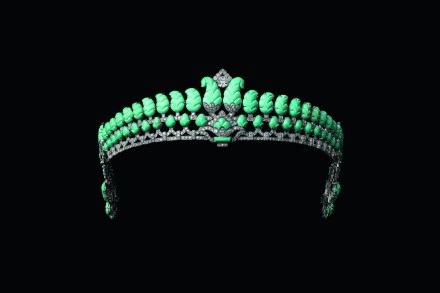
Jewel aid
In the late 1890s, the workshop of Maison Cartier adorned its Belle Époque clients in “garland-style” jewelry fashioned from white diamonds in platinum settings shaped like curled ribbons and bows. Soon, however, a more streamlined style began to emerge. In 1904, the workshop produced a small, rhomb-shaped brooch, decorated with smaller rhombs in diamonds and rubies. By the 1920s, Cartier was regularly producing polychromatic jewelry in a linear, abstract style made up of interlocking or tessellated triangles, squares, lozenges and other geometric shapes that had rarely been seen in Western jewelry. The craftsmen also combined brightly colored stones such as turquoise, coral and jade, and they experimented with enamel. What prompted this dramatic change?