Disquiet at the Beeb
From our UK edition
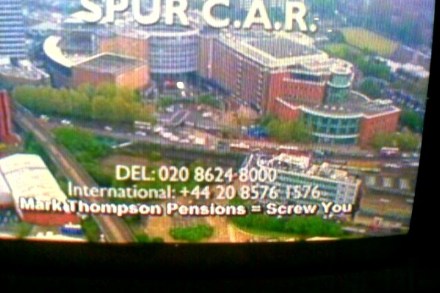
Well, well, it seems like there's some internal disgruntlement about the changes at the Beeb. We've been forwarded this image of a message which has appeared on screens across Television Centre today.
From our UK edition
Well, well, it seems like there's some internal disgruntlement about the changes at the Beeb. We've been forwarded this image of a message which has appeared on screens across Television Centre today.
From our UK edition
What is that quote at the end of King Lear? I think it is something like “the wheel has come full circle”. I felt a sense of that wheel with the announcement by Mr Miliband yesterday that the BBC should be democratised and become some sort of mutual co-operative. I have been campaigning for democratisation of the BBC licence fee for a while now, first writing about it on ConservativeHome in 2008 and most recently tabling an Early Day Motion, only a couple of weeks ago. Inevitably a few brickbats were thrown.
From our UK edition
Paul Waugh has already noted David Miliband and Tessa Jowell's proposal to turn the BBC into a co-op. But the language they use to outline the idea is striking in itself. Here's an excerpt: "In confronting the big challenges ahead of us, whether it's rebuilding our economy, tackling climate change or protecting frontline public services – the need for collective action is greater than ever. This is a moment for mutualism, which offers us the opportunity to take collective action in step with individual aspiration, drawing on the values and practices of the cooperative movement and today's Coop party.
From our UK edition
Michael Gove may be a pip-squeak but he has an imperious voice and that formidable quality of both sounding and being enormously clever. With a faint note of arrogance, he bossed a potentially difficult interview on the Today programme this morning. Tired of defending himself against Ed Balls’ dishonest maxim that what’s good for bureaucratic process is good for children, Gove changed tactics. He described his bill as a ‘permissive piece of legislation’ and linked it directly to the Blair-Adonis Academy reforms, which were frustrated by a regressive coalition wedded to the educational status quo.
From our UK edition
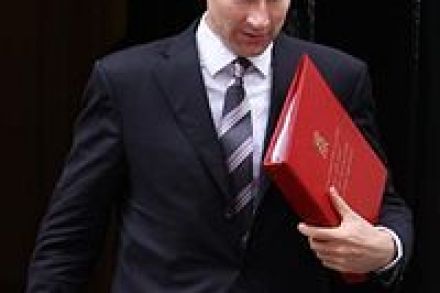
Auntie has been warned, and in no uncertain terms. Jeremy Hunt, the innocuous-looking Culture Secretary, has used an interview with the Telegraph to threaten the BBC. He said: ‘There is a moment when elected politicians have an opportunity to influence the BBC and it happens every five years. It is when the licence fee is renewed. That will be happening next year. That will be the moment when I use my electoral mandate to say to the BBC now, going forward for the next five years, these are what we think your priorities need to be and there are huge numbers of things that need to be changed at the BBC. They need to demonstrate the very constrained financial situation we are now in.
From our UK edition
I suspect Rod Liddle's analysis of the BBC and, more especially still, the mentality of its top brass is acute and persuasive: My suspicion is that it will become increasingly difficult to justify a license fee when the balance of the BBC’s output is tilted so far in favour of populism and ratings chasing. This is the point I made to Alan; that times have changed, the market has changed and that no matter how fine a “product” Radio Five, say, or Strictly might be, they can easily be done elsewhere. You would have thought I’d suggested rogering his grandmother; there was an immediate bristling and a refusal to engage with the issue. Just a blanket denial that the corporation chases ratings, is stretching itself too thinly, etc etc.
From our UK edition
From a completely selfish standpoint, I’m pleased that the BBC has saved 6Music. The decision does, however, raise a pertinent question: why is one of the public sector’s mammoth institutions seemingly impervious to spending cuts? Never mind DfID and the NHS, ring-fencing Sue Barker is simply inadmissible. Mark Thompson, the Director General, has identified the barest modicum of cuts. The BBC’s ‘gold-plated’ pension scheme might be limited (subject to union agreement), which will save roughly £50million. But the BBC has awarded 70 percent of its employees a £475 annual pay rise. Few companies in the private sector, especially broadcasters, can afford such generosity. It’s that same with presenters’ pay.
From our UK edition
When Jeremy Paxman grilled Danny Alexander on Newsnight yesterday he spent most of his time on politics, not economics. Fair enough. That's what the media does and one wouldn't expect it any other way. But it was the type of attack Paxman employed that was both mildly interesting and futile. This was because Paxman decided to tear into Alexander and attack him for all the things in the budget that weren't in the Liberal Democrat manifesto. Some of them, as Paxo pointed out time and time again, were actively opposed by the Lib Dems. Gotcha! Hypocrites! Why, he sneered, should anyone ever listen to anything you have to say in the future, far less take it seriously? In as far as it went it was effective. Unfortunately it didn't go very far.
From our UK edition
One of the stranger aspects of watching World Cup coverage in the United States is ESPN's choice of colour commentator and studio analyst. Who knew that what this tournament really needs is Robbie Mustoe's analysis? Then there's Steve McManaman and Ally McCoist and Efan Ekoku all of whom are working for the Americans for, frankly, mysterious reasons. Not all of it works. Then again, the quality of analysis on the BBC and ITV has been abysmal and actually, I think, worse than what ESPN offers.
From our UK edition
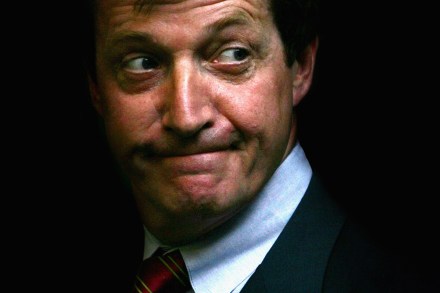
All kinds of hoohah about last night's Question Time, for which Downing St refused to put up a panellist because of Alastair Campbell's involvement. If he was replaced with a shadow minister, they said, they would happily get involved. But, as the excutive editor of Question Time explains here, the Beeb wasn't prepared to go along with that. So Campbell got to lord it up in front of the cameras. For the reasons outlined by Guido and Iain Dale, it was probably a slight mis-step by the coalition – but not one, in itself, that will have any important rammifications for them or the public. For while it's not the government's prerogative to decide on the entire Question Time panel, it is their prerogative to choose whether or not they join it.
From our UK edition
So, did Cameron say anything particularly noteworthy during his interview on the Today programme? In truth, not really. Most of the answers were of the "let's wait and see what in the Budget" variety. The ratio of spending cuts to tax rises: wait and see. Plans for hiking capital gains tax: wait and see, and so on. The only answers that weren't determined by the Budget seemed to be his racing tips for the sports bulletin. You can hear them here. But that isn't to say the interview wasn't revealing. For much of it, Cameron was quizzed about the objections that David Davis and John Redwood have raised to the planned hike in capital gains tax.

From our UK edition
Not a great showing by Jeremy Paxman last night as he wrestled with a Welshman* (who seemed to be named after an Icelandic volcano) and lost. And it wasn't even close. Immensely entertaining, therefore. The real fun starts just after the two minute mark: *Plaid Cymru's** economics advisor Eurfyl ap Gwilym. **Typo fixed, Jeremy.
From our UK edition
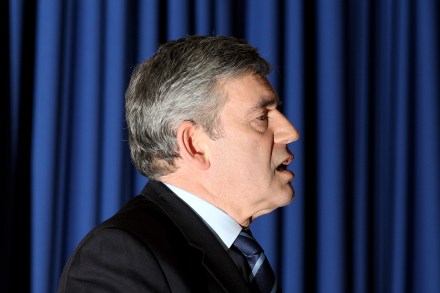
Labour high command will be very satisfied with Brown’s performance on Marr this morning. There was far less of the tetchiness that we usually see from Brown in interviews and by being invited to talk about the ash cloud and the government’s response to it at the beginning, Brown was able to assume some of the aura of his office as Prime Minister. The interview saw the debut of Brown’s latest rewriting of history. Apparently he has always been for bringing in the liberals (exact quote to follow when the BBC release the transcript) and a ‘progressive consensus’. This will come as a shock to anyone who has read Paddy Ashdown’s diaries or talked to those involved in the discussions between the two parties in the mid to late nineties.
From our UK edition
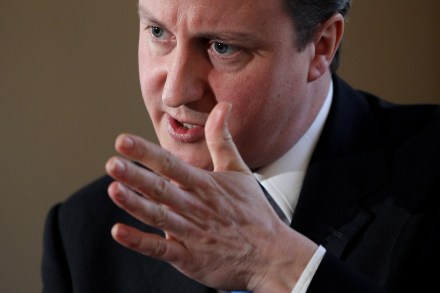
Want some more David Cameron? Well, the Tories are happy to oblige. After their party leader's speech yesterday, he is interviewed in the FT and appeared on the Today programme earlier. The FT interview was certainly the more comfortable of the two. In it, Cameron stikes a confident note – saying that his party have "come a long way," and that "people are gagging for change". And he stresses that he thinks – and, apparently, Ken Clarke thinks – that George Osborne is "the right person" to be Chancellor. But Cameron had a tougher time in his Today Programme interview. It started well, with Today highlighting the supportive letter that business leaders have written about the Tories' national insurance cut.
From our UK edition
...according to the Beeb just now. And if you watched tonight's Dispatches programme, you'll know exactly why. Nick Robinson comments that the "Labour leadership" will delight in "taking revenge" on three figures who have ruffled Brown's feathers on multiple occasions – so it continues to look like backbiting and politicking will take priority over geniune reform. A grubby Parliament just got considerably grubbier.
From our UK edition
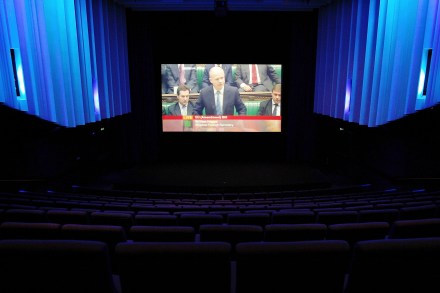
The various parties involved in the televised leaders' debate have finally come to an agreement on how they will work. You can read full details here, courtesy of Sky. But the main points are: i) Topics and locations. The first debate will be hosted by ITV's Alastair Stewart, in Manchester, and will cover domestic affairs. The second will be Sky's Adam Boulton, in Bristol, and will cover foreign policy. And the third will be the Beeb's David Dimbleby, in Birmingham, on the economy. ii) Structure. The rather rigid structure of each programme will be as follows: "Each leader will make an opening statement on the theme of the debate lasting for 1 minute. After the three opening statements the moderator will take the first question on the agreed theme.
From our UK edition
Apart from the odd terrorist plot and the beginning of an already very nasty election campaign, nothing much has happened in my absence! Yes I had a nice Christmas and New Year, thanks. It certainly made a change from being threatened with a libel action by an Iraqi billionaire as I was last year. And yes, I was not entirely serious when I described the festive break as Winterval in my last post. I even attended a very traditional village nativity play and loved it. The telly was traditionally dreadful. But one of the highlights of my Christmas was watching Matt Smith regenerate as the new Dr Who, which confirmed beyond any doubt the genius of the producers of the cruelly discontinued BBC poiitical drama Party Animals.
From our UK edition
It has taken eight years, but Tony Blair has finally leveled with the British public and admitted that the WMD thing didn’t really matter: he wanted to depose Saddam Hussein anyway. That's what he has said in a BBC interview, presumably to pre-empt his appearance before the Chilcot inquiry. His chosen confessor: Fern Britton. His medium: BBC1 on Sunday. It has been trailed to the newspapers, including tomorrow’s Times. As it says: "He said it was the 'threat' that Saddam presented to the region that was uppermost in his mind. The development of weapons of mass destruction was one aspect of that threat. Mr Blair said that there had been 12 years of the United Nations going 'to and fro' on the subject, and he noted that Saddam had used chemical weapons on his own people.
From our UK edition
Alistair Darling normally strikes us as an honest man dropped into an impossible situation. But whether he misspoke, or whether he set out to mislead, he told a lie on the Today Programme this morning which needs to be highlighted. So what was it? That non-ringfenced departmental budgets would remain "pretty much flat" rather than receiving significant, if not sufficient, cuts. As Fraser demonstrated yesterday, there were spending cuts hidden in the Budget and we'll see the full extent of those as soon as the IFS processes the numbers later today. Last time around, after April's Budget, they calculated cuts of 7 percent across three years. Thanks to a few more ringfenced budgets here and there, those cuts could even be deeper this time around.
From our UK edition
Just watching Newsnight, and the show's economics editor, Paul Mason, has said we can expect several budgets to be ringfenced from spending cuts in tomorrow's PBR – hospitals, schools and perhaps even the social security budget. If so, it's another sign of how political the document is set to be. Ringfenced budgets are the other side of the soak-the-rich coin: sending out the twin message that Labour will batter the "City fat cats," while also "investing" in public services "for the many". Just a shame that it's all insufficient to the scale of the debt crisis.