Barack obama

Obama’s military reshuffle

From our UK edition

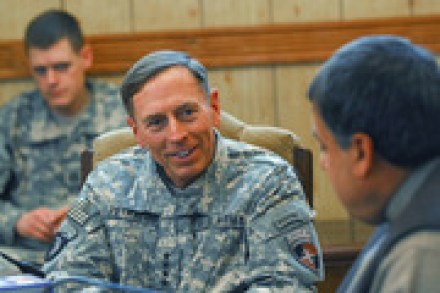
President Obamna’s nomination of  General Petraeus to run the CIA will have a huge knock on effect on the US military. Petraeus will have to resign his commission to take on the post which means that his work trying to transform the US army into a force comfortable trying to deal with counter-insurgency will have to come to an end. One also can’t help but suspect that the Obama administration will be glad to avoid a public tussle with Petraeus over the schedule for withdrawal by moving him out of theatre. Of the other moves in Obama’s shake up of his national security team, one worth paying particular attention to is Ryan Croker—the former ambassador to Iraq—moving to Kabul as US ambassador.

Why Gitmo ought to be closed

From our UK edition

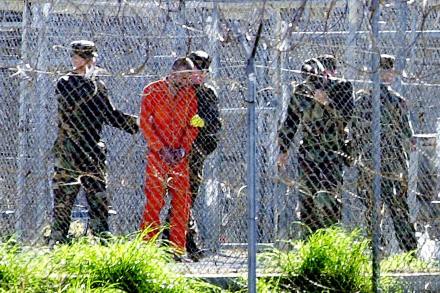
It is hard to feel anything but nauseous when reading the Guardian's continuing special report on Guantanamo Bay, which started yesterday. The paper has released hundreds of classified files which were obtained last year by Wikileaks, including detainee assessments prepared between 2002 and 2009 to summarise what the government knew about each detainee — and they do not paint a pretty picture. Some detainees are clearly guilty as sin. But others seem to have been caught in the crosshairs of conflict. One example seems to be Abdul Badr Mannan, who was arrested in Pakistan and turned over to US forces in the belief that he was affiliated with al-Qaeda.

Obama’s budget: faster, but not further, than Osborne’s

From our UK edition

Barack Obama's budget plan has become a political debating point on this side of the Atlantic. Ed Balls set the ball a-rolling in an article for the Guardian this morning, which effectively claimed that the President isn't planning to cut the deficit as quickly as George Osborne is. "The truth is that it is Osborne himself who is isolated," is how he pugnaciously put it. But the Tories' Matthew Hancock has since responded — on Coffee House, as it happens — arguing that, actually, the Obama Plan is simpatico with what Osborne is doing. By way of hovering above the red-on-blue scrap, we thought we'd put together a comparison of Osborne's and Obama's budgets for the benefit of CoffeeHousers.

Labour are drawing the wrong lessons from America

From our UK edition

The global debate about how we live within our means is moving fast. I spent a week in Washington while Congress and the President hammered out their deal on this year’s budget. The deal was significant because all sides agreed on the need to cut spending now. After days of brinkmanship, they agreed to £38 billion in-year cuts. Significant, perhaps, because America has now started to tackle its huge deficit. But everyone agreed it is a small downpayment ahead of a much bigger debate to come.   What’s fascinating for us here is that President Obama’s proposals are to cut the deficit slightly faster than we are here. Congress would go faster still.

Standard & Poor’s bombshell

From our UK edition

A mute, almost disbelieving response (except on the Markets) has met Standard & Poor’s announcement that the US government’s fiscal profile may become ‘measurably weaker’. The credit rating agency has put a ‘negative outlook’ on the US’s AAA rating; the accompanying report said:    “We believe there is a material risk that U.S. policy makers might not reach an agreement on how to address medium- and long-term budgetary challenges by 2013. If an agreement is not reached and meaningful implementation does not begin by then, this would in our view render the U.S. fiscal profile meaningfully weaker than that of peer ‘AAA’ sovereigns.

Balls in fiscal isolation

From our UK edition

Ed Balls has long said that America is the right comparison for Britain when it comes to how to deal with the deficit, contrasting the Obama administration’s fiscally loose policies with Osborne’s plan for fiscal tightening. This comparison has always been flawed; the dollar is the world’s reverse currency which gives Washington far more fiscal flexibility than HMG. But, even leaving that aside, the Obama administration is now — albeit under Congressional pressure — about to start cutting.   By 2015, Obama’s plan will have reduced the US deficit by 8 percent of GDP. Osborne’s plan sees Britain reduces its deficit by 8.4 percent by 2015. Indeed, from next year the US will be tightening at a faster annual rate than Britain.

A word for Mitch

From our UK edition

In the magazine’s cover piece this week (read it here or subscribe from just £1/issue), Richard Littlejohn described the rather feeble assortment of Republican contenders for next year’s presidential elections. But he left out Mitch Daniels, the Governor of Indiana, who seems to be emerging as a favourite among American conservatives.   Daniels hasn’t yet declared his candidacy, and at first glance he comes across as a dweeb. But it would be foolish to underrate him. In 2008, against a tide of Obama-mania, Daniels won the Indiana governorship with ease. He got more votes, in fact, than any candidate in the state’s history. The secret of Daniels’s success is his winningly awkward Pennsylvanian manner.

The government should recall parliament

From our UK edition

Today’s declaration (£) by Barack Obama, David Cameron and Nicolas Sarkozy that Nato’s operation in Libya will continue until Gaddafi leaves power marks a shift in their rhetoric and makes explicit that regime change is the war aim. This has led to calls to recall parliament, most notably from David Davis on the World at One, to debate this change. Parliament merely voted to enforce the UN resolution which was not a mandate for regime change. The government would be well advised to heed these requests. It would be the best way of maintaining the necessary political support for the mission. Now that regime change is the explicit war aim, the allies must will the means. To do otherwise, would simply guarantee a humiliating and debilitating stalemate.

Meanwhile, in America…

From our UK edition

We really oughtn't let the weekend pass without some mention of political events across the Atlantic. As you've probably heard, a US government shutdown was avoided on Friday evening, and all thanks to a budget compromise which saw Barack Obama slash a cool $38 billion from his spending plans. Although the debate over who has credited or discredited themselves is still ongoing, it's striking that the Republicans — urged on by the Tea Party corps — achieved around two-thirds of the cuts that they demanded. Yet disaster, or at least the prospect of it, has still not been averted. The Tea Party has already claimed several fiscal scalps along the way — and the next target for their administrations is the impending debate over America's debt ceiling.

Budget lessons from across the pond for America

From our UK edition

In Washington, a budget shutdown is becoming an increasing possibility. The Republican controlled House of Representatives wants deeper cuts than the White House will accept. This has led a growing bi-partisan group of Senators to try and revive the work of the blue-ribbon commission on Fiscal Reform and Responsibility that produced its report late last year. Interestingly, the commission’s proposals are very similar to George Osborne’s plan. UK Treasury analysis shows that the Osborne plan calls for an average tightening of 1.6 percent a year from 2009-10 to 2015-16  while the commission suggests 1.4 percent a year from 2010 t0 2015. The composition is also similar, both work on roughly three quarters spending cuts and one quarter tax rises.

Obama sketches out the limits to American involvement in Libya

From our UK edition

There was one aspect of Barack Obama's Big Speech on Libya last night that was particularly curious: for a President who is trying to downplay American involvement in this conflict, he sure went in for good bit of self-aggrandisement. The amount of references to his and his government's "leadership" — as in, "At my direction, America led an effort with our allies at the United Nations Security Council to pass an historic Resolution" — was really quite striking, at least to these ears. I suppose it's all about mollifying those voices who argue that the US Pres hasn't done enough, quickly enough. But it's hardly going to endear him to some of his more proactive partners in this fight.

Agreement in principle reached for Nato to take command of operations over Libya 

From our UK edition

I understand that agreement in principle has now been reached to pass command of the Libya operation to Nato. The United States has been keen to relinquish control for days now--the Obama administration has no desire for Libya to turn into another American responsibility--but agreement within Nato about the alliance taking over command of the mission could not be reached. This has led to an embarrassing situation where no one appears to want to actually be in charge of the operation. The blockage, up to now, to transferring control to Nato has been Turkey. Ankara is not keen on the whole intervention and is furious about not having been invited by Nicolas Sarkozy to the summit in Paris last weekend.

Obama’s nervousness makes life difficult for him and his allies

From our UK edition

Gingerly, gingerly — that's how the Americans are approaching the presentational battle over Libya, if not the actual campaign itself. There is no bombast in the official broadcasts from Washington, nor categorical intent. Instead we have Robert Gates emphasising, as he did yesterday evening, that the US will soon handover "primary responsibility" for the mission to us or the French. Or there's Mike Mullen, the Chairman of the Joint Chiefs of Staff, saying that "potentially one outcome" is for Gaddafi to stay in power (see video above). The idea of regime change, or of deeper US involvement, is being downplayed all round. What's clear, perhaps even understandable, is that Obama & Co. are eager not to exhume the ghosts of Iraq.

Sarkozy’s game

From our UK edition

I'm hearing more reports about the rather peculiar behaviour of Nicholas Sarkozy, and how he is playing the Libya campaign thus far. Obama wants to hand over leadership of this mission quick. He was never really into it, but the US Navy was overwhelmingly the best placed to do the first phase of the mission (ie, fire Tomahawks into 20 Libyan targets). The Tomahawk team constituted 11 US ships and submarines, plus one British submarine. Anything other than American leadership would have been a joke. Phase Two is to take out Gaddafi's surface-to-air missiles as soon as he dares to move them. Obama wants to hand over the baton to NATO, with its bases in southern Italy and other Mediterranean nations. But Sarko objects. He likes the idea of US, UK and France as a triumvirate.

The allies converge on Gaddafi

From our UK edition

George Osborne appeared on the Andrew Marr show this morning to introduce the Pledge of his Budget magic trick. But Marr and his viewers wanted talk about the show of military strength over Libya. Osborne reiterated that the government is committed to enforcing the UN Resolution and had no plans to deploy ground troops at this stage. He refused to rule out the use of British ground forces in the future. Privately, officials are trying to dispel the perception that the UN Resolution forbids the use of Special Forces commandos to assist the bombing campaign. The Resolution does not permit an occupation, but it would be very surprising if covert operations were not already being planned against Gaddafi's military installations and logistical infrastructure.

Allied military intervention in Libya has commenced

From our UK edition

Reports are coming in that French jets have fired the first shots in the UN-supported intervention in Libya. The coming conflict will determine, in the short term, whether the Gaddafi regime is toppled and, in the longer term, whether the international community rediscovers its appetite for intervention which had been so diminished by the controversies over Iraq and the difficulties of the Afghan mission. That there is intervention at all in Libya is down in no small part to David Cameron and William Hague. Hague played a key role in ensuring that Arab countries were prepared to commit to putting planes in the air in this operation, something that was crucial to moving the vacillating Obama off the fence.

Allies’ statement on Libya demands more of Gaddafi than just a cease-fire

From our UK edition

A statement has just been issued by the sponsors of last night’s Security Council resolution, it reads: “Resolution 1973 lays out very clear conditions that must be met. The UK, US, France and Arab States agree that a cease fire must be implemented immediately. That means all attacks against civilians must stop. Gaddafi must stop his troops from advancing on Benghazi, pull back his troops from Ajdabiyah, Misratah, and Zawiyah, and re-establish water, electricity and gas supplies to all areas. Humanitarian assistance must be allowed to reach the people of Libya. These terms are not negotiable. If Gaddafi does not comply with the Resolution, the international community will impose consequences, and this Resolution will be enforced through military action.

Hillary the hawk

From our UK edition

Intervention it is then. Cue lots of politicians walking around with rousing West Wing music in their minds' ears. This is the part where they get to play the good guys. Until something goes wrong, and they are bungling idiots again. Of course, it's good for everyone to feel that a bombing campaign in Libya is a multi-lateral, UN decision – not an Iraq. But if this turns into a long campaign, American airpower will be expected to do the vast majority of the work. And while Obama may be reluctant to engage on a third front, there are plenty of enthusiasts in Washington – none more so than Hillary Rodham Clinton. It is becoming increasingly obvious that Clinton has been using Obama's indecision over Libya to promote herself.

Cameron’s persistent leadership on Libya was key to tonight’s resolution

From our UK edition

David Cameron deserves huge credit for tonight’s Security Council vote. He has kept plugging away for a no fly zone and has succeeded in moving the Obama administration’s position. Cameron’s decision to have Britain table with the French and the Lebanese a Security Council resolution without the support of the Americans or even having talked to the president was a bold move that has turned out to be a game changer. The Prime Minister has proved himself an effective and courageous actor on the world stage. The question now is how quickly and effectively military force can be deployed and how Gaddafi is to be ousted. It, obviously, would have been better if the no fly zone had been imposed when the rebels had the military momentum.

Zelikow’s case for a no-drive zone

From our UK edition

Philip Zelikow, who served on the 9/11 Commission and in both Bush administrations, has a persuasive piece in today’s FT arguing that a no drive zone on the highway from Tripoli to eastern Libya could be as effective as a no fly zone and easier to implement. He says that it could be enforced from off-shore with the use of precision weapons. Legally, there would be issue with this scheme—as there would be with any intervention in Libya that is not based on a full Security Council resolution  under chapter 7. But there simply will not be enough time now to get full UN authorization before Gaddafi has reasserted full control. The Obama administration, though, seems content to let the clock run down.