Barack obama

Stopping Maliki’s coup

From our UK edition

The year is ending not with a successful US withdrawal from Iraq — as President Barack Obama claims — but with what amounts to a coup d'etat by the country's Shiite prime minister (and former ally of the US) Nouri al-Maliki. Less than 24 hours after the last US soldier left Iraq, the country's Sunni vice-president Tareq al-Hashemi was wanted on charges that he led death squads, in a case most observers think could reignite the sectarian slaughter of 2006-07. Violence in Iraq has subsided since 2006-07, when Sunni insurgents and Shiite militiamen killed thousands of civilians each month — but, without U.S. troops to act as a buffer, many Iraqis now fear a return to those days.

Four weeks to Iowa, and Newt’s looking strong

From our UK edition

It's less than a month until the Iowa caucuses, the first big vote of the presidential primaries. It could finish off some candidates who've been shuffled to the bottom of the pack, and give us a better idea of the chances of those at the top.   Right now, Newt Gingrich looks most likely to be celebrating on January 3rd. As Fraser suggested last weekend, he seems to be gaining most from Herman Cain's withdrawal, and now leads the field both nationally and in Iowa.

The New York Times’ austerity myth

From our UK edition

Yet again, the New York Times fact-checkers seem to have taken the day off. The newspaper yesterday printed an editorial about British economic policy which contained basic errors – identical to those made in a blog which Paul Krugman bashed out last week. It's worth fisking a little, because Krugman appears to be using the newspaper to create an austerity myth. 'A year and a half ago, Prime Minister David Cameron of Britain came to office promising to slash deficits and energize economic growth through radical fiscal austerity. It failed dismally.' This is right, insofar as there was no austerity. The below shows current spending, for every month since the government took power. They overspendt.

Republicans use Obama’s own words against him

From our UK edition

Mitt Romney, the clear favourite to win the Republican presidential nomination, has released the first television ad of his 2012 campaign. Even though his immediate battle is against fellow Republicans – in the latest CNN poll, he trails Newt Gingrich by four points – here Romney's attack is aimed squarely at Obama. https://www.youtube.com/watch?v=H3a7FC0Jkv8 The Obama campaign has pushed back, particularly against the clip of Obama saying 'If we keep talking about the economy, we're going to lose', calling it 'deceitful and dishonest'. You see, when Obama said that, in 2008, he was quoting John McCain's campaign and criticising them for it.

Democrats’ strong results bolster Obama’s hopes

From our UK edition

Things haven't been looking particularly good for the Obama 2012 campaign of late. Half the country disapproves of his performance so far, the economy's very weak and Mitt Romney's grip on the Republican nomination is tightening. And the last two sets of November elections have seen the electorate move towards the Republicans. In 2009, they took over the governorships Virgnia and New Jersey. Last year, they won control of House of Representatives and increased their numbers of Senators and Governors. But this year, the story's different: Democrats scored some important wins yesterday, making their prospects for 2012 that bit brighter.

Saudi and Iran at each others’ throats

From our UK edition

Yesterday — as Pete pointed out earlier — the Obama administration filed criminal charges against two individuals, Manssor Arbabsiar and Gholam Shakuri, claiming that they worked with Mexican criminals and for the Iranian government on orders to assassinate the Saudi ambassador to the United States. The plot has met with denials from Tehran, which “categorically and in the strongest terms condemn this shameful allegation.”     But, if true, the plot would only be the latest in a long-standing feud between Iran and Saudi Arabia. The struggle between Riyadh and Tehran has become the Middle East’s central conflict, overshadowing even the Israeli-Palestinian conflict.

Palin and Rubio say no to 2012 bids

From our UK edition

It's been quite a week for Republicans deciding they're not interested in entering the White House in 2013. First, Christie closed the door on a presidential bid on Tuesday. Last night, Sarah Palin followed suit, saying: "After much prayer and serious consideration, I have decided that I will not be seeking the 2012 GOP nomination for President of the United States... My decision is based upon a review of what common sense Conservatives and Independents have accomplished, especially over the last year. I believe that at this time I can be more effective in a decisive role to help elect other true public servants to office – from the nation’s governors to Congressional seats and the Presidency.

Christie staying out of 2012 race

From our UK edition

The broad narrative of the Republican primaries has essentially been "the search for an alternative to Mitt Romney". And that search looks set to continue with another potential candidate, New Jersey Governor Chris Christie, set against running for president. Romney has been the favourite to win the nomination pretty much since the 2008 election. But he does not generate much enthusiasm among the Republican base: only 14 per cent of Republicans have a "strongly favourable" view of him (according to Gallup) and he's polling at just 24 per cent: pretty low for such a well-known frontrunner. As a result, many in the Grand Old Party have been looking elsewhere.

Yesterday’s big speech

From our UK edition

I suspect that the most important political speech delivered yesterday was not Ed Miliband’s address to Labour conference, but Chris Christie’s one at the Reagan Library in California. The governor of New Jersey is coming under mounting pressure from the Republican establishment to run for president; they view him as the party’s best chance of capitalising on President Obama’s electoral vulnerability. This speech was striking for its political dexterity. It is not a base-pleasing red-meat speech, but rather one designed to reach out to those who voted for Obama last time; those who grown disillusioned by how he has governed.

New Balls?

From our UK edition

Given that Ed Balls’ strategy has backfired on his party so far, with Labour ten points behind the Tories on economic credibility, something has to change. Either the policies, or the shadow chancellor. Read between the lines of Balls’ speech today, and you can see a man backtracking – and trying to hold on to his job. Even when Balls tells porkies, he does so with imagination and élan. He is always worth listening to. He had the 8.10am slot on Today this morning. Here’s what jumped out at me: 1) Mea Culpa, kinda. The other day in the Commons, Balls said sorry – you could tell then that it’s the first of many.  He repeated it again, while making clear that he is no more guilty than any finance minister anywhere around the world.

Obama’s new best buddy – Warren Buffett

From our UK edition

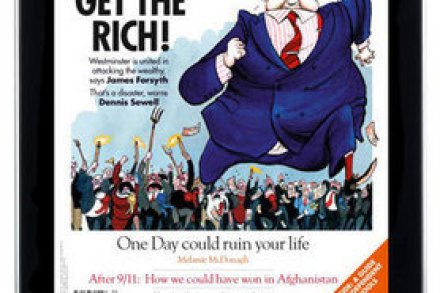
The politics of 'get the rich' is going global and even the rich are joining in. While few countries have adopted the equivalent of Britain's 50p tax, many are baring their teeth at the very well-off. In America, this is now being done by an unlikely alliance between Barack Obama and Warren Buffet. The billionaire investor is allowing his name to be appended to Barack Obama’s new tax-the-rich-more policy, which apparently follows the ‘Buffett Rule’. The Buffett Rule, which draws its basic principle from an op-ed Buffett wrote for the New York Times, is this: people making more than $1 million a year should pay a tax rate that’s at least the same percentage of their earnings as middle-class Americans.

Preparing for the US Presidential election

From our UK edition

One thing British politics has yet to rise up to is how possible it is that Barack Obama might lose next year. All the pollsters have his approval rating in negative territory, Gallup has him down by ten, and the American economy looks likely to deteriorate between now and November 2012. But the big thing in Obama’s favour is the weakness of the Republican field. Bill Kristol’s cry of pain about the quality on show in last night’s primary debate sums up Republican establishment worries that none of the candidates cut it. We can now expect another push to get a new candidate into the race. Chris Christie, the governor of New Jersey, will come under a lot of pressure to throw his hat in.

The Israel Palestine question

From our UK edition

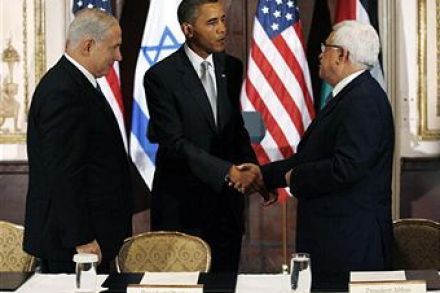
After a hiatus, the Middle East Peace Process is about to return to the international stage. The Palestinians are pushing at the UN for recognition. Nobody knows yet what they will actually ask for: full statehood or just upgrading their UN status to "non-member". But, whatever the language of the resolution, the issue will be contentious. By some estimates, 126 states are poised to back the Palestinian request, including France, India, Brazil, Spain. The US will not support a Palestinian move, nor is Germany likely to. Britain remains undecided, hoping to help the Palestinians draft a resolution that other Europeans can sign up to. It’s not clear what Britain and European governments should do.

Authenticity or bust?

From our UK edition

Mitt Romney won the Atlanticist vote last night by saying he'd bring back a bust of Winston Churchill to the Oval Office. That's a reference, obviously, to Barack Obama's decision, soon after moving into the White House, to have the bronze removed. That decision caused a lot of bother. When the story broke, the Obama machine insisted that the bust's removal was part of a routine changeover between presidents. But British hacks shouted 'Anglophobia' and pronounced the Special Relationship dead. The British embassy in Washington received masses of letters from Americans apologising for this great slight against Britannia. Never in the field of human history has so much been made of so little.

In New York, the whole world remembers

From our UK edition

New York There's an eerie mood in New York right now, as the city prepares to commemorate the tenth anniversary of the September 11 attacks. Al-Qaeda, or what's left of it, likes anniversaries. The police have been on overdrive ever since a "credible" tip-off about an attempted truck bomb. Officers are everywhere. Armed guards patrol landmarks and cars from bridges and tunnels are being pulled over and checked. All this reinforces the sense of something alien to New Yorkers (and almost all Americans) until ten years ago: the threat of attack. A common threat has solicited a rather wonderful common response. Shop windows have displays of commemoration; companies take adverts in local newspapers. Exhibits and events have sprung up all over the city.

Obama’s plan B: tax cuts

From our UK edition

Washington, DC The clue is in the name. A stimulus is supposed to stimulate, and Obama's first attempt stimulated nothing more than the American national debt. So he's trying again, with a $447 billion package (he's careful not to call it a "stimulus") in what will probably be his last roll of the pre-election dice. But $245 billion of it would be debt-financed tax cuts.  Not sales tax cuts, the type of which Ed Balls is prescribing for Britain. It's all payroll tax cuts: reducing the tax on jobs in the hope of encouraging more hiring. Given the temporary nature of the tax cuts, I doubt this will be the pre-election silver bullet.

Rubio for VP?

From our UK edition

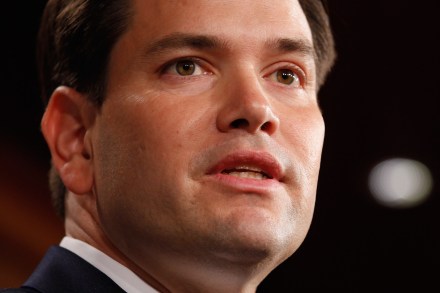
Just under a year from now, Republicans will meet in Tampa, Florida for their National Convention, at which their candidate to take on President Obama will be nominated. So too will that candidate's running mate: the man or woman hoping to oust Joe Biden and become the 48th Vice President of the United States. The choice of VP candidate will be one of the biggest decisions facing whichever of the Presidential hopefuls emerges victorious in the primaries. Right now, the clear favourite to be selected is Marco Rubio. The betting markets give him around a one-in-three chance of being chosen, making him at least four times as likely as anyone else to be the VP candidate. Mitt Romney has already stated that Rubio's on his VP shortlist.

Obama’s field of dreams?

From our UK edition

The striking thing about last night's Republican Party debate was just how bad the leading GOP candidates are. Rick Perry, the new favourite, isn't terribly bright. ("Perry is like Will Ferrell doing Bush, but on half-speed," is how David Frum, a former Bush speechwriter, put it.) Mitt Romney is an oily cheese merchant who keeps contradicting himself. And Bachmann is bonkers. With the USA in such a poor state, you might think President Obama would be in danger of losing the White House. But the Republican party is incapable of offering a coherent and sensible alternative. The most interesting candidates are Jon Huntsman and Ron Paul, but they don't seem to stand a chance. Huntsman is too popular among liberals and Paul is too radical a libertarian.

Newsflash: Americans and Europeans like each other

From our UK edition

A decade has passed since the attacks of 9/11 and so much water has flown under the proverbial bridge. Today, ordinary Americans don't want to have a leadership role in the world, and Europeans aren't too keen on it either. And having dithered over what to do about Guantanamo Bay, most people in the US and Europe don't trust President Obama's counter-terrorist policies. Right? No, actually wrong. According to the tenth-annual public opinion survey of the general public in the United States, Turkey, and 12 European Union member states – the Transatlantic Trends – 54 per cent of respondents from European countries surveyed want the United States to show strong leadership in world affairs. That’s a switch from the Bush years.