Banking

Whisper it, but the big banks are finally getting their houses in order

From our UK edition

By and large it was a good week for the big banks — underpinned by encouraging news from the wider economy, in which every little uptick brings a few more zombie borrowers back to the land of the living. Lloyds returned to profit, promised to start paying decent dividends again and declared itself oven-ready for return to the private sector, with the market anticipating an immediate sale to institutions of a first tranche of the taxpayers’ 39 per cent stake. HSBC reported varied performance around the world but still clocked up a fat result for the half-year — and asked the Vatican to close its account as part of a sweep against money laundering.

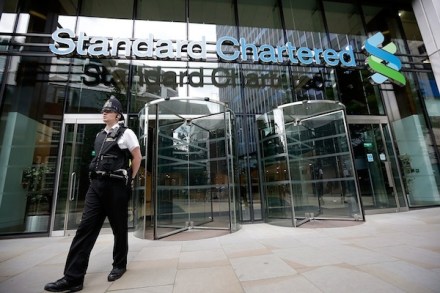
Boris on the warpath on Standard Chartered

From our UK edition

Boris Johnson is the Spectator's diarist this week, and as you'd expect, his piece in tomorrow's magazine is full of wonderful Borisisms including cyclists who 'wave their bottoms at each other like courting pigeons' and 'luscious gold doubloon'. But the Mayor of London also launches an attack on America and the way 'some New York regulator' has set upon Standard Chartered. He writes: I mean, what is all this stuff about Standard Chartered? This British bank has generally enjoyed a high reputation for probity (as these places go) until yesterday, when some New York regulator apparently denounced Standard as a 'rogue institution'. Well, if people have broken the law of this country, then by all means bang them away.

Dear Justin Welby – here’s how you can really take on Wonga

From our UK edition

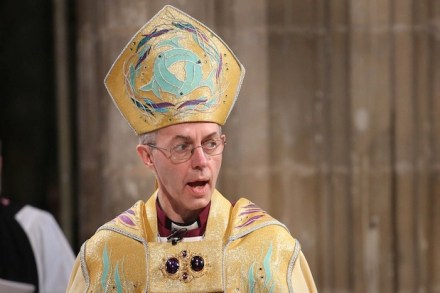
I’ve been in the pulpit again, this time to salute the centenary of the death of Charles Norris Gray, a formidable Victorian vicar of my Yorkshire town of Helmsley. Gray was a social activist with strong opinions on everything from sanitation to election candidates, and he did a great deal of good for his parish — so I’m not averse to the idea of churchmen intervening in worldly affairs, and I think Archbishop Justin Welby was right to highlight the parasitical nature of ‘payday lenders’ such as Wonga, even if he was subsequently embarrassed to discover that the Church of England was an indirect investor in it.

The free market didn’t kill Detroit: blame bad managers and worse unions

From our UK edition

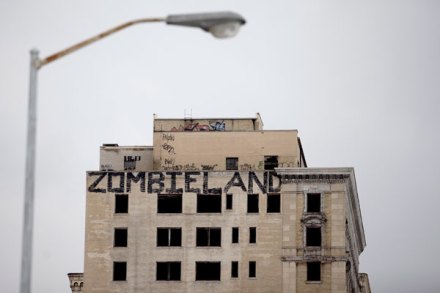
One of the best articles I ever commissioned as an editor was an account by James Doran of a road trip from the steps of the New York Stock Exchange to the back streets of Detroit in October 2008, at the nadir of the financial crisis. At his destination, Doran found a shocking vista of empty, vandalised factories, all once ‘bit-part players in the now dying auto industry… The desolation was so complete that it hardly seemed real.’ Five years on, the city of Detroit is bankrupt with $18 billion of debts, its population has shrunk to 700,000 from a peak of more than two million, leaving mostly the poor, black and unemployed behind, its public services have disintegrated, and the count of abandoned homes and buildings has risen to 78,000.

Stephen Hester was pushed out of RBS for telling politicians the truth

From our UK edition

Quite a spell of bowling from the Chancellor last week, skittling Stephen Hester’s stumps at RBS and causing Paul Tucker of the Bank of England to walk even before the new Canadian umpire had time to raise his finger. The kindest thing to be said about Hester’s innings (enough of the cricket already) is that he made a pretty good stab at bringing RBS back from the dead in the face of fierce political pressure, given that he was never really the right man for the job.

George Osborne’s Mansion House minefield

From our UK edition

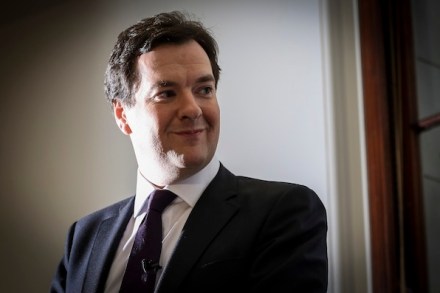
George Osborne is expected to respond to the Parliamentary Commission on Banking Standards's final report in his Mansion House speech this evening. The report is hefty and packed with recommendations, but there are two areas where the Chancellor will find himself treading a particularly tricky path. Both the proposal to defer bonuses and introduce a criminal offence of reckless misconduct in the management of a bank are designed to encourage responsibility and a greater regard of the consequences of bad behaviour. But Osborne will know that they also pose a threat to the success of the city. He will need to consider what effect deferring some remuneration for up to 10 years will have on London's competitiveness as a financial centre.

What the Banking Commission report says about…

From our UK edition

...bad bankers The commission wants to encourage greater personal responsibility, through making it clear with whom the buck stops for each key area within a bank, and sanctions including a criminal offence of reckless misconduct in the management of a bank. The report emphasises that it would be rare to secure a conviction under this offence, but that it would apply 'in cases involving only the most serious of failings, such as where a bank failed with substantial costs to the taxpayer, lasting consequences for the financial system or serious harm to customers'. It also recommends that the PRA and FCA be able to put banks into 'special measures', where the organisation will make a commitment to address concerns identified by the regulator.

George Osborne’s Lloyds sale will be all about votes – just as Mervyn King warned

From our UK edition

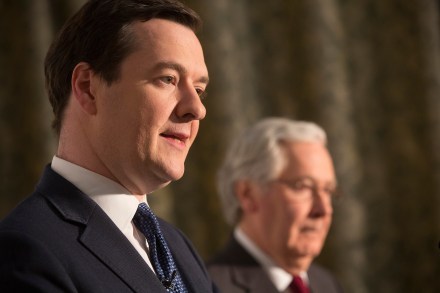
When a politician’s speech is spun ten days in advance, you know there’s trouble behind the scenes. Next week’s Mansion House dinner will be seen by City attendees principally as a farewell to Sir Mervyn King — and journalists present (including your columnist) will be timing the ovation to see how it compares with Eddie George’s full five minutes in 2003. But we learn that the Chancellor is ‘poised’ to use the occasion to ‘signal’ a public offer of Lloyds Banking Group shares that could raise up to £17 billion and mark a turning point in the post-crisis clean-up of the banking sector. By giving discounts to small investors, it might also swing votes away from Ukip.

‘Bankers’ was not a documentary. It was a BBC hit job

From our UK edition

I like bankers. They’re an honest lot. All of us like money, but only they are upfront about it. I once witnessed a conversation between three financiers that started with them comparing their cars, then their houses, then their helicopters. None of the shilly-shallying you find at a society cocktail party, where people slyly suss out your income on the basis of your profession, your postcode, your accent and the school you went to — these bankers went straight to unvarnished one-upmanship. Such frankness can be refreshing. I like bankers because, these days, somebody has to. The second episode of Bankers (Wednesday), the BBC2 three-part documentary that’s just ended, started off in such a mean-spirited way I actually felt sorry for financial traders.

Why Mark Carney’s Canadian success story may be about to fall apart

From our UK edition

No Bank of England governor has ever been installed in office with quite so much advance hype as Mark Carney. When he moves from running to the Bank of Canada to his new office in Threadneedle Street, expectations will be running high. Carney arrives with a reputation as a master of economic strategy, a man who can single-handedly steer an economy through the most treacherous of waters, and get a country growing again with a few deft strokes of monetary magic. Certainly, George Osborne has invested his hopes in him. During Carney’s time as governor in Canada, the country was ‘acknowledged to have weathered the economic storm better than any other major western economy’, he said on announcing the appointment.

British banking would be poorer without a Co-operative challenge

From our UK edition

When the Manchester-based Co-operative Bank was announced last July as the buyer of 632 Lloyds branches, tripling the size of its own network, I hailed the news as a step forward for  ‘banking biodiversity’. In February, George Osborne was still praising the deal, codenamed Project Verde, as one that would ‘shake up the established players’. But last month it fell apart — and the superfluous Lloyds outlets, which Brussels insists must be disposed of as a condition of the 2008 Lloyds-HBOS merger, are now likely to be repackaged as a revived Trustee Savings Bank.

Bishop of London Richard Chartres on bankers, Occupy and Justin Welby

From our UK edition

You may have gathered from last week’s column that I’ve been cruising the Med in search of fresh subject matter. It’s the sort of cruise that includes a programme of lectures, and the star turn on that front has been the Bishop of London, Dr Richard Chartres, enjoying a change of pulpit after his much-praised sermon at Lady Thatcher’s funeral. I had been struck by a passage in that address about the ‘prior dispositions’ required for a healthy market economy: ‘the habits of truth-telling, mutual -sympathy and the capacity to co-operate’. So as we steamed across the Ionian Sea I sent a note to the bishop’s cabin asking whether he’d care to elaborate, and he agreed to meet me in the library for tea (this really is a posh boat).

Angela Merkel’s domestic imperative

From our UK edition

The Cyprus situation has demonstrated that until the elections in the autumn, Angela Merkel’s primary focus is on a domestic audience. She clearly wanted to show that Germany is now prepared to take a far tougher line. As Open Europe notes the need for this is fast becoming the consensus view in Germany. So, the question now for the Eurozone is will we see any more crunch moments this side of the German election? If we do, then I think we could see the end of the Euro. The Cypriot parliament’s rejection of the initial bailout deal, at the insistence of the voters, shows that there is a limit to the pain that the weaker Eurozone economies are prepared to take for economic and monetary union.

Bankers: I like them — somebody has to

From our UK edition

I like bankers. They’re an honest lot. All of us like money, but only they are upfront about it. I once witnessed a conversation between three financiers that started with them comparing their cars, then their houses, then their helicopters. None of the shilly-shallying you find at a society cocktail party, where people slyly suss out your income on the basis of your profession, your postcode, your accent and the school you went to — these bankers went straight to unvarnished one-upmanship. Such frankness can be refreshing. I like bankers because, these days, somebody has to. The second episode of Bankers (Wednesday), the BBC2 three-part documentary that’s just ended, started off in such a mean-spirited way I actually felt sorry for financial traders.

So the Cypriots cop it for having fallen for the honeyed promises of the EU

From our UK edition

I had forgotten about Cyprus. I suppose it was lodged somewhere near the back of my mind as a cheap British Mediterranean satrapy usefully divided into two: a southern bit, where our chavs went on holiday, and a northern bit where our criminals hide out from the filth. I was dimly aware that we had allowed them, some time ago, to go their own merry way and that since had followed a predictable descent into barbarism, yet another Ottoman invasion and some sort of coup effected by the useless Greeks. And that’s it, really.

In Cyprus as in Britain, the prudent must pay for others’ folly – but not like this

From our UK edition

The Cypriots are the authors of their own misfortune, having turned their banking system into a rackety offshore haven for Russian loot and lent most of the proceeds to Greece. But it was madness on the part of bailout negotiators to shake confidence in banks across the eurozone by trying to impose a levy on deposits held by even the smallest Cypriot savers, in what was presumably an attempt to cream off a layer of ill-gotten foreign cash. And even if the proposal has been radically watered down by the end of the week, we now know the European powers-that-be are prepared to pull this device out of their toolbox if the subject government is too weak to resist.

Europe’s cap on bankers’ pay is merely a harbinger of the Great Persecution to come

From our UK edition

‘Possibly the most deluded measure to come from Europe since Diocletian tried to fix the price of groceries across the Roman Empire,’ was Boris Johnson’s assessment of the proposal to cap bankers’ bonuses at 100 per cent of base salary, or 200 per cent with shareholders’ approval. This blunt exercise in market interference was tabled by a committee of MEPs led by a British Lib Dem, Sharon Bowles (perhaps in revenge for the fact that she didn’t win the Bank of England governorship, for which she applied) as a condition of agreeing a new set of bank capital reforms. With the support of all member states other than the one most affected — that’s us — and despite token resistance from George Osborne, it will now pass into EU law.

Losing the plot | 28 February 2013

From our UK edition

Who got the most out of the credit crunch? Security guards, repossession firms, bailed-out banks and, of course, playwrights. Anders Lustgarten is the latest to cash in on five years of global misery with If You Don’t Let Us Dream, We Won’t Let You Sleep. The play, like the title, is effortful, disjointed and cumbersome. In the first half, a gang of fatcat bankers sets up a new financial instrument, Unity Bonds, which will generate profits from socially useful behaviour. This intriguing idea is sidelined in the second half. The action moves to a squatter camp where the banking system is about to be put on trial. Lustgarten assumes, no doubt correctly, that the audience is more in sympathy with anti-capitalists than with high finance.

The losers of the Libor scandal

From our UK edition

The Treasury Select Committee published its stinging report into Libor today, and it makes uncomfortable reading for all involved. 'That doesn't look good,' committee chair Andrew Tyrie said when describing the failure of both the FSA and the Bank of England to spot the manipulation at the time. His committee's report also pointed out that things did not look good for Bob Diamond's 'highly selective' evidence, either, saying: 'The committee found Mr Diamond's attempt to subdivide the later period of wrongdoing [following his telephone conversation with Paul Tucker] neither relevant nor convincing.

Libor isn’t working

From our UK edition

The Financial Services Authority's Martin Wheatley will take one of the first steps to cleaning up the banking industry's reputation after the Libor scandal today when he publishes an initial discussion paper on his review of Libor. Wheatley is likely to confirm what it appears Sir Mervyn King, his deputy Paul Tucker and Angela Knight of the British Bankers' Association already suspected back in 2008: that Libor as it currently stands is 'no longer fit for purpose'. The FT reports that Wheatley will suggest scrapping Libor altogether and replacing it with a rate based on actual trades that would be overseen by a new independent body. This would remove the 'incentive to manipulate' Libor that Timothy Geithner highlighted.