Banking

Are we killing investment banking? And if we are, should we care?

From our UK edition

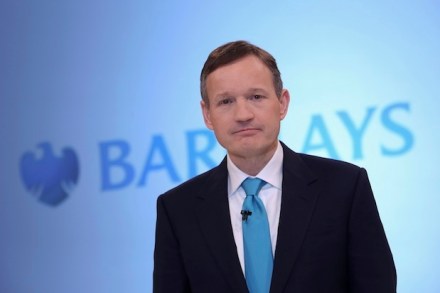
Do we really mean to kill investment banking, or are we trampling it by accident in a fit of righteous zeal? By ‘we’ I mean politicians, regulators and public opinion, and by ‘kill’ I mean rendering it unattractive or unviable for any shareholder-owned financial business except on the most limited scale — and as uncertain a career choice as, say, Liberal Democrat politics or freelance journalism. The announcement last week of a radical scaling back of Barclays’ trading and deal-making arm has stoked a debate that had been smouldering for some time; for background reading, I recommend recent articles by Philip Augar in the FT and Frances Coppola in Forbes.
Why the bankers’ bonus debate is not going away

From our UK edition

A bouquet to Alison Kennedy, ‘governance and stewardship director’ at the Edinburgh-based pensions provider Standard Life, for leading the rebellion of Barclays shareholders against the bank’s decision to pay increased bonuses of £2.4 billion, far outstripping dividends to shareholders and despite a fall in profits. At last week’s AGM, 34 per cent of shareholders refused to endorse the board’s remuneration report after Kennedy declared herself ‘unconvinced’ that the bonus pot was ‘in the best interests of shareholders’ and warned of ‘negative repercussions on the bank’s reputation’.

Any other business: The friends of Putin taking home gold from the Sochi Olympics

From our UK edition

Imagine if the BBC’s excitable commentators had been asked to cover the building of Sochi’s facilities, rather than the Winter Olympics themselves. ‘Yeesss!!’ Ed Leigh might have yelled, ‘That’s the 21st construction contract for the big lad from St Petersburg, Arkady Rotenberg. Seven point four billion dollars’ worth, a new Olympic record — more than the entire cost of the 2010 Vancouver Games! How cool is that for the 62-year-old who was Vladimir Putin’s boyhood judo partner? Up next, the $9.

Where I’m looking for the next great banking blow-up

From our UK edition

A reader likens me to Dr Pangloss, the quack philosopher in Voltaire’s Candide who insisted that ‘all is for the best in the best of all possible worlds’ even after he was reduced to a syphilitic beggar. It’s true that I tend to regard positive indicators — a 22-year high in the BDO index of business expectations, a CBI statement that ‘we’re starting to see the right kind of growth’ — as a pattern of recovery, rather than a mirage in a minefield. But rest assured I’m also on constant alert for ‘black swans’, those change-making events that (so we learned from a more modern thinker, Nassim Nicholas Taleb) come out of the blue and have to be rationalised afterwards.

Richard Branson deserves (some) respect

From our UK edition

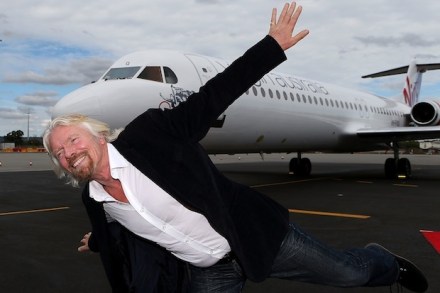
Tom Bower’s first biography of Sir Richard Branson, in 2000, was memorable for its hilarious account of the Virgin tycoon’s accident-prone ballooning exploits — and for its trenchant thesis that he had ‘toppled from his perch onto a slippery, downward path’, both in business and personal reputation. But what Bower depicted as ‘the beginning of the end’ for the bearded self-publicist turned out to be rather the opposite. Since the turn of the millenium, Branson has blasted into the stratosphere; not literally, since his equally accident-prone venture in commercial space travel has so far failed to take off, but in the sense that he has attained ever more rarified levels of global celebrity.

Any other business: The £1 bet that built a 1,000-strong company

From our UK edition

At a charity lunch in Manchester, I meet a cheerful ‘engagement manager’ from AO.com, formerly Appliances Online, a fast-growing internet seller of fridges and washing machines headquartered at Horwich near Bolton. The job title is new to me: it turns out to mean engaging the company’s workforce in ways that help them enjoy their jobs and feel valued. Their employment package features a £4-a-month ‘healthcare cash plan’ including dentistry, days off for charity work, gym memberships and a 50 per cent subsidy for ‘any social activity our staff fancy, so long as it develops their skills and is done by more than four people’.

Any other business: How François Hollande let France miss the global recovery train

From our UK edition

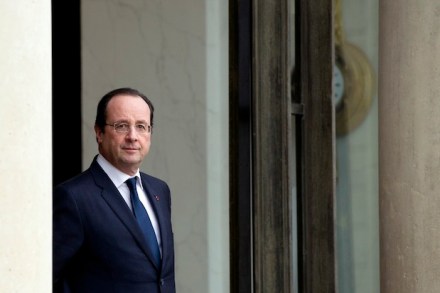
I’ve always respected stationmasters, but that sentiment is not universally shared. A distinguished friend of mine across the Channel described François Hollande the other day as ‘un chef de gare, sans aucune dignité’ — and it’s not difficult to picture the little president, peaked cap awry, trousers unbuttoned, haplessly waving his whistle as the last train à grande vitesse departs for the Eurotunnel laden with talented compatriots who see no future in France. As modern socialist leaders go, Hollande is beginning to make Gordon Brown look statesmanlike. Nicknamed ‘Flanby’ after a cheap custard pudding, he has left decision-making to his ragbag of ministers and done nothing to steer France towards economic recovery.

Ed Miliband’s ‘One Nation Economy’ speech: full text and audio

From our UK edition

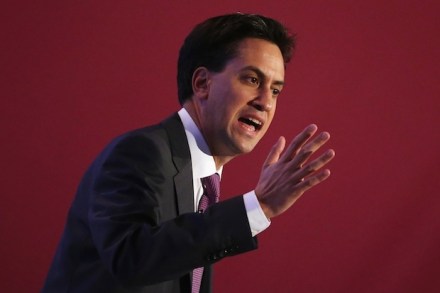
listen to ‘Ed Miliband's ‘One Nation Economy’ banking reform speech’ on Audioboo Today I want to tell you what the next election is about for Labour. It is about those families who work all the hours that God sends and don’t feel they get anything back. It is about the people who go to bed anxious about how they’re going to pay their bills. It is about the parents who turn to each other each night and ask what life their sons and daughters are going to have in the future. It is about those just starting out who can’t imagine they will ever afford a home of their own. It is about the most vulnerable in our country who feel they are just being tossed aside.

Any other business: Oh dear… perhaps Standard Chartered isn’t as dull as it looks

From our UK edition

The cautionary tale of the Co-operative Bank, its black hole and its naughty chairman has recently taught us that if a financial institution has the reputation of being dull, earnest and set in its ways, it probably isn’t. The collapse last year of Switzerland’s oldest private bank, Wegelin & Co — whose boss once claimed that being small and provincial made it ‘easy to avoid the deadly emotions of greed and fear’ — was another example. Attention now turns to Standard Chartered, an overseas commercial bank that has long had the reputation of sticking cautiously to the mode of business in which it has historic roots, notably in Asia, and has seen off repeated takeover approaches from others jealous of its franchise.

Who’s really to blame for the Co-op Bank crash?

From our UK edition

The naughty Reverend Flowers will be a comic footnote in the history of the financial crisis — but no more than that. In terms of making ministry relevant to modern congregations, you’ve got to take your hat off to a man of the cloth who knows his ‘Charlie’ from his ‘ket’ (for the uninitiated that’s a horse tranquilliser) and likes to unwind after a tough select committee hearing with a ‘two-day, drug-fuelled gay orgy’. But it must be obvious that neither the FSA nor his own colleagues thought him anything other than a figurehead when he emerged through the Co-operative hierarchy to become a director of the Co-op Bank in 2009, and its chairman a year later.

Martin Vander Weyer: The Reverend is just a funny sideshow — here’s who to blame for the Co-op mess

From our UK edition

The naughty Reverend Flowers will be a comic footnote in the history of the financial crisis — but no more than that. In terms of making ministry relevant to modern congregations, you’ve got to take your hat off to a man of the cloth who knows his ‘Charlie’ from his ‘ket’ (for the uninitiated that’s a horse tranquilliser) and likes to unwind after a tough select committee hearing with a ‘two-day, drug-fuelled gay orgy’. But it must be obvious that neither the FSA nor his own colleagues thought him anything other than a figurehead when he emerged through the Co-operative hierarchy to become a director of the Co-op Bank in 2009, and its chairman a year later.

Ireland’s back, and luck had nothing to do with it

From our UK edition

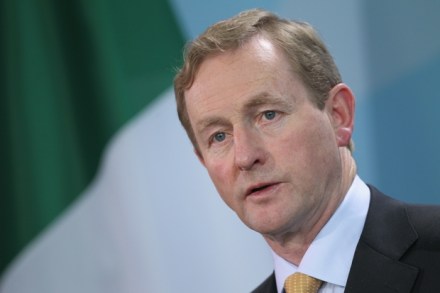
My man in Dublin calls with joy in his voice to tell me ‘the Troika’ — the combined powers of the EU, the European Central Bank and the IMF — have signed off Ireland as fit to leave their bailout programme and return to economic self-determination. This is a remarkable turnaround in just three years since I visited the Irish capital in the midst of rescue talks — to find a nation in shock, staring at an €85 billion emergency loan facility that equated to €20,000 per citizen, a collapsing banking system and a landscape scarred by delusional, never-to-be-finished property developments.

Now the economy is recovering, is it a good idea to buy Poundland shares?

From our UK edition

‘Satan seizes control of saintly bank’ would be a fair summary of much of the coverage of the deal that has rescued the crippled Co-operative Bank from oblivion, or ‘resolution’ as it is technically called. In order to avoid that fate, the parent Co-op Group has had to inject £462 million into the bank while accepting a reduction in its own equity stake to 30 per cent. Dominant among the holders of the other 70 per cent will be a group of hedge funds from New York and Los Angeles who may or may not represent the prince of darkness but are certainly looking for what Co-op Group chief Euan Sutherland calls ‘recovery value’.

There’s a revolution — in banking

From our UK edition

In 1925 Winston Churchill, then Chancellor of the Exchequer, famously declared that he wished to see ‘finance less proud and industry more content’. In the light of the financial crisis, much the same refrain has been heard from policymakers and politicians over the past five years. How are we to avoid repeating the mistakes of the past? And how might the financial sector reinvent itself for the future? I wish to argue there are grounds for optimism. Out of the ashes of the financial crisis a new type of banking is emerging. Old business models are being rewritten and new entrants are driving change. Indeed, it’s possible that the financial sector is in the early throes of a miniature revolution, the like of which has swept through a number of other industries recently.

Martin Vander Weyer: Bad news for pawnbrokers. Is that good news for the rest of us?

From our UK edition

While attention has focused on the sudden ubiquity and alleged iniquity of payday lenders, boom and impending bust has infected another part of the short-term credit sector. For the very reason that the global economy is recovering, Britain’s pawnbrokers are in trouble. Pawnbroking traces its history to the Medicis, but owes its traditional image in this country to Charles Dickens: ‘Of the numerous receptacles for misery and distress with which the streets of London unhappily abound,’ he wrote in 1835, ‘there are, perhaps, none which present such striking scenes as the pawnbrokers’ shops.’ Today’s UK market leader H&T, formerly Harvey & Thompson, opened for business on Vauxhall Bridge Road in 1897.

This isn’t a property bubble – it’s a reason to improve London’s transport

From our UK edition

Everyone —including me, if I’m honest — has been talking about a new property bubble. But is it for real? London house prices are rising at an annual rate of almost 10 per cent, and shares in the capital’s bellwether back-from-the-dead estate agency Foxtons soared on their stock market debut last week. Yet according to the Office for National Statistics, the national rise is just 3.3 per cent, the average price of a home having only recently regained its pre--credit-crunch peak. -Outside the South-East, and hotspots such as oil-rich Aberdeen, the pattern is largely flat or even falling.

Bet on Royal Mail, not Twitter

From our UK edition

Royal Mail delivers to 29 million UK addresses; last year it generated £9 billion of revenues, of which £324 million remained as profit before tax; and it is likely to be valued at £3 billion in its privatisation share sale, indicating a price-earnings ratio modestly below ten. Twitter — the microblogging phenomenon beloved of self-admiring celebs, but now so ubiquitous as a mode of communication that it is compulsory for British ambassadors abroad — has 200 million users and is expected to generate revenues of just £365 million this year, maybe twice that next year. Twitter says it’s profitable but has so far kept its accounts private, and is nevertheless likely to be valued at £6 billion-plus in its forthcoming flotation.

Welcome back, TSB: your founder’s spirit is alive and well and living in Airdrie

From our UK edition

A big hello to the revived Trustee Savings Bank — the spin-off of 631 Lloyds branches that were going to be sold to the Co-operative Bank to fulfil EU conditions for the bailout of Lloyds after its catastrophic takeover of HBOS. The new entity starts life with 4.6 million personal and small-business customers, a clean balance sheet, no investment banking arm and no foreign skeletons in its cupboard. That all sounds promising, but those of us who have long argued for a break-up of mega-banks and a return to relationship-driven high-street finance will watch closely to see whether the new TSB’s slogan, ‘Welcome back to local banking’, turns out to be just that, or a real mantra for change.

Charm-y Carney shows his bookish side

From our UK edition

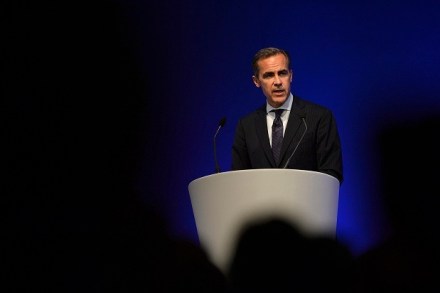
Mark Carney’s charm offensive continues. I hear that the new governor of the Bank of England was laying it on thick last week when he bumped into Faisal Islam, Channel Four’s Economics Editor, after he gave his first public speech. ‘Don’t you have a book out?’ The Canadian smoothy asked Faisal, who offered to send him a copy. ‘Well I've got an idea, how about I buy one?’ The charmer cooed. ‘I’d be honoured, governor.’ Faisal beamed. ‘Hey,’ replied the governor, ‘I said I’d buy it; I didn’t say I’d read it!

Unpaid internships turned me into a banker – but I still think they’re a good thing

From our UK edition

My thanks to ‘AndyB’, the only reader who posted an online comment on my column last week. It was ‘Don’t you ever go on holiday?’ and the answer is yes I do, and here I am deep in the Dordogne, glass of rosé to hand, lunch on the terrace in prospect, scanning cyberspace for some fizzing ingredients to make an Any Other Business cocktail. Upbeat economic news from home, led by ‘CBI lifts growth forecast amid optimism’, merely adds to the mellowness of mood. As for local issues to raise the pulse, there isn’t even a decent ruckus to be had over shale gas, since François Hollande has barred all exploration of it beneath French soil.