Aviation

Who’s to blame for the air travel crisis?

From our UK edition

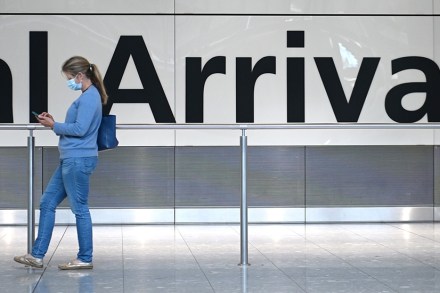
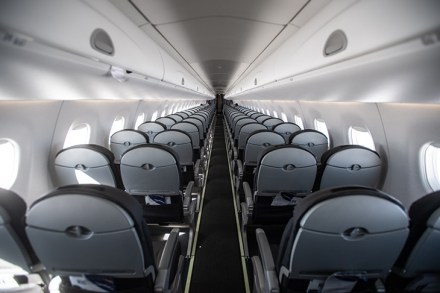
I sincerely hope you’re not reading this on a holiday flight that’s sitting on the tarmac with no indication as to when it might take off – or a sad train home after your flight was suddenly cancelled. Brace for three-hour delays at security, we’re told; don’t even try checking bags in, and at worst, as happened to Tui passengers at Manchester who thought they were going to Kos, watch out for a text after you’ve boarded telling you you’re going nowhere at all. How and why? When the pandemic set in, airlines and airports – thinking, not unreasonably, that their industry was doomed – made mass redundancies rather than keeping sufficient staff on furlough.
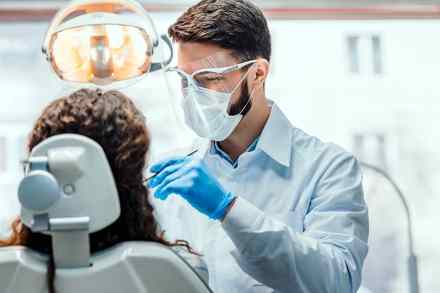
How hard is it to see an NHS dentist?

From our UK edition

Biergate Sir Keir Starmer was facing the scandal of ‘beergate’. Biergate is a lane in the Lincolnshire village of Grainthorpe. It is a noted area for grain production, although the origin of the name is not clear as it has also been recorded as Beargate on old maps. – It would not be happy hunting ground for Starmer or Labour as it has both a Conservative district and county councillor. – One thing you won’t find close by is beer. The village used to have a pub, the Black Horse Inn, but it closed in 2017. Not sharing Bill Gates declined to deny that he is shorting Tesla shares. What are the largest car companies by market capitalisation?

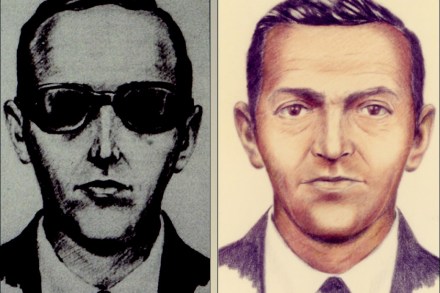
Fifty years ago, D.B. Cooper changed air travel forever

I flew from Seattle down to Las Vegas the other day to watch the Rolling Stones in action. Great show, Kafkaesque journey. There are times in life when the miseries of the world threaten to engulf us, when the precariousness of the human condition, far from appearing a worthwhile and even noble struggle, seems an infinite rebuke. That’s the way I feel when I pass through a modern-day American airport. Many Spectator readers will be familiar with the ordeal. It was shortly after 6 a.m. when I boarded my outward flight, and my reporting skills perhaps weren’t at their best. Nonetheless, I made a note of some of the many exhortations, appearing in either written or spoken form, that enlivened the morning. Stand here. Look at the camera.

cooper

End of the line: it’s time to rethink the queue

From our UK edition

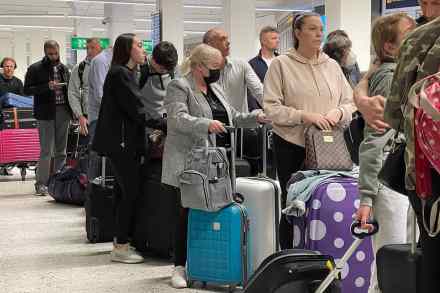
Flying to Kalamata this week, I did my own little bit to reduce the terrible queues at Heathrow Terminal 5. Heroically, I stacked up the grey luggage trays once they’d been emptied by passengers coming through security. As a result, there were more loaded trays for people to pick up, and a smaller tailback of passengers — including me — waiting to pick up their unloaded trays. It was just a tiny example of the hundreds of things that could be done to reduce queues in airports, hospitals, train stations, supermarkets… The British may be famous for their patient queueing but it doesn’t mean we actually like doing it. So why hasn’t more been done to eradicate queues?

The beauty of the Normandy memorial

From our UK edition

As the cross-Channel ferry noses into Ouistreham, I have a perfect view westward along the D-Day beaches. The excitement of arrival is heightened by the fact that this is the first time I have travelled to the Continent since Covid struck. Not since the age of 17 have I been absent from what the English call ‘Europe’ for so long — although of course, living in England, I have been in Europe all the time. My first objective on this trip is to see the new British Normandy Memorial at Ver-sur-Mer, the very place where my father landed with the first wave of the 6th Green Howards shortly after H-hour, 7.25 a.m., on D-Day in 1944. Located atop a high coastal bluff, the memorial commands a spectacular view of the Normandy beaches.

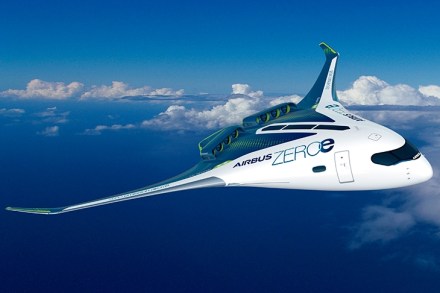
Could hydrogen power turn air travel green?

From our UK edition

Have you been scanning airline websites for exotic destinations to which your double-jabbed status might allow you to slip away in August? I certainly have, but I’ve ruled out the parts of Canada and the United States that are stricken by record-breaking heatwaves and forest fires — and I’m wondering what impact such extreme climate events will have on the aviation industry as it struggles back to life after the pandemic. Having survived a year of near-total shutdown, I suspect it will now face an onslaught of green rhetoric to which governments — positioning for November’s COP26 climate conference in Glasgow — will be forced to respond.

How many countries have royal yachts?

From our UK edition

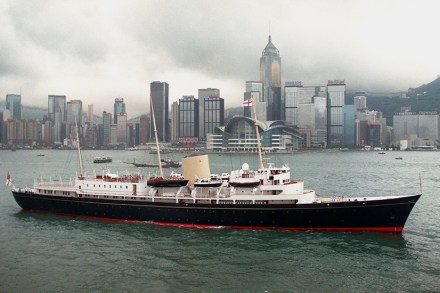
Royal waves Does any other country have a royal yacht? — The Queen of Denmark uses HDMY Dannebrog, a 260ft vessel built in 1932 to replace a paddle steamer of the same name. — The Dutch royal family own a 50ft 1950s yacht, De Groene Draeck, used only locally. — King Harald V of Norway has the use of HNoMY Norge, a 264ft vessel originally built for aircraft manufacturer Thomas Sopwith in 1937 and bought by the Norwegian people for their royal family after the second world war. It was restored following a serious fire in 1985. — King Mohammed VI of Morocco owns El Boughaz I, a 133ft yacht built for a private American owner in 1930 and originally called the Black Douglas. Covid death counts Is the UK still near the top of chart for Covid deaths?

Air travel is in terminal danger

From our UK edition

During the political car crash of 2019, I couldn’t imagine ever agreeing with Theresa May. Yet last week she exhibited both principle and pragmatism — qualities sorely lacking in her capitulation to the conniving EU paradigm whereby Northern Ireland made Brexit supposedly insoluble. The legacy of that surrender, Ulster’s disastrously unworkable trade protocol, will wait for another day. I come to praise May, not to bury her. The previous prime minister stressed to the Commons that ‘chaotic’ and ‘incomprehensible’ international travel restrictions, more oppressive this summer than last, send the message that Britain is ‘shut for business’.

It’s getting harder to laugh off the idea of UFOs

From our UK edition

When the late-night talk-show host James Corden asked Barack Obama about UFOs last month, there was as usual an air of nervous joviality surrounding the subject. Bandleader Reggie Watts pressed him as well and Obama, as if relenting, admitted two things. Firstly, that he could not divulge all that he knew on air; and secondly, that the slew of footage released by the Pentagon in the past two years showing UAP — ‘unidentified aerial phenomena’ — is in fact real.

Will remote-working strengthen the case for HS2?

From our UK edition

Soon after the pandemic hit, the world’s airlines turned off their pricing algorithms and resumed pricing flights manually. Everything the software had learned from people’s past behaviour was suddenly rendered irrelevant. The software had been created for a world of discretionary travel where demand was elastic. If a plane seemed likely to leave half-empty, the software dropped prices to fill remaining seats. In March this once-efficient approach failed spectacularly. The few people who were still flying were doing so only in desperation: everyone else was unwilling to travel at any price. Far from reducing prices to respond to a drop in demand, it now made sense to hike them.

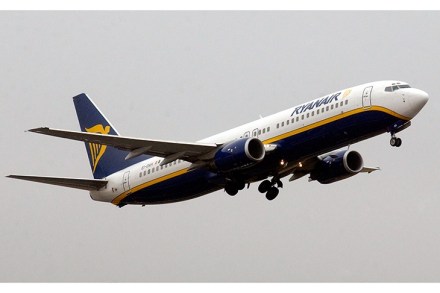
Ruthless Ryanair could show us the future of aviation

From our UK edition

Aviation, nuclear power and public transport — along with good restaurants, golden retrievers and hand-knitted bed socks — are, as Julie Andrews put it, a few of my favourite things. So in a week when the news is as depressing as I can remember since the dark winter of 1973-4, I might as well write about all of them. I’ll try to find points of light along the way but it’s not going to be easy. First the plight of airlines, now so extreme that it’s hard to foresee any outcome other than nationalisation for many major carriers. Even if the new ban on leisure travel ends, only pre-flight Covid testing and reduced quarantine can boost passenger numbers in the short term, while transatlantic routes will take years to recover.

Could ‘clean tech’ save the aviation industry?

From our UK edition

What advice can I offer Alok Sharma, who took a pasting in the weekend press for his lacklustre performance as Secretary of State for Business, Energy and Industrial Strategy? While Rishi Sunak knocks up as many runs as he can on a difficult wicket with his job support scheme and VAT deferrals, Sharma is the ‘dead bat’ (in one business chief’s phrase) at the other end — accused of offering no Brexit clarity, not much personal energy and no strategy at all. In defence of this former City accountant, we might say that his rag-bag department, operating under many different names since 1979, has rarely been regarded as an engine of British enterprise.

Now get off your sofa to help save the arts

From our UK edition

Along, cold weekend brought a haul of business news more bad than good. The worst was from aero-engine maker Rolls-Royce, which announced a £5.4 billion half-year loss — adverse currency movements plus a collapse in new orders and engine-repair work — and warned that in the ‘plausible downside scenario’ of an extended slump in global aviation, the company might cease to be a ‘going concern’. That’s a horrendous prospect for what’s left of British engineering. And unlike recent losses on a similar scale at BP, there’s no consolation in terms of long-term repositioning of the business: in short, the fewer jets flying, the grimmer Rolls’s future.

In defence of Amazon

From our UK edition

We should take heart from BP’s £5.1 billion second-quarter loss, accompanied by a halving of its dividend. What’s good about that? Nothing — except that the loss reflects a write-down of the value of oil and gas assets that shifts the company to a more realistic footing for an extended period of low oil prices and reduced demand, indicating resilience rather than impending doom. In recent times, BP has lived through Deepwater Horizon, history’s most politicised oil-rig disaster, and extricated itself from TNK-BP, history’s nastiest Russian joint-venture. It operated when oil was below $20 a barrel in 2001 and when it hit $147 in 2008. It has plans to achieve net zero carbon by 2050.

Is it too late to jump on the gold bandwagon?

From our UK edition

The price of gold has been rising since the earliest virus reports from China in December. Adherents regard it as a hedge against inflation, bad government, economic turmoil, weak currencies and negative real returns on financial alternatives, all of which are present threats. For pessimists, this week’s headlines — above-inflation pay rises for 900,000 UK public-sector workers, the EU’s €750 billion debt-fuelled recovery package, the WHO’s report of 260,000 new Covid cases in a single day — all represent arguments for this ultimate safe-haven holding. Too late to jump on the bandwagon?

Airlines are no special case when we all need a bailout

From our UK edition

The world needs airlines — and, barring Armageddon, will still have some when this crisis is over. It will also still have aircraft, pilots and airports. The aviation industry, accustomed to volatility as it is, should be well capable of restructuring and regrowing in response to renewed demand, even if bankruptcies are left behind. I know that sounds glib, but airlines on both sides of the Atlantic have been loud in calling for state aid as traffic has collapsed — and in the cruel process of deciding how governments can equitably relieve the virus’s financial impact on every business and family, all such claims demand scrutiny.