Assassinations

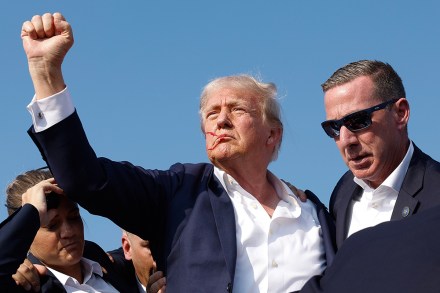
Which world leaders survived the greatest number of assassination attempts?

From our UK edition

Marathon sprints The Kenyan marathon runner Sabastian Sawe broke the world record by running the first official sub-two-hour marathon. – The world’s first official sub-three-hour marathon was also run in London, at the 1908 Olympics at White City. – The record could have gone to an Italian, Dorando Pietri, but he collapsed just short of the line and was helped over it, leading to his disqualification. The record went instead to Johnny Hayes, at a time of two hours 55 minutes and 18 seconds. – The two and a half hour barrier was broken in 1925, in New York. The price of energy Is renewable energy really helping to keep down bills? The table shows domestic electricity price alongside the share of electricity made up of wind and solar. South Korea 10.
On less famous presidential assassins

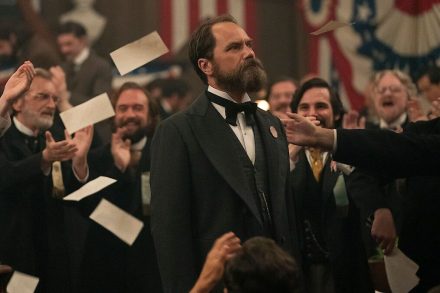
Everyone can name JFK and his (probable) assassin, Lee Harvey Oswald, or Abraham Lincoln and everyone’s least favorite actor, John Wilkes Booth. But what of James A.  Garfield, America’s short-lived (in both senses) 20th President, and his murderer, Charles Guiteau? Both men have disappeared into obscurity, at least until Candice Millard’s award-winning 2011 true-crime history Destiny of the Republic, which skillfully unpicked the sheer strangeness of the backstory behind Garfield’s protracted death and Guiteau’s conviction and execution for the crime. Garfield won election in the 1880 presidential election almost by accident.

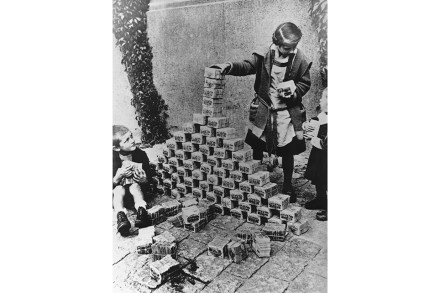
Why did the Weimar Republic descend so rapidly into chaos?

From our UK edition

‘Thirteen wasted years’ bellowed Adolf Hitler at receptive audiences in the spring of 1932. He was talking about the first full German democracy, the Weimar Republic. Proclaimed in November 1918, it was born out of a desire to do things better after the horrors of the first world war and was an ambitious attempt to establish one of the most progressive states in history. ‘Democratic chaos,’ sneered Hitler, ‘unmitigated political and economic chaos.’ Much of the electorate agreed. Less than a year later, Hitler became chancellor and immediately set about fulfilling his electoral promise to destroy democracy. The short and tumultuous story of the Weimar Republic continues to fascinate.