Art

Exhibitions Round-up: lifting the heart

From our UK edition

The run-up to Christmas is the perfect season for an exhibition of Andrew Logan’s joyful and extravagant art. The run-up to Christmas is the perfect season for an exhibition of Andrew Logan’s joyful and extravagant art. At Flowers (82 Kingsland Road, E2, until 31 December) is an installation of glittering sculptures which lightens the spirit and brings a song to the lips. Fashion meets fantasy in Logan’s signature mirror sculptures, his unique blend of resin, glass, fibreglass, paint and glitter. For the past 40 years, Logan (born 1945) has brought colour and light into people’s lives. He was a pioneer of the sensational long before the YBAs toddled into view; revealingly, Sir Norman Rosenthal, chief enabler of the YBAs, is a long-time admirer of Logan.

Come together

From our UK edition

Niru Ratnam invites you to join in and take off your trousers in the name of art at the taxpayer’s expense — while you still can In the week before the G20 summit in early 2009, I found myself sitting at a large, round, glass-topped table in the new extension to the Whitechapel Gallery. A large tapestry copy of Picasso’s ‘Guernica’ hung on one of the walls nearby. Around the table were 30-odd people made up of students, random art folk, regulars of the Anarchist Bookshop located in the alley next to the gallery and, somewhat incongruously, the managing director of the Whitechapel Gallery looking dapper, if increasingly confused, in the chair. We had all been invited along to respond to ‘the current political and economic climate’.

Forget the matchstick men

From our UK edition

Here at last is a book that takes L. S. Lowry’s art seriously and treats it with the scholarly attention it deserves. Here at last is a book that takes L. S. Lowry’s art seriously and treats it with the scholarly attention it deserves. Tom Rosenthal has been a life-long admirer of Lowry’s work, spending his formative years in Greater Manchester and even interviewing the old curmudgeon for Radio 3 in the 1960s. One of his aims in this book is to dispel the various myths that have grown up around Lowry and his critically underestimated art. It has become fashionable in the art world to look down on Lowry as a naive painter who could only paint industrial landscapes full of ridiculous scampering matchstick people.

Chinese burn

From our UK edition

A kind of madness has taken grip of the art market. It seems that the world’s super-rich have decided that money has no value — or at least that it has a value different from that understood by the rest of us. Just this month, one of Alma Tadema’s fanciful biblical epics was sold for an incredible $36 million (previous auction record $2.8 million), a Modigliani changed hands at $69 million (previous record $31 million), while a now famous porcelain vase made for the Emperor Qianlong, which turned up in a bungalow in Pinner, realised more than £53 million — a world auction record for any Chinese work of art. Of all global art markets, none is more feverish than that of Chinese art.

A thinker of arresting and compelling grandeur

From our UK edition

John Ruskin is the greatest writer whom, today, an educated person can admit not having read without embarrassment. One professes ignorance of Shakespeare or Dickens with apology or defiance, but most of us still seem unaware that Ruskin is as essential as Chaucer or Milton to understanding ourselves within a world (for all its ills), of beauty and happiness. Hopefully The Worlds of John Ruskin will bring new readers to one of modernity’s most remarkable thinkers. Ruskin first made his name with Modern Painters, a five volume work published between 1843 and 1860 which established Ruskin as the dominant art critic of the mid-19th century and is remembered chiefly for its passionate defence of Turner.

Vertically challenged

From our UK edition

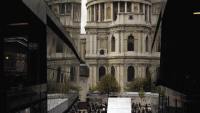
St Paul’s Cathedral is quite rightly something of a national obsession. No other building has protected ‘view corridors’ as a result of legislation in 1935, when new building regulations allowed the surrounding buildings — notoriously a telephone exchange to the south — to overtop the cathedral’s cornice line. These corridors, extending like an unseen net as far afield as Richmond Hill, make architects unaccountably cross, as if they were an unfair curb on the alliance of art and Mammon. Thank God they are there, and that the tallest buildings, springing up once again like genetically modified beanstalks, are at least corralled east of Bank. St Paul’s Cathedral is quite rightly something of a national obsession.

Ring of truth

From our UK edition

The glamorous art world of Manhattan is a natural subject for novelists and film-makers, but with the honourable exception of William Boyd’s Stars and Bars, written before the great art boom of recent times got going, few of the novels or movies have quite got it right. The glamorous art world of Manhattan is a natural subject for novelists and film-makers, but with the honourable exception of William Boyd’s Stars and Bars, written before the great art boom of recent times got going, few of the novels or movies have quite got it right. But now comes a novel by Steve Martin, An Object of Beauty, which does seem to have the ring of truth about it.

Middle East meets West

From our UK edition

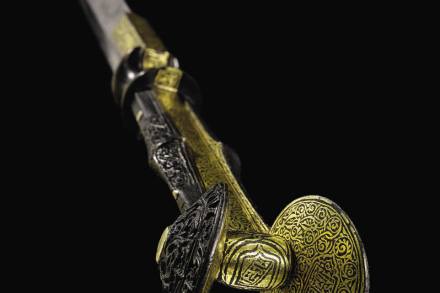
The Islamic-art market has seen some changes since it emerged in the late-19th century. At that time, anything Middle Eastern was likely to be classified as ‘Persian’, while for most of the 20th century the preferred term was ‘Islamic art’. Now, it is ‘art of the Islamic world’, and the market is stronger than ever. Last month at Sotheby’s saw a new record for an Islamic weapon: almost £4 million for a dagger from 15th-century al-Andalus. The Islamic-art market has seen some changes since it emerged in the late-19th century. At that time, anything Middle Eastern was likely to be classified as ‘Persian’, while for most of the 20th century the preferred term was ‘Islamic art’.

The body in the library

From our UK edition

Jacques Bonnet is a distinguished French art historian and novelist who has amassed a private library of 40,000 volumes (around double the number contained in the average Waterstones). Phantoms on the Bookshelves is Bonnet’s meditation on a life lived with so many books. Particularly pressing is the matter of classification. ‘Should I put Norbert Elias’s What is Sociology? next to his more historical works?’ he worries. ‘Should Paul Veyne’s Comment on écrit l’histoire be next to his studies of sexuality and euertegism (gift-giving) in ancient Rome? Does Picasso count as French or Spanish? Modigliani as Italian or French? And what am I to do with Michelangelo?

Across the site | 19 October 2010

From our UK edition

Just to point CoffeeHousers in the direction of a trio of delights across the site. First up, is Lloyd Evans’ review of a talk by Kevin Spacey that the Spectator hosted last week, which you can read over at the Spectator Arts Blog. And we also have a web exclusive review, by Lloyd again, of a Spectator debate on faith schools, here.     Then there’s our vote for The Greatest Parliamentarian of the Last 25 Years. There are only a few days left to nominate your choice for the award, which you can do so here. The most persuasive nomination that we receive will win its author a pair of tickets to The Spectator’s Parliamentarian Awards dinner on 17 November.

Director’s cut

From our UK edition

In the spring of 2008 I went on a press trip with the director of the British Museum, Neil MacGregor, to Hadrian’s wall. It was one of a series of jaunts planned by the BM in the run-up to its great Hadrian exhibition, a little Roman holiday. But though the wall was fascinating, I spent most of my time inspecting the director. He’s charming and universally admired — but also enigmatic. What are his politics? What does he do for fun? Nobody seems to know. So I watched him at Segedunum in Newcastle, talking to local grandees, charming, mercurial, alert. I watched him out by Housesteads fort, chatting to the curators.

Art is a high-risk business

From our UK edition

Never before have so many people in so many places collected works of art. In the past decade, the auction houses in particular have made heroic efforts to expand their markets, both by reaching out to emerging economies and by embracing new technologies. Thanks to instant translation by online search engines and live online auction platforms, it is now as easy to buy a work of art offered by an English provincial auction house or a Manhattan dealer while sitting in Guangzhou as it is from Guildford. The international art market has become global, and art is now seen as an asset class for investors. Given the current performance of the global financial and property markets, it is probably fair to say that more people than ever are tempted to put their money in works of art.

Double exposure

From our UK edition

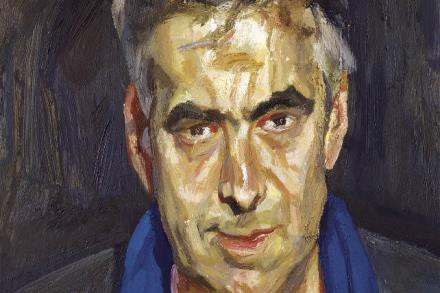
I never thought I’d write these words. I never thought I’d write these words. This book is unclassifiable. It belongs to a whole new genre. The field of literature has been extended! And I saw it happen. Martin Gayford, who writes for The Spectator and whom I’ve never met, kept a diary during the seven months he spent sitting for the painter Lucian Freud in 2003/4. The book is a journal, an act of confession, a character study of Freud, a piecemeal survey of art history and an investigation into the practicalities of portraiture. It’s also a hostage drama. Gayford has no idea how many months or years the painting will take, and his abductor-cum-immortaliser asserts his right to abandon the project at any moment, without warning.

What it is to be British

From our UK edition

What is it about the British and flag waving? I ask after watching last night's superlative BBC Proms, a brilliant end to the best season for years. On HD and wired to the hifi, it was all the better. As the end approached, my Czech mother-in-law asked: if this is Britain's flagship musical event, why are there so many foreign flags? It's hard to explain. Britain has a mutating relationship with flags and nationality. Twenty years ago, the Union flag was used in England matches, then devolution came and the St George's cross made an emphatic comeback. I'm sure I saw a Cornish flag last night, and at least one Saltire, so part of it is regionalisation.

Built for eternity

From our UK edition

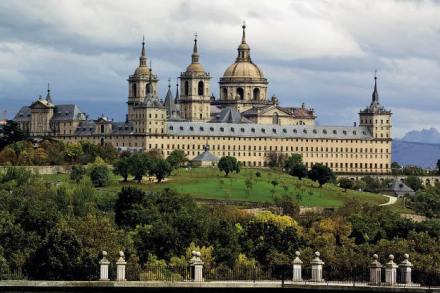
The Escorial, as a monastery and a royal palace, was the brain child of Philip II of Spain. Built in the latter half of the 16th century, about 30 miles north-west of Madrid, the huge granite complex with 4,000 rooms, 16 courtyards, a basilica, a library and picture gallery as well as the king’s private apartments, came to be regarded as the creation of a cold-hearted despot cut off from the outside world. For Richard Ford, whose 1850 Handbook for Travellers in Spain is the most learned guidebook ever written, the Escorial ‘was as cold as the grey eye and granite heart of its founder’.

Doing what it says on the tin

From our UK edition

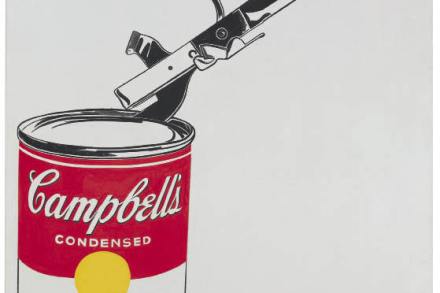
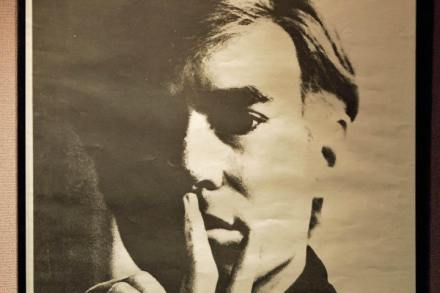
If you want to know all about Andy Warhol, just look at the surface: of my paintings and films and me, and there I am. There’s nothing behind it. Much the same thing has been said by many artists and writers, but seldom has this proposition been so tested as it is by ‘32 Campbell’s Soup Cans’. In the Factory, as he called his atelier, Warhol made paintings of photographs, casually silk-screened prints of blown-up acetates of blow-ups from contact sheets of original negatives, copies of copies, images of images. He inverted high and low culture. He expressed something, defined something, about our psychic relationship to the stuff that surrounds us, in the way that Freud or Proust did. He changed the way we see, and he changed art.

A man after his time

From our UK edition

Denys Watkins-Pitchford (1905-1990) illustrated dozens of books under his double-barrel and wrote at least 60 of his own under the two initials ‘BB’. Denys Watkins-Pitchford (1905-1990) illustrated dozens of books under his double-barrel and wrote at least 60 of his own under the two initials ‘BB’. This Symposium is a demonstration of how his writing has touched many, varied lives. The son of a vicar, he put his own faith in ‘nature’. Subsidised by his own writing, he followed what is called here ‘the manly pusuits’ — fishing, wildfowling — though why a man exalted to near ecstasy by the beauty of a skein of geese rising from marshes in the dawn should feel it necessary to shoot, to ‘bag’ its leader, is a mystery.

More than a painter of Queens

From our UK edition

The last words of Hungarian-born portraitist Philip de László, spoken to his nurse, were apparently, ‘It is a pity, because there is so much still to do.’ As Duff Hart-Davis’s biography amply demonstrates, for de László, art — which he regarded as ‘work’ as much as an aesthetic vocation — was both the purpose and the substance of his life. The last words of Hungarian-born portraitist Philip de László, spoken to his nurse, were apparently, ‘It is a pity, because there is so much still to do.