Art market

In defence of deaccessioning

From our UK edition

There’s more than a grain of truth in the popular caricature of a curator as a mother hen clucking frantically if anyone gets too near her nest – not that her eggs are about to hatch, let alone run. The recent threat of the British Council to ‘deaccession’ – to put it more bluntly, sell – its 9,000-strong collection of British art has caused a predictable flurry in the curatorial world. Doesn’t the British Council know that public art collections are sacrosanct and must be preserved for all time? When I was director of Glasgow’s museums and art galleries, I remember talking to my committee about my long-term plans for the city’s great permanent collection when the leader of the council, Pat Lally, commented drily that there was no such thing as ‘permanent’.

The genuine faker John Myatt

John Myatt held his breath as the bidding began in the Christie’s auction room. His drawings were selling, one by one. He had dreamed of having his work on the block since the beginning of his career. He felt a tingle of adrenaline as the paddles went up... and victory as he strolled through the city streets with a wad of money in his back pocket afterward. But the feeling didn’t last long. Eventually, Myatt started to feel empty and disappointed. The psychic void grew as the prices that his agent, John Drewe, sought for his work went up and up.

Myatt

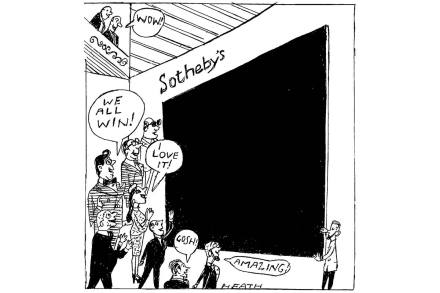
Sotheby’s latest gamble

On February 1, 2024, Sotheby’s auction house announced a new fee structure that came as something of a surprise to the art world. For decades, Sotheby’s and its competitors have been one-upping each other with respect to the fees charged to buyers and sellers. While these fees have unquestionably increased the profitability of the auction houses themselves, in their complexity they have often bewildered auction participants and market observers alike. In theory at least, that may be about to change. Beginning this spring, Sotheby’s new fees will be both lower and potentially easier for all parties to understand. They apply to sellers consigning lots for auction after April 15, and to buyers beginning on May 20.

Sotheby's

Why the Royal Academy is wrong to consider selling their precious Michelangelo

From our UK edition

How much does a Michelangelo cost? It is, as they say, a good question, meaning: nobody really knows. The reason for this odd state of affairs is that almost none of them have ever been bought and sold on the open market, which is how the prices of most things are established. It’s hard to think of many examples of his sculptures being traded in that way over the past 500 years. Strangely, the main exception is the ‘Taddei Tondo’, otherwise known as ‘Virgin and Child with the Infant St John’, which, reportedly, some members of the Royal Academy are suggesting the RA should sell. If that were to happen, which I very much hope it does not, we might learn the answer to the conundrum. Probably it would be a very large sum indeed.