Arnold schwarzenegger

The polished edges of Colorado’s ski resorts

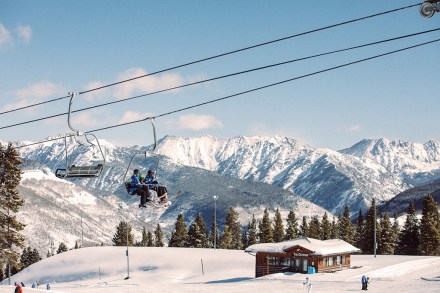
“Arnold Schwarzenegger was sitting exactly where you are,” the boot fitter said, as he handed me K2 Anthems at Aspen Collection, perhaps the world’s most sophisticated ski rental shop and café. “He was drinking Sancerre.” It’s an impossibly “Aspen” anecdote – where else would the Terminator sip French wine, but the resort famous for Champagne showers and fresh powder? Such a scene seemed perfectly fitting in Colorado, where I have come to explore Aspen and Vail – two titans of American skiing. Vail remains the more accessible of the two, its European-inspired village just 120 miles from Denver, while Aspen's extra hundred miles of mountain road maintain that coveted layer of exclusivity. Bouncing between the resorts, I’ve discovered a season of transformations.
The Terminator is still the best

From our UK edition

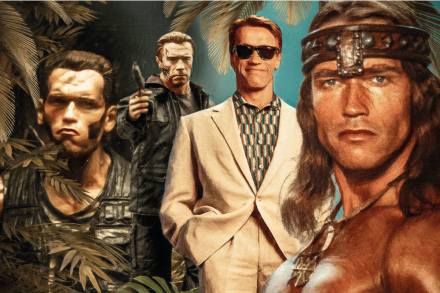
The Terminator is James Cameron’s first film, made a star of Arnold Schwarzenegger, is celebrating its 40th anniversary – there’s a 4K restoration out in cinemas – and I’ve never seen it. I’m not wholly ignorant of 1980s action films, it may surprise you to hear. I’ve seen Diehard. I know a single fella in a vest can see off an entire army. But Terminator passed me by and now I’m glad to have rectified that. It’s engrossing, suspenseful, has a personality all of its own and absolutely stands the test of time. That last scene with the crawling, whirring, clanking arm? Best scene ever. Cameron, who would go on to make Aliens, Titanic and Avatar, was reportedly living out of his car when he sold the script to producer Gale Anne Hurd for $1.

Arnold Schwarzenegger is back

It would be presumptuous to call 2023 the comeback of Arnold Schwarzenegger: he never went away. From his first starring role in 1982’s Conan the Barbarian to an illustriously memorable life and career that have included everything from the Terminator films to his term as governor of California, he has judiciously created an existence for himself as an all-American success story; a sort of Scott Fitzgerald character for the Reaganite age. Not bad, really, for a man born seventy-six years ago in a small town in Austria, the son of an unrepentant Nazi. Should you turn on Netflix, you will now be greeted by two incarnations of Der Arnold.

Arnold

The expendable Expendables: how has Hollywood’s least essential franchise persisted?

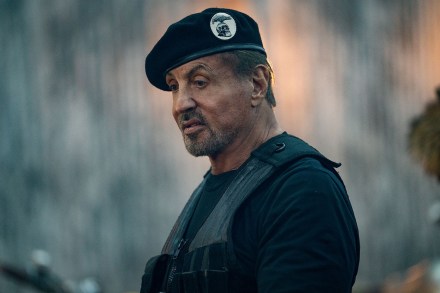
For anyone of a certain age who grew up in the Eighties and Nineties, there was always a wistful feeling that persisted whenever a big-budget blockbuster came out. The likes of Arnold Schwarzenegger, Sylvester Stallone and Bruce Willis were often seen slaughtering (usually foreign) villains and dispensing manly quips. But why did they never team up to do so together? Was there not the possibility that, one day, a veritable Dirty Dozen of Hollywood hard men could be assembled to kick ass, take names and (perhaps) compare notes on agents’ fees, too? Well, Stallone himself was not deaf to the pleas of action-loving cineastes, and so his 2010 film The Expendables was an honorable attempt to make exactly this sort of film.

sylvester stallone expendables

Arnold Schwarzenegger’s leftward turn

In the '80s and early '90s, there was perhaps no greater cinematic hate figure for liberals than Arnold Schwarzenegger. Since his first big hit in the politically dubious Conan the Barbarian (Roger Ebert wrote of the film's James Earl Jones-decapitating ending, “I found myself thinking that Leni Riefenstahl could have directed the scene, and that Goebbels might have applauded it”) he became a Reaganite fantasy, disposing of foreign-accented villains who threatened the good ol’ United States of America with little more than automatic weaponry and an Austrian-accented quip. Never mind that his father Gustav was a leading light of the Nazi party.

When actors become politicians

The similarities between acting and politics are obvious. Someone stands on a stage, wearing makeup and an appropriate costume. With suitable gravitas, they read out a speech that someone else has written. If it goes well, there is applause. (If not, there can be booing, or a riot.) If they are good at their job, they can continue at a high-profile level for a considerable time, and arouse great public affection. If they are not, they are either swiftly forgotten or, at worst, become a figure of public loathing, a status that they might never live down for their rest of their lives.

Is Boris Britain’s answer to Arnold?

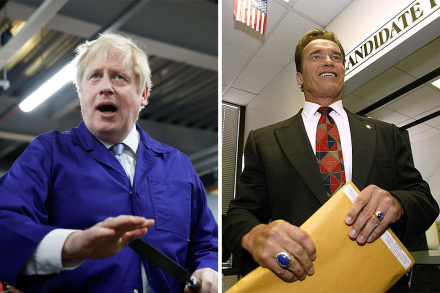
As the political stage that Boris Johnson stands on continues to shrink and become more unstable, I am reminded of how much his career resembles that of another larger-than-life celebrity. Last month, Arnold Schwarzenegger rolled his large black Yukon SUV over a red Prius in Los Angeles. The former California governor was uninjured, but the other driver suffered serious injuries and was hospitalized. Law enforcement sources told TMZ that "they believe the accident was Arnold's fault." They think Arnold made an illegal left turn at an intersection. There’s no word if he will be charged. The incident got me to thinking how both Boris and Arnold have a history of ignoring rules and creating mayhem around them.

boris arnie

How The Spectator discovered Helen Mirren

From our UK edition

One of the first jobs I ever did for The Spectator was to find out if professional wrestlers fixed the outcome of their fights in advance. This was 1965. The editor who wanted to know was Iain Macleod, a future chancellor of the exchequer filling in time while his party was out of office by dabbling in journalism. He turned out to be an addict of the professional wrestling screened on Saturday afternoon TV. In spite of the spinal disease that had immobilised his back and neck, he mimed what he meant by throttling himself without getting up from his chair in an Indian deathlock. His deputy editor, his political editor and I watched this unnerving performance in horrified silence. ‘Wouldn’t it be better if we sent a man?’ asked the deputy editor after a long pause.

GOP West: could Republicans have an Arizona advantage?

This article is in The Spectator’s December 2019 US edition. Subscribe here. November inflicted more dismay on Republicans. Twelve months out from the presidential election, state and local races this year subjected the GOP to another bloodbath. The party lost both chambers of the Virginia legislature and gave up the governor’s mansion in deep-red Kentucky, despite a campaign intervention by the President. The drubbing Republicans received in city and county contests near Philadelphia was the most frightening of all, presaging difficulty ahead for Trump’s reelection efforts in Pennsylvania. Democrats could relax: 2018 was not a fluke after all.

arizona