Anthropic

The Founding Fathers of AI

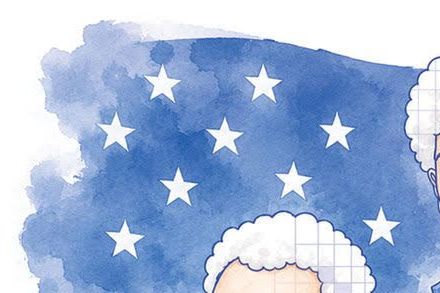
In the spring of 1722, a 16-year-old apprentice in a Boston print shop began slipping letters under the door at night, signed by a middle-aged widow named Silence Dogood, who did not exist. The apprentice was Benjamin Franklin. His brother James, who owned the paper, had no intention of printing his kid brother, so Franklin invented a woman and let her say the things he couldn’t. Readers wrote in guessing at the author. No one suspected the boy sweeping the floor. Franklin would go on to be a printer, a postmaster, a scientist famous across Europe for his electrical experiments and a founder of libraries, fire companies and, in time, of the United States itself.

Silicon Valley wants to control the economy

I recently walked past an old minicab stand which, during our younger student days, sallied my friends back and forth between the city’s nightlife and our more affordable suburban digs. It is gone now; only a dilapidated and cordoned-off shack remains of a once-thriving minicab empire. Like thousands of others across the western world, the business went into terminal decline the moment Uber appeared in our lives. Yet a simple check of the app today shows the price of an Uber is not substantially less than a minicab ride back then. Uber rocketed to celestial heights because it was heavily subsidized by venture capital – driving the value through the floor, bankrupting all physical competitors, before it then jacked up the price to create an instant monopoly.

LLM

The Pope’s AI intervention shames our politicians

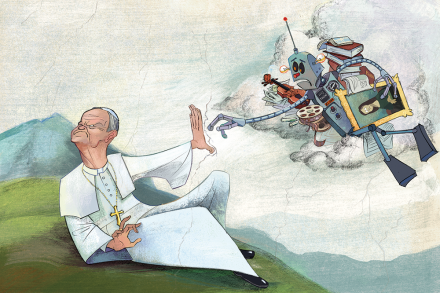
I was born into a sternly Presbyterian culture. Politically, I’m more Orange than Donald Trump’s skin tone. But today I am on my knees giving thanks to the Pope. He has produced the most powerful political document of the year, taking on the greatest challenge of our times. His first encyclical, Magnifica Humanitas, deals with the changes which will be wrought to all our lives by artificial intelligence in the months and years ahead. AI will transform our economies and societies massively and irrevocably; it will change what it means to be human; it may even mark the end of humanity itself. If it takes the Pope to alert us to this revolution then perhaps the Reformation wasn’t such a good idea after all.

AI