Angela merkel

Forget the ‘Norway model’. Germany suggests UK could get ‘special’ EU status

From our UK edition

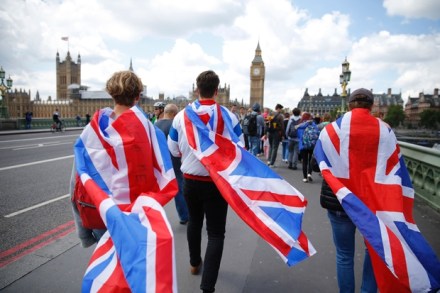
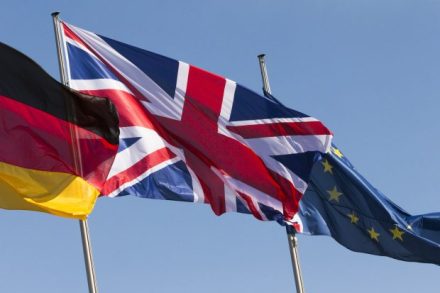
Britain’s decision to leave the EU sent shockwaves crashing throughout the continent. As Europe struggled to interpret the outcome of the referendum, we heard calls for Brussels to drive a hard bargain with the UK in order to contain the 'Brexit contagion'. The European Council President Donald Tusk's warning that the UK must not be allowed to 'profit' from leaving the bloc summed up this mood. But now, it seems, our neighbours in Europe are coming to terms with Brexit. And with it, the desire to punish the UK appears to be dampening. Michael Roth, Germany's European Affairs minister, has this week suggested that a 'special status' could be achieved which would take into account Britain’s size and previous commitment to the European project.
High life | 11 August 2016

From our UK edition

Gstaad   ‘He flies through the air with the greatest of ease, that daring young man on the flying trapeze.’ As everyone knows, life’s unfair, but this is ridiculous. An American daredevil falls out of an aeroplane at 25,000 feet without a parachute and manages to land on a postage-stamp-size net without a scratch. The poor little Greek boy falls off a balcony ten to 15 feet high, lands on gravel and breaks many bones in his body. Being encased in plaster is similar to living under a strict dictatorship, North Korea, for example. There’s no crime, no muggings, but as far as doing what comes naturally, fuggetaboutit. Self-doubt and cultural pessimism are twinned to physical immobility and pain.

The Spectator Podcast: Summer of terror | 30 July 2016

From our UK edition

After a week where both Germany and France suffered terror attacks, the question of the relationship between Islamic terrorism and Europe’s refugee crisis is once again rearing its head. In his Spectator cover piece, Douglas Murray argues that whilst the public knows that 'Islamism comes from Islam', Europe’s political classes are still refusing to tackle the problem at its core. So how can we bridge this gap between what politicians are saying and what the public are thinking? And does Europe have to come to terms with a new reality of domestic terrorism? On this week's podcast, Douglas Murray speaks to Lara Prendergast. Joining them both to discuss Europe's summer of terror is Haras Rafiq, Managing Director of the Quilliam Foundation, a counter-extremism think tank.

The Spectator Podcast: Summer of terror

From our UK edition

In a week in which both Germany and France have suffered terror attacks, the question of the relationship between Islamic terrorism and Europe’s refugee crisis is once again rearing its head. In his Spectator cover piece, Douglas Murray argues that whilst the public knows that 'Islamism comes from Islam', Europe’s political classes are still refusing to tackle the problem at its core. So how can we bridge this gap between what politicians are saying and what the public are thinking? And does Europe have to come to terms with a new reality of domestic terrorism? On this week's podcast, Douglas Murray speaks to Lara Prendergast. Joining them both to discuss Europe's summer of terror is Haras Rafiq, Managing Director of the Quilliam Foundation, a counter-extremism think tank.

Europe’s summer of terror

From our UK edition

How is your Merkelsommer going? For now, Britain seems to be missing the worst. True, a couple of men of Middle Eastern appearance tried to abduct a soldier near his base in Norfolk for what was unlikely to have been an interfaith dialogue session. But Britain’s geographical good fortune, relative success in limiting weapons and our justified scepticism of the undiscriminating ‘open borders’ brigade mean that we have so far been spared the delights of what Angela Merkel’s growing army of critics refer to as her summer of terror. Douglas Murray and Haras Rafiq discuss Europe's summer of terror: It is now a fortnight since Mohammed Lahouaiej-Bouhlel shouted ‘Allahu Akbar’ and ploughed a truck along the Nice seafront, killing 84 people.

Is Theresa May Britain’s Angela Merkel? The German press thinks she might be

From our UK edition

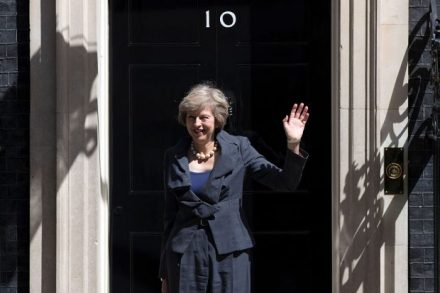
As Britain's second female Prime Minister, Theresa May has inevitably been compared to Margaret Thatcher. But she's also been linked to a contemporaneous politician: Angela Merkel. Whilst some have dismissed the comparisons, it's not only British journalists drawing on the similarities between Theresa May and the ‘Iron Frau’ - German newspapers are now doing the same. The initial parallels are clear; two middle-aged women who have fought their ways to the top of the male-dominated world of politics. However, both Bild and Die Welt - two of Germany's biggest newspapers - believes there is much more which unites May and Merkel and has uncovered a surprising number of similarities to back up their argument.

Merkel tells Juncker: Britain needs plenty of time to invoke Article 50

From our UK edition

Der Speigel has published a fascinating write-up giving last week’s extraordinary events from Angela Merkel’s perspective. Specifically, it seems, she’s had enough of Jean-Claude Juncker, the egregious president of the European Commission, and has told him to bow out from future negotiations with the UK. She’s fed up of him insisting that Britain rushes to invoke Article 50. Indeed, her “utmost concern,” says the magazine, is “giving Britain as much time as possible” for an orderly transition. Here’s an extract:- At 1 p.m. on the Friday after the Brexit referendum, Merkel makes a statement to Berlin journalists in which -- in contrast to Schulz -- she does not demand a rapid British withdrawal.

Project Hope

From our UK edition

Boris Johnson famously said that Winston Churchill would have voted for Brexit. The wartime leader’s grandson — staunch Remainer and Tory grandee Nicholas Soames — dismissed such claims as ‘appalling’ and ‘totally wrong’. This bad-tempered referendum rift between two traditionalist, Old Etonian Conservatives symbolises, somewhat incongruously perhaps, the broader state of the nation. Deep and traumatic divisions have been drawn between friends and families everywhere — and, of course, within political parties. David Cameron’s dignified resignation speech has quickly given way to a grim determination to ‘Stop Boris’ from taking the Conservative crown and the Premiership.

William Astor: Why voting Leave won’t mean we leave the EU

From our UK edition

It is difficult not to be Eurosceptic. The euro is in trouble, Greece has been bankrupted by Angela Merkel’s fiscal rules, and the Schengen agreement on open borders is collapsing as economic migration seems impossible to stop. Genuine refugees are sadly lost in the human tide of misery landing on the shores of Greece and Italy. And the democratic deficit which allows the European Union to be so unaccountable is leading to the rise of extreme nationalist political parties all over Europe. The result – Bulgaria has a lamentable justice system, Poland has introduced illiberal media laws and Hungary’s constitution has been hijacked. The EU is in danger of collapse unless it undertakes serious reform.

The Spectator’s Notes | 2 June 2016

From our UK edition

‘No one can seriously deny that European integration brought an end to Franco-German conflict and has settled the German question for good,’ wrote Niall Ferguson in the latest Sunday Times. I hesitate when confronted by such an assertion by such a learned professor. But I think I would seriously deny it, or at least seriously question it. Surely what brought an end to Franco-German conflict was the utter defeat of Nazi Germany. European integration was a symptom of that end, not its cause. As for settling the German question, isn’t it too early to say? The eurozone is the first large non-German area to have been dominated by Germany since 1945. It is a mess.

Angela Merkel wades into the Brexit debate. But what made her decide to speak out?

From our UK edition

Angela Merkel has waded into the Brexit debate. Her stance won’t surprise anyone – she hopes that Britain stays put. But what’s interesting about her intervention is that it comes after it seemed she was reluctant to speak out, for fear of helping the leave cause. The Sunday Times reported earlier this month that Downing Street believed such an expression of her views on Brexit would be counterproductive. Admittedly, when she made her comments today, she clarified that they were her personal view. They also appeared to be, to say it mildly, lukewarm. Here's what she said: ‘Obviously, it is up to the citizens of the UK themselves how they wish to vote on the upcoming referendum.

Angela Merkel and David Cameron fail to work out who’s in the driving seat

From our UK edition

At times in David Cameron's EU renegotiations, it's seemed as though the Prime Minister struggled to be in the driver's seat. Now evidence has come to light that confirms Cameron's power struggle with one of Europe's main leaders. Speaking at the Hay Festival, Neil MacGregor -- the former director of the British Museum -- let slip the difficulties he encountered when Angela Merkel and Cameron arranged a visit to see an exhibition he on German history from the past 600 years. Of all the objects in the exhibition, MacGregor thought the VW Beetle would make a great prop for a photo opp for the two leaders. Alas, it wasn't to be. While Merkel and Cameron's teams were both keen on the idea, they couldn't agree who would sit in the driving seat. As a result, the photo was never taken.

Merkel says Brexit would bring “instability” to Europe. A bit like her migrant crisis

From our UK edition

Each week before June 23, I would like to nominate a ridiculous comment of the week. With the amount of folk around claiming that Britain’s exit from the EU would herald World War III, pestilence, famine and every other horseman of the apocalypse, there is no shortage of candidates. At the beginning of last week I rather assumed that David Cameron would win for attempting to posthumously recruit the British dead of Two World Wars to  the cause of the EU, claiming that the fallen had laid down their lives solely in order that Britain should not to be sovereign.  But then the PM’s predecessor, Gordon Brown, stepped up in the middle of the week and pronounced that voting to ‘Leave’ the EU would be ‘not British’.

The internet’s war on free speech

From our UK edition

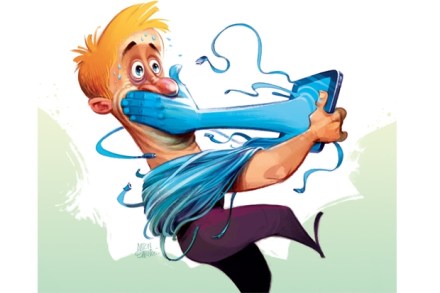
The dream of internet freedom has died. What a dream it was. Twenty years ago, nerdy libertarians hailed the web as the freest public sphere that mankind had ever created. The Declaration of the Independence of Cyberspace, written in 1996 by John Perry Barlow, warned the ‘governments of the industrial world’, those ‘weary giants of flesh and steel’, that they had ‘no sovereignty where we gather’. The ‘virus of liberty’ was spreading, it said. Now it seems that the virus has been wiped out. We live our online lives in a dystopian nightmare of Twittermobs, ‘safety councils’, official procedures for ‘forgetting’ inconvenient facts, and the arrest of people for being offensive.

The Spectator podcast: Erdogan’s Europe

From our UK edition

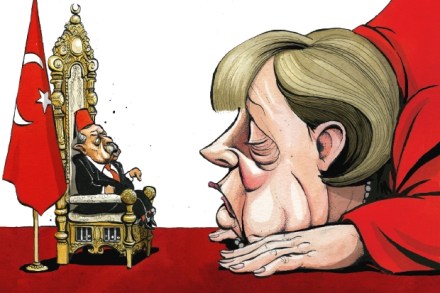
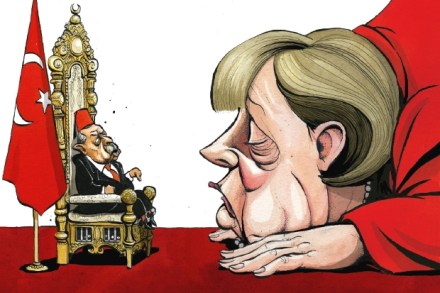
To subscribe to The Spectator’s weekly podcast, for free, visit the iTunes store or click here for our RSS feed. Alternatively, you can follow us on SoundCloud. Has Erdogan brought Europe to heel? In his Spectator cover piece, Douglas Murray argues that the Turkish President has used a mixture of intimidation, threats and blackmail to do just that and throw open the doors of Europe to Turkey. Douglas says Erdogan is a ‘wretched Islamist bully’ who has shown just how the EU works. But in pushing Europe around, is Erdogan now more powerful than Merkel, Juncker and Cameron? And how does the Turkish PM's resignation this week changed the country's relationship with the EU? Isabel Hardman speaks to Rem Korteweg, from the Centre for European Reform.

Turkey’s triumph

From our UK edition

Update: Since this article was published Ahmet Davutoglu has resigned as Turkey’s Prime Minister. Reports suggest this comes as a result of a rift with President Erdogan caused by the increasingly ‘Presidential’ nature of Turkey’s politics. Is Turkey part of Europe? For most of our civilisation’s history, to have even asked such a question would have been to invite derision. The Ottomans were kept out of Europe not by some early-onset prejudice, but by the armies of Europe having to beat back their repeated invasions. The question became slightly more plausible a century ago with the rise of Ataturk and the modern Turkish state (one of the only successful efforts to reconcile the Islamic religion with state power).

A right mess | 28 April 2016

From our UK edition

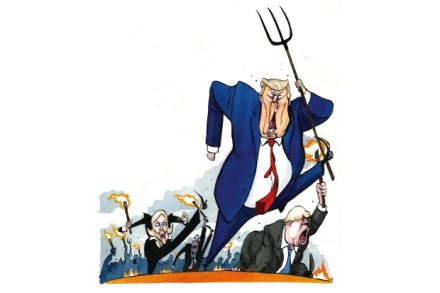
[audioplayer src="http://feeds.soundcloud.com/stream/261189280-the-spectator-podcast-the-wrong-right.mp3" title="Freddy Gray and Tom Slater discuss the state of the right" startat=22] Listen [/audioplayer] Is Boris Johnson turning into the thinking man’s Donald Trump? Just like the Donald, he’s got funny hair, charisma, and an appetite for women. He may not be as rich as Trump — although we were all impressed by his latest contribution to the Exchequer — but he makes up for that by having a much bigger vocabulary. He’s also able to get away with saying outrageous things because people think he’s entertaining.

Don’t mention the poem! A tale from Angela Merkel’s Turkish trip

From our UK edition

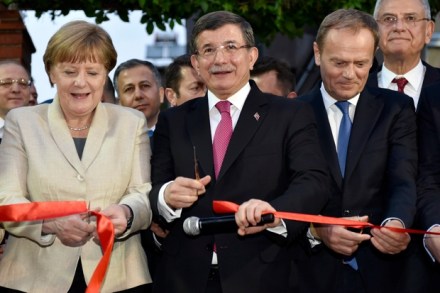
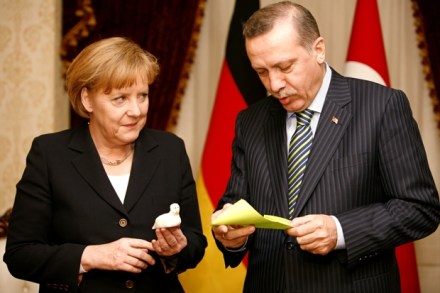
It was all smiles for the camera as German Chancellor Angela Merkel and other EU top brass visited Nizip refugee camp in the south-east of Turkey over the weekend. A photo opportunity with the Turkish Prime Minister, Ahmet Davutoglu and some refugees dressed in traditional costumes preceded the tour. I was among the journalists covering this sanitised pitstop in Gaziantep, a city close to the Syrian border. The whole event marked a month since the migrant deal between the EU and Turkey. Human rights groups have criticised the deal, which allowed failed asylum seekers to be deported from Greece back to Turkey. They argue that the EU has turned its back on refugees - and that Turkey isn't a safe country for them to return to.

A poem for Erdogan

From our UK edition

At the end of last month, a German comedian appeared on German television and read a poem mocking Recep Tayyip Erdogan, the president of Turkey. Jan Böhmermann’s satire was directed, among other things, at the laws President Erdogan has been using to lock up his critics. Turkey — which David Cameron is still fighting to bring into the EU — now has some of the world’s most repressive speech laws. Numerous journalists have been arrested for ‘insulting’ President Erdogan and he has even been known to ban Twitter in the country when corruption allegations against him and his family have surfaced online. Yet until Mr Böhmermann came on the scene, one might have expected these lèse-majesté laws to remain in Turkey. Not so.

Introducing ‘The President Erdogan Offensive Poetry Competition’

From our UK edition

Nobody should be surprised that Turkey’s President Recep Tayyip Erdogan has instituted effective blasphemy laws to defend himself from criticism in Turkey.  But many of us had assumed that these lèse-majesté laws would not yet be put in place inside Europe.  At least not until David Cameron succeeds in his long-held ambition to bring Turkey fully into the EU. Yet here we are.  Erdogan’s rule now already extends to Europe. At the end of last month, during a late-night comedy programme, a young German comedian called Jan Böhmermann included a poem that was rude about Erdogan.  Incidentally the point of Mr Böhmermann’s skit was to highlight the obscenity of Turkey already trying to censor satire in Germany.