Andy burnham

Andy Burnham isn’t just the unions’ candidate, he’s the Tory candidate too

From our UK edition

“I’m the change candidate,” said Andy Burnham, settling down to the consolidation phase of his leadership bid. Chuka Umunna is out, so he is now the bookies’ favourite. He faces a conundrum: the brains of Labour want to tack to the centre, the money (ie, the unions) want to keep it to the left. So how can he keep both happy? Andrew Marr this morning asked Burnham if he was happy to be the union candidate. “I’m the unifying candidate,” he said. He admitted that he has spoken to Unite’s Len McClusky – the union Godfather - but only as part of his attempt to “build support from all parts of the Labour Party.” And Charlie Falconer, Blair’s ex-flatmate, is backing him – so surely that’s enough?

The three groups of voters that Labour needs to win back

From our UK edition

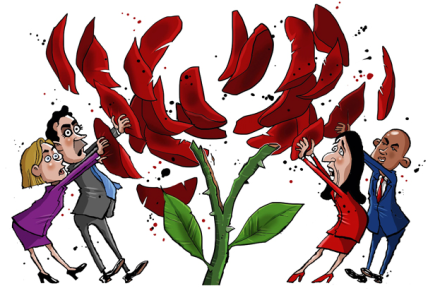
Labour is in a more difficult position now than it was after its defeat in 1992. In ’92, the electorate had sent Labour a clear message: move to the centre, don’t say you’ll put up taxes and get a better leader. But this time round, the message Labour has been sent is more complicated. There are three groups of voters that Labour failed with at this election, I argue in the magazine this week. Aspirational voters who went Tory, the left behind working class who went Ukip in England and SNP in Scotland and Nationalist-minded ones north of the border. What the Labour leadership candidates have to explain is how they would win these voters over.

Making Labour work

From our UK edition

[audioplayer src="http://rss.acast.com/viewfrom22/thelastdaysofmiliband/media.mp3" title="Dan Hodges and Andrew Harrop discuss the final days of Miliband" startat=34] Listen [/audioplayer]The Labour party is in a worse position today than after its defeat in 1992. Then, the electorate sent Labour a clear and simple message: move to the centre, don’t say you’ll put taxes up and select a more prime ministerial leader. This time, the voters have sent the party a series of messages, several of which are contradictory. The reasons Labour failed to win Swindon South are very different from why it lost Morley and Outwood and the reasons for that defeat are different again in Scotland, where almost all seats fell to the nationalists.

Podcast special: Cameron’s new cabinet and runners and riders for Labour leader

From our UK edition

In this View from 22 podcast special, Fraser Nelson, James Forsyth and I discuss the beginnings of David Cameron's new Cabinet and how the ministers announced so far demonstrate the Prime Minister's reticence to shake the boat. Does Michael Gove's new role at Justice show he's repaired his relationship Cameron? Will Mark Harper manage to keep the Tory backbenchers in step with Downing Street? Plus, we look at the runners and riders in the Labour leadership contest and why Chuka Umunna and Andy Burnham are the early favourites.

Andy Burnham still can’t answer questions on Mid Staffs

From our UK edition

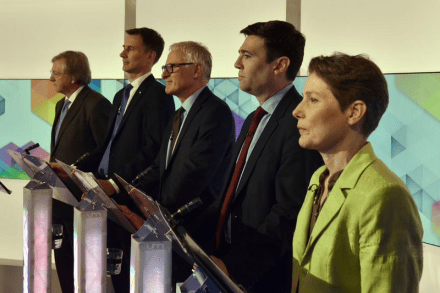
Today’s health election debate on the BBC just now was one of the feistiest we have seen in this campaign. Andy Burnham, Jeremy Hunt and Norman Lamb clashed repeatedly — and passionately — over Mid Staffs and the appropriate role for the private sector in the NHS. Burnham was on hectoring form throughout the debate. But he struggled so badly to answer Andrew Neil’s questions about Mid Staffs that one was left feeling he’ll never be able to win a Labour leadership contest until he has a proper answer to these questions.

We can’t just blame Benjamin Netanyahu for the lack of peace in the Middle East

From our UK edition

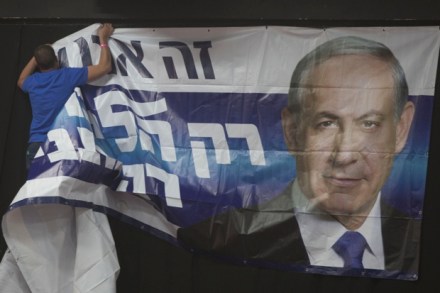
The re-election of Benjamin (‘Bibi’) Netanyahu in Israel has not gone down well in the chancelleries of Europe, let alone the White House. During his terms of office, a majority of western politicians and commentators have become opposed to Netanyahu, viewing him as an obstacle to peace. BBC reporters claimed that his win was down to ‘scare tactics’. The shadow health secretary, Andy Burnham, said he found Bibi’s success ‘depressing’. But the election results are a reminder that, although outside the country there is a vast industry focused on the unresolved Israel-Palestinian border dispute, inside Israel other issues dominate.

Andy Burnham burnishes his foreign policy credentials

From our UK edition

If Shadow Health Secretary Andy Burnham's future leadership aspirations were ever in doubt, then take a look at his reaction to the news of Benjamin Netanyahu's re-election as Prime Minister of Israel last night: https://twitter.com/andyburnhammp/status/578116833653305344 Burnishing his foreign policy expertise: tick. Cat-nipping the Labour left: tick. About as subtle as Burnham's recent attempts in The Spectator to rebrand himself as 'mainstream Labour'. The general election campaign has barely begun, and already potential Miliband successors are getting their ducks in a row.

Andy Burnham: I am mainstream Labour

From our UK edition

Has Andy Burnham really reinvented himself to prepare for a future leadership bid? In this week’s Spectator, I interviewed the Shadow Health Secretary about his rather forthright views on the NHS: views that some suspect have conveniently changed in order to appeal to Labour’s base. You can read the interview here, but for Coffee House readers, here are some extended quotes from our discussion. Burnham was insistent that his views on the health service today are the ones he put into practice when he was Health Secretary under the last Labour government. When I asked whether he’d changed politically, he said: ‘Well, there are a couple of ways to answer that.

Andy Burnham interview: ‘I wanted a different approach, because I’m mainstream Labour’

From our UK edition

Time was when Andy Burnham passed for a middle-of-the-road Labourite: he was deemed insufficiently dramatic and impressive to secure much support when he stood for leader five years ago. But these days, his colleagues — and the bookmakers — consider the shadow health secretary the frontrunner in any new contest. At an otherwise funereal Labour conference last year, his speech received standing ovations. In three months’ time, Burnham will either be health secretary or a serious contender for Labour leader. He has already survived calls from within his party to remove him from the health brief, though he claims Miliband has never raised the prospect.

Labour unsure about health policy its own councils support

From our UK edition

The announcement today that Greater Manchester will receive full control of health spending - worth £6bn - has left Labour in a rather interesting position. On the one hand, it is easy for Andy Burnham to say that this sounds ‘like yet another NHS reorganisation’. But on the other, Greater Manchester includes a number of Labour councils who appear pretty happy to sign up to the provisional deal. Indeed, one of those councils is Wigan, which covers Burnham’s own constituency. Now one of the reasons that spending has been devolved to this area is that councils in Greater Manchester are keen, forward-looking and ambitious.

The Burnham message

From our UK edition

Andy Burnham’s interview in The Times today lays down several markers. He praises Len McCluskey, declares that trade union funding is best for Labour, slates Alan Milburn, criticises Peter Mandelson for being relaxed about people getting filthy rich and distances himself from the Blairite mantra that ‘what matters is what works.’ It will, to put it mildly, do nothing to discourage speculation that he is preparing to run for the leadership on a left-wing ticket if Labour loses the election. To be fair, Burnham is frank in this interview that he has changed his mind on various subjects. As he puts it, 'There was a period in the 80s and 90s and the first decade of this century when people said the market has the answer to everything and I honestly don’t think it has .

Labour MPs’ minds wander to a post-election contest

From our UK edition

With the opinion polls so tight at the moment, we’re having to look for other ways to try and work out what the general election result will be. One indicator worth watching is which party is spending more time thinking about the leadership contest that would follow an election. Now, there has been plenty of speculation about this on both the Tory and Labour benches in recent times. But in the last few weeks, I’ve picked up more of it from the Labour side. One Labour frontbencher calculates that the focus of ‘half the party is on what happens next’.

Andy Burnham’s car crash interview shows why Labour can’t be trusted with the NHS

From our UK edition

If Labour is weaponising the NHS, maybe it needs to sharpen its tools. Shadow Health Secretary Andy Burnham had a difficult and ill-tempered interview on Newsnight yesterday about what he actually thinks about private sector involvement in the NHS. When asked about the role he sees for the private sector under his reshaped health service, Burnham said private companies would not be entirely excluded: 'There is still a role for private and voluntary providers but I also did say very clearly that the market is not the answer.' Presented with a graph (below) showing how private sector outsourcing grew to four per cent under Labour — but rose two per cent under the coalition — Burnham was unable to say what he thinks is the right level: 'There isn't a right percentage.

Burnham’s bill for hollow Hunt legal threat

From our UK edition

Ubiquitous Shadow Health Secretary Andy Burnham has had to admit that he 'spent' £25,000 in a disastrous and embarrassing threat to sue his counterpart Jeremy Hunt. Burnham has had to declare donations in kind of £16,665 worth of legal services offered by Steel & Shamash, the Labour Party's solicitors, and £8,250 from Gavin Millar QC, a barrister who specialises in defamation proceedings. Students of North London Labour Kremlinology will be aware that Millar is the brother of Fiona Millar, the left-wing agitator and partner of Alastair Campbell. He was last seen taking down Tory MP Andrew Mitchell in the High Court.

So the near collapse of A&Es around the country is all my fault?

From our UK edition

Oh, I see. So it’s my fault. There I was, thinking that the general swamping and near collapse of accident and emergency services in hospitals across Britain might be the result of, you know, some sort of systemic problem within the NHS. With me, a mere member of the public, just being an occasional victim. But no! Apparently it’s all because I took my wailing two-year-old daughter in, one Sunday afternoon last year, to get some antibiotics for her ear. This is good to know. For, had I not been told that all this was the fault of chumps such as me heading to such places for the sorts of trivial ailments better treated by a traditional family doctor, I might in my ignorance have been inclined to blame other people.

Labour seeks urgent question on A&E crisis

From our UK edition

Andy Burnham has put in a request for an urgent question on the A&E crisis, I have learned. The question, which the Speaker has yet to decide whether or not to grant, is as follows: URGENT QUESTION Rt Hon Andy Burnham MP To ask the Secretary of State for Health if he will make a statement on the major incidents that have been declared at a number of hospitals and on A&E performance in England. This might seem rather unsurprising at first glance, and it would be on any other day of the week. Today Ed Miliband will face David Cameron at PMQs and as I blogged earlier, it would be extremely odd if he didn’t use his questions to the Prime Minister to ask about the NHS.

Will any party really offer an election message of ‘hope, not falsehood’?

From our UK edition

Ed Miliband today promised that Labour will offer ‘hope, not falsehood’ in its General Election campaign. It’s a bold pledge given the party is making so much of the claim that the Tories want to reduce public spending to levels not seen since the 1930s - a claim that has foundations made of something oddly similar to sand. Similarly the Tories have today produced an interesting dossier that Miliband’s party has interestingly called ‘dodgy’ because it contains a number of ‘assumptions’. As James explains, that’s part of the plan, as Labour now has to say which cuts it wouldn’t reverse and which it would.

Even Ukip don’t dare break the unhealthy consensus on the NHS

From our UK edition

There’s an irony about Ukip’s rise. Nigel Farage party’s popularity is driven by a widespread sense that the main parties are all the same. Yet in the past four years, the differences between the Labour party and the Conservatives have grown substantially, on issues from the size of the state to an EU referendum. In an election year you might expect parties to converge in the centre ground as they chased swing voters. It won’t happen this time. Labour is determined to stop left-wingers defecting to the SNP and the Greens, while the Tories, who have long had their own issue on the right because of Ukip, believe that their best chance of victory comes from heightening the contrast between them and the other parties.

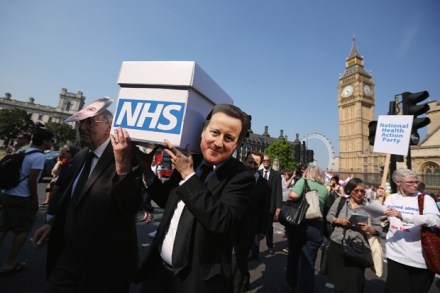
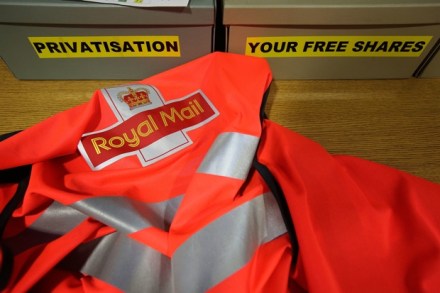
Private enterprise has shaped Britain. So why is privatisation thought to be politically toxic?

From our UK edition

Lately there's been a lot of talk about the 'P' word: privatisation. Ed Miliband's team hasn't done the hard policy work to revitalise Labour as a party of government, and it is beginning to show. His platform for next May has a lot of sticky plaster policies, but very little that addresses structural problems like the housing market and transport costs, to name two issues close to my heart. Instead, catnip like 'no privatisation of our NHS' and 'reversing the privatisation of the railways' is being wheeled out to fill the Left's policy void. This conveniently ignores the Blair and Brown government's enthusiasm for market – rather than state – solutions.

Who privatised Hinchingbrooke hospital? And does it matter?

From our UK edition

When it comes to rows about the NHS, these days it doesn’t rain, it pours. In fact, fights between the parties about who cares more/privatised the most are turning into a weather bomb, such is their frequency. Today Nick Clegg turned up to Prime Minister’s Questions determined to highlight Labour hypocrisy on the health service, and he managed to shoehorn it in to an answer to Harriet Harman’s question about people trusting the Lib Dems (or not). The Lib Dem leader said: ‘In fact, the Shadow Health Secretary, sitting there demurely, is the only man in England who has ever privatised an NHS hospital, and they dare to lecture us. Hinchingbrooke hospital - the only NHS hospital to be privatised, and by the Labour party.