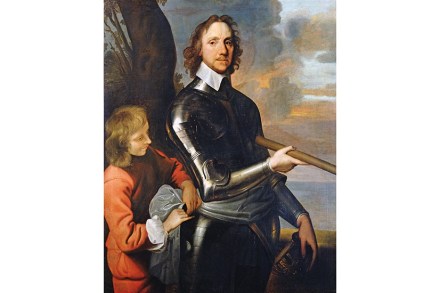
Andrew marvell

When botanists resembled a worldwide intelligence network

From our UK edition

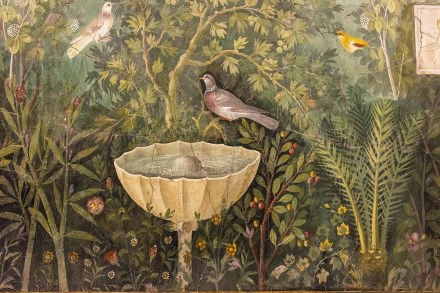
In The Garden Jonathan Bate leads us through 4,000 years of ‘green thought’, observing the interplay between literature, art and horticulture. Bate has long refused to be fenced in. His academic and biographical work ranges from Shakespeare to Wordsworth, John Clare, John Keats, F. Scott Fitzgerald and Ted Hughes. He is also an editor, poet, playwright and novelist. The Garden is the book he has waited a lifetime to write. It is both scholarly and relaxed, ambitious and kindly, bringing complicated ideas and feelings down to earth and grounding us in the humble human joy of real and imagined gardens.  The mapping of language on to gardens is a major theme from the start.
The flowering of enlightenment under Oliver Cromwell

From our UK edition

In 1651, the poet Andrew Marvell was working for the parliamentarian military hero Sir Thomas Fairfax, tutoring his daughter Mary on Fairfax’s Nun Appleton estate near York. When he wasn’t delivering language lessons to his young charge, Marvell was busy composing one of the most astonishingly experimental poems of the 17th century. Opera in the 1650s first seeded the idea that women might be able to act and entertain for money in public ‘Upon Appleton House’, dedicated to Thomas Fairfax, is, on the one hand, just another variety of early modern patronage poem in which a writer praises a member of the aristocracy and their values in return for favour or reward. From another perspective, the poem is profoundly avant-garde.

Oliver Cromwell: ruthless in battle – but nice to his men

From our UK edition

One of the first retrospective accounts of Oliver Cromwell’s early career, Andrew Marvell’s ‘An Horatian Ode upon Cromwell’s Return from Ireland’ (1650), maintained that its subject was difficult to capture. Perhaps the finest political poem in the English language, it was written shortly after Cromwell’s return from a brutally successful military campaign overseas, which witnessed infamous atrocities at Drogheda and Wexford. It celebrates Cromwell as a victorious military commander, a supernatural epic hero who burns through the air, destroying all who block his path to establishing England as the greatest nation on Earth.