American Revolution

Why America still longs for monarchy

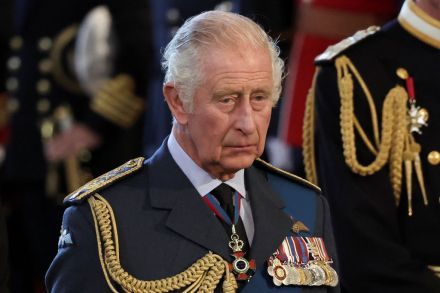
Even when he’s not visiting the United States, King Charles III might occasionally daydream about what his reign would be like today if things had worked out differently 250 years ago. The King is not, of course, the head of government anywhere nowadays, and were Charles the king of America, he wouldn’t necessarily wield any more power here than he does in modern Britain. Yet there’s reason to think he possibly could – for the truth is, Americans love monarchy at least as much as they fear it, and they love the royal family, too.

Did the American Revolution ever really end?

We Americans celebrate July 4, 1776, as our national birthday, and this year, of course, marks our 250th. But the American Revolution began before that. And when did it end? Maybe it never did. In 1812, warhawks in Congress and president James Madison – the man known to posterity as the very father of the Constitution – launched an invasion of Canada in the hopes of completing the American Revolution. Canada was unfinished business. We had invaded Québec in 1775, but that was a disaster. And even though the 13 colonies that became the United States succeeded in winning their independence from Britain, the newborn US was not altogether free.

The White House UFC cage fight

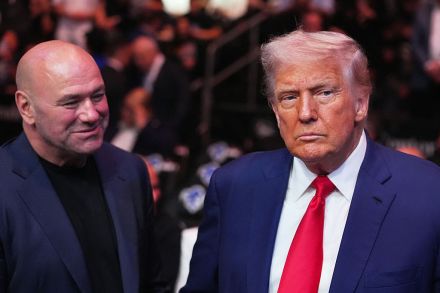
When President Trump said in July that he planned to host a Ultimate Fighting Championship event on the White House lawn next year as part of the U.S.A.’s 250th birthday celebrations, people dismissed it as a typical piece of hyperbole and bluster. “We have a lot of land there,” Trump said, which is somewhat true, but that doesn’t mean that you can plop down an Octagon, right? Well, as it turns out, that’s exactly what it means. Trump is like that boy in the old Twilight Zone episode. Whatever he wishes, comes true. In an interview with the Wall Street Journal, UFC boss Dana White, one of Trump’s biggest supporters, said that the UFC 250th anniversary (of the U.S.) is definitely going to happen. “Fighters will be warming up in the White House,” White said.

Dana White

Freedom is still the Revolutionary War’s legacy

When the first shot rang out at dawn on Lexington Green, a decade of frustration and growing alienation between the American colonies and the British government boiled over into armed conflict. By the time the British staggered back into Boston on the evening of April 19, 1775, having fought a running battle for twenty-five miles from Concord’s North Bridge and losing at least 73 killed, the American Revolution had begun. Like many turning points in history, the encounter at Lexington Green was not planned. British troops acting on the orders of General Thomas Gage were on their way to capture arms and munitions stored by the Massachusetts militia when they ran into Lexington’s “Minutemen” drawn up on the Green.

We are living through the Second American Revolution

On March 23, 1775, a month before the first shots would ring out at Lexington and Concord, Patrick Henry entered Saint John’s Church in Richmond, Virginia to deliver a bold conviction. “The war is actually begun,” he said, “I know not what course others may take; but as for me, give me liberty or give me death!” Henry’s rallying cry remains one of the most iconic speeches in American history and is one of my personal favorites. Indeed, multiple times since we moved to northern Virginia in 2021, my family and I have made the drive south to see Henry’s speech reenacted. The message remains as compelling as ever, and this year, on its 250th anniversary, I believe it is especially relevant to our current political moment. We are facing a struggle for ordered liberty.

What Americans can learn from the monarchy

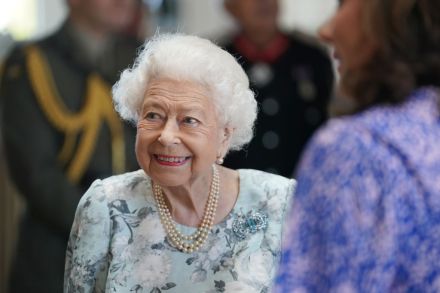
September 8, 2022 will go down in history as the date we lost Her Majesty Elizabeth II, Queen of the United Kingdom of Great Britain and Northern Ireland, Canada, Australia, New Zealand, and of her other realms and territories, Head of the Commonwealth, Defender of the Faith. Her son Charles, Prince of Wales, has now succeeded her as King Charles III. For the first time in this writer’s life, the anthem is to be sung as "God Save the King." To write about the accomplishments of the sole public figure remaining from one’s earliest memories is a daunting task. The Queen in her turn inherited an institution that is difficult for Americans — especially of a conservative stripe — to understand.

An American remembrance of the Queen

I write as an American patriot who is also a confirmed Anglophile. So when I got the sad news this morning that the Queen’s health had taken so dangerous a turn that the palace had summoned her family to Balmoral, I steeled myself for bad news. Alas, the bad news has now been confirmed. Queen Elizabeth II has died. It says a lot that when I say “the Queen” even American readers know I can mean only one person. The ninety-six-year-old had just celebrated her platinum anniversary this summer — seventy years on the throne, the longest of any English monarch. Elizabeth was far and away the most admired head of state in the world. Her good sense, her generosity of spirit, her thoughtful but active reticence have made her one of the most successful monarchs in history.

This great ungovernable country

Back in 2020, the oozing governor of California, Gavin Newsom, took it upon himself to all but cancel the Fourth of July. Newsom issued a statement encouraging towns and cities across his state to shut down any fireworks shows they might have planned, so as to prevent people from congregating and spreading Covid. The reliably meddlesome Los Angeles County then went a step further, banning displays of fireworks altogether. The people of LA considered this. They stroked their chins. And they said, "You know what? I don't think this is for me." The night of the Fourth, Angelenos sent up so many fireworks that the next day a local authority had to issue an air quality warning.