American history

We are living through the Second American Revolution

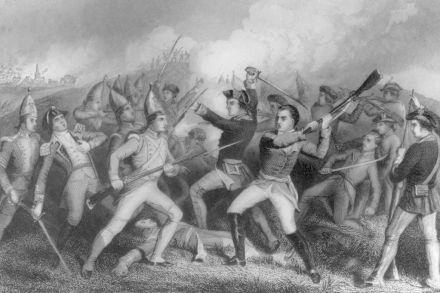
On March 23, 1775, a month before the first shots would ring out at Lexington and Concord, Patrick Henry entered Saint John’s Church in Richmond, Virginia to deliver a bold conviction. “The war is actually begun,” he said, “I know not what course others may take; but as for me, give me liberty or give me death!” Henry’s rallying cry remains one of the most iconic speeches in American history and is one of my personal favorites. Indeed, multiple times since we moved to northern Virginia in 2021, my family and I have made the drive south to see Henry’s speech reenacted. The message remains as compelling as ever, and this year, on its 250th anniversary, I believe it is especially relevant to our current political moment. We are facing a struggle for ordered liberty.

Old texts and Bacon’s Castle: a walk through Virginia history

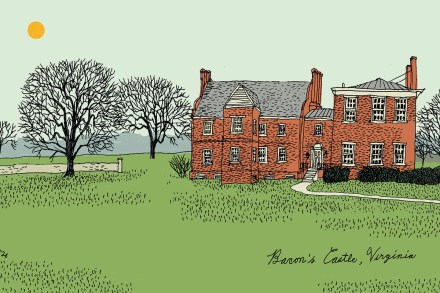
You will find Bacon’s Castle amid the flat tobacco and peanut fields in Surry County, Virginia, across the James River from Jamestown, if not quite a “castle” then certainly a very fine Jacobean mansion and the oldest brick dwelling in America. When I first visited this part of the Tidewater in 1958, I was ten and Jamestown, the year before, had turned 350. Queen Elizabeth II and Prince Philip came to crown the anniversary, and replicas of the three ships that brought the first English here in 1607 — Susan Constant, Godspeed and Discovery — were tied up in perpetuity at Jamestown. I came on a field trip with my schoolmates to take in the sights and something of the history of the place and of Colonial Williamsburg, just up the road. Bacon’s Castle was not on our itinerary.

Virginia

The awesome Alan Pell Crawford

The great nineteenth-century novelist Harold Frederic (The Damnation of Theron Ware) had a character complain “I cannot read or listen to the inflated accounts” of the role played in the Revolution by Massachusetts and Virginia “without smashing my pipe in wrath.” Frederic’s pipe-smasher would smoke in peaceful raptness while reading Alan Pell Crawford’s engrossing new book, This Fierce People: The Untold Story of America’s Revolutionary War in the South.

Crawford

A Boston tea party and Christmas time on Cape Cod

Boston Harbor Hotel, 6:42 a.m. I tossed on a robe, had a fight with an unfamiliar coffee machine, then threw back my bedroom curtains to soak up the best part of chronic jet lag. Fuschia skies intensified before a beautifully fat, gold sun peeped above the horizon. Some hours later, a three-tier stand stacked with PB&J sandwiches, smoked salmon, vanilla bean scones and fig jam obscured the same uninterrupted view, from the Rowes Wharf Sea Grille downstairs. Proffered a frankly overwhelming selection of colorful loose leaf teas, the irony wasn’t lost on me, a Brit, as I raised a pinky. “Green Sparkling… Tropical Oolong… Organic Big Ben English Breakfast… Chai Imperial? How about L’Herboriste?

cape cod boston christmas

The gentlemanly legacy of the Shine-O-Mat

Next to the Harvard Club in Boston’s Back Bay stands the old Eliot Hotel, named after Harvard’s most famous and probably most influential president, Charles William Eliot. The hotel was built in 1925 as a genteel way of easing aging Harvard professors into semi-retirement. In 1939 it was purchased by a private family and became one of the city’s finer hotels, with many amenities including a top-of-the-line Uneeda Shine-O-Mat.  Any well-dressed gentleman striding out onto Commonwealth Avenue would be embarrassed to show a scuffed wingtip, and shoeshine boys were not exactly welcome in that part of town. The Shine-O-Mat, installed in about 1947, solved the problem.  The Eliot Hotel had its ups and downs over the years.

shine-o-mat

Visiting a forgotten chapter in American history

Nowadays few Americans could identify what the Monroe Doctrine signifies. Named for the fifth US president, the point of the 1823 policy had been succinctly stated fifteen years earlier by the third, Thomas Jefferson: “The object... must be to exclude all European influence from this hemisphere.” Sean Mirski terms the Doctrine “revolutionary” in his impressively erudite We May Dominate the World, an astonishingly comprehensive and stylishly written account of US foreign policy in the Western Hemisphere during the years 1860 to 1945. Calling the period a “missing chapter” in American history, he rightly asserts that “the story of the United States’s rise to regional hegemony has not received anywhere near the attention it deserves.

mirski

Why civics test scores are falling in American schools

Twenty years ago, one of the most popular bits on late-night television was “Jaywalking,” where Tonight Show host Jay Leno quizzed passersby on world events, geography, history and more. He would ask random people on the street about literature, who the vice president was, or who we fought in World War Two. The clips that made the cut inevitably involved embarrassingly ignorant answers. Today, America is a nation of Jaywalking Allstars; whereas it was once a punchline for someone to be that ignorant, ignorance is now the norm. In early May, news emerged about record low scores for history and civics for eighth grade students nationwide.

test scores

Are New England’s stone heaps Native Americans’ sacred ruins?

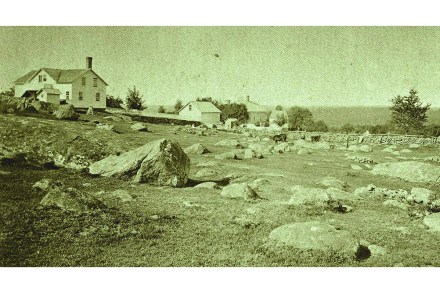
Brightman Hill lies deep in the forests of Hopkinton, Rhode Island. It is named for the Brightmans, one of the families who farmed it, and evidence of its agricultural past is, to most observers, unambiguous: old building foundations, a nineteenth-century burial ground, an extensive network of stone walls and hundreds of stone heaps, the results of field clearing. But in 2019, a federally-funded survey of Brightman Hill shattered these traditional interpretations. The surveyors, Ceremonial Landscapes Research, LLC, are a small group of antiquarians led by Alexandra Martin, a registered professional archaeologist who recently earned her doctorate in anthropology. Instead of stone heaps and walls, the surveyors reported “linear stone groupings” on Brightman Hill.

stone

Adieu, Teddy Roosevelt

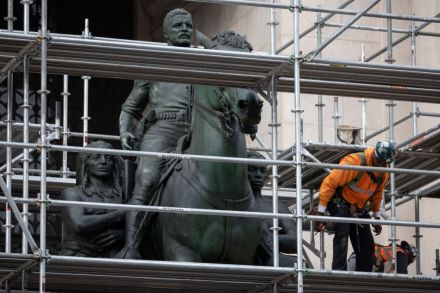
It is a custom to offer a blindfold to prisoners facing a firing squad. Just so, the authorities covered the statue of Teddy Roosevelt that has stood in front of the American Museum of Natural History before it is carted off to its new home in North Dakota. Everywhere one turns, America’s past is being dismantled. Just last month, a statue of Thomas Jefferson that had graced New York’s City Hall for 187 year was removed.  At schools and colleges across the country, images are being covered or removed, buildings renamed, history rewritten. It’s open season on the past. Back in June 2020, I wrote about the decision to remove the statue of Roosevelt from in front of the institution he help to found.

roosevelt

Have Americans got George III all wrong?

Americans are rarely accused of underestimating themselves, but might they in fact be a greater people than they think? That thought has regularly occurred to me over the past three years while I was researching and writing my new biography of their last king, George III, and especially when I read Richard Brookhiser’s insightful comment in his recent book Give Me Liberty, where he points out that Britain’s thirteen American colonies in the 1760s and early 1770s were among “the freest societies in the world.

George iii

The National Anthem is doomed

Cockburn is going to get ahead of things and announce it right now: ‘The Star-Spangled Banner’ is doomed. Accept it, and the pain will be lessened. Over the weekend, conservatives were piqued (as they almost always are) when the track and field athlete Gwen Berry turned her back on the American flag as the national anthem played. How could she dare sully the integrity of the women’s hammer throw in this manner? Dan Crenshaw says Berry should be booted off the Tokyo Olympic team. Ted Cruz asked why the left ‘hates America’. They should have just let it lie. Instead, the GOP has let Berry’s stunt become a multi-day controversy. And in doing so, they have sealed the anthem’s fate.

gwen berry national anthem

The demise of America has been greatly exaggerated

One of my favorite quotes about America — mainly because it annoys so many people — comes from the historian Robert Wiebe. In his book Self-Rule, he writes: ‘Telling Americans to improve democracy by sinking comfortably into community, by losing themselves in a collective life, is calling into the wind. There has never been an American democracy without its powerful strand of individualism, and nothing suggests there will ever be.’ Cue the yelping from nationalists, socialists, Burkeans, take your pick. Yet Wiebe was less making a political argument than he was observing what was right in front of his nose.

america

Antifa’s white privilege

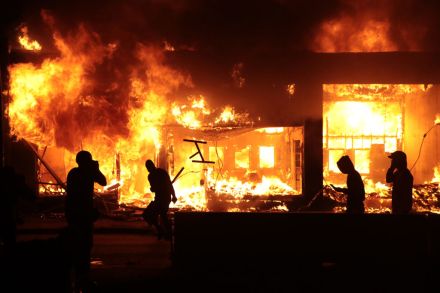
There is no right to burn down your neighborhood, but it’s always an option. Freedom means choice, and real freedom must include the choice of self-destruction — but not destroying someone else’s neighborhood. Especially not when the neighborhood is mostly black and poor. That is what the privileged whites of antifa are doing by instigating disorder and destruction in Minneapolis’s 3rd precinct and elsewhere. Cost-free kicks at black people’s expense: the height of white privilege. Race is the American sickness, and though everyone is sick of it, no one has the cure. The murder of George Floyd and the fact that it took riots before his killer was charged, confirms, should anyone still need confirmation, that Americans are still not equal before the law.

antifa

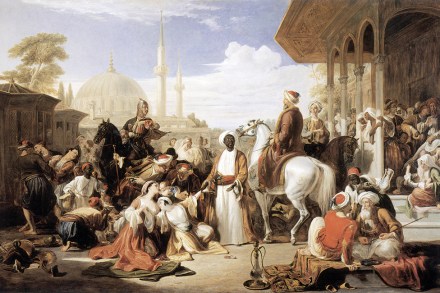
The 1619 Project is the 2019 Project — and the 2020 Project

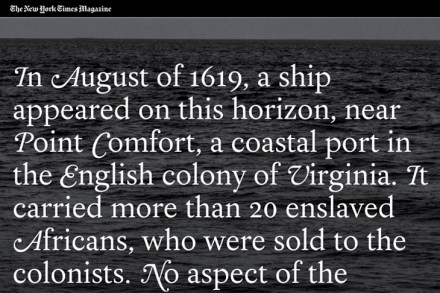
It is increasingly clear that the 1619 Project, foisted on the American public in August by the New York Times, was ill advised. Fatuous, tendentious and tedious, 1619 is more advocacy than history, and is intended mainly to stoke the woke and to keep race on the front burner in the upcoming 2020 elections. No close observer of the Times over the past few years would have expected otherwise, for in its domestic coverage it reads at times more like a Midtown edition of the Amsterdam News than a national newspaper of record. While still indispensable in some ways, its editorial slant and, indeed, news coverage have become unmoored.

1619 project hannah-jones