Alfred hitchcock

Finding the warmth in Alfred Hitchcock’s filmography

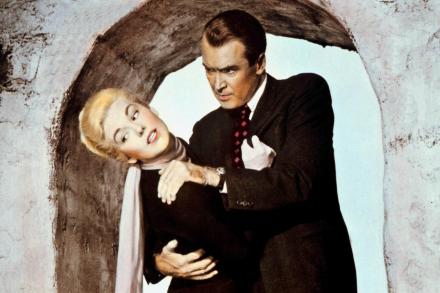
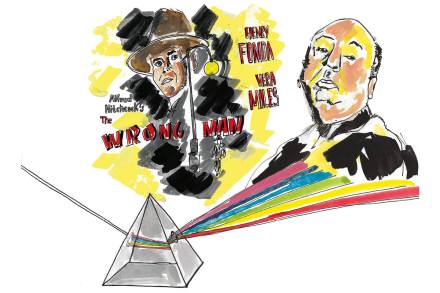
Alfred Hitchcock: the master of suspense. We grew up seeing his entertaining thrillers on TV, beautifully made movies about elegant people in danger. The glamour of To Catch a Thief; Cary Grant as the wrong man on the run in North by Northwest; Tippi Hedren looking chic with her chignon, brutally attacked in The Birds by the titular avian menace. Don’t look for heart, though. These were emotionally detached films, weren’t they? In his publicity Hitchcock joked about murder. He said that Psycho was a dark comedy. His TV programs were full of gallows humor. Critics said he had an ironic Englishness. Chilling and chilly. Maybe it’s the Celt in me, but I don’t quite see the films like that. Yes, I spot the irony, and that’s part of their appeal.

Hitchcock

So long, Orson Welles

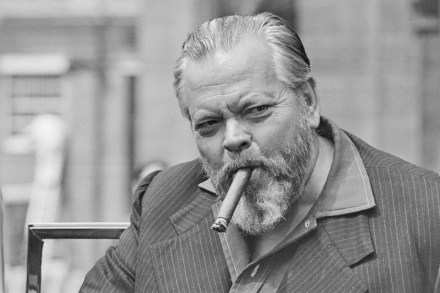
During his seventy years on Earth, and for much of the nearly forty years since he left it, Orson Welles has managed to rub people the wrong way.  Welles, who was born in 1915 and died in 1985, was plainly a genius: a theatrical impresario whose Mercury Theatre was legendary in its own day; a puckish conjurer whose War of the Worlds radio broadcast misled millions; and a so-called one-man-band who, like few filmmakers before him, combined the jobs of director, producer and actor in such masterpieces as Citizen Kane, Chimes at Midnight and F for Fake.  But this record earned him little credit among the naysayers who hounded him and told us to believe them rather than our lying eyes.

orson welles

Where Jeanne Dielman went wrong

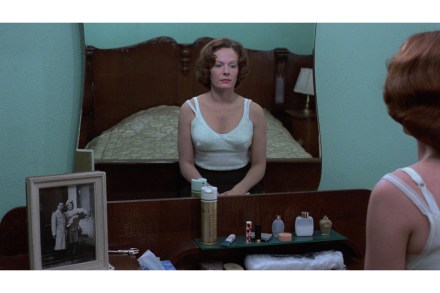
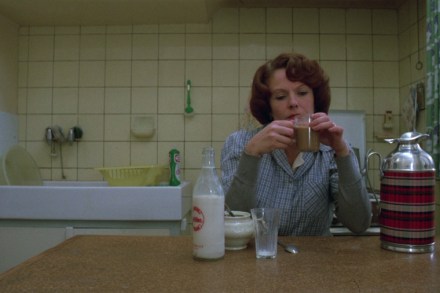
In the era of boring Hollywood-Marxist blockbusters like Avatar: The Way of Water, it’s quite refreshing to see Jeanne Dielman, 23, quai du commerce, 1080 Bruxelles, a half-a-century-old masterpiece of European art cinema, proclaimed the best movie of all time by the 2022 Sight and Sound poll. Chantal Akerman’s 1975 film reached the top after a long delay, thereby confirming the fact that each present era retroactively rewrites its past. Jeanne Dielman is fourth in the series of Sight and Sound's best films, preceded by Eisenstein’s Potemkin, Welles’s Citizen Kane and Hitchcock’s Vertigo. The film’s triumph is, of course, the result of a well-planned campaign to promote a woman to the top position.

jeanne dielman

Confessions of a Sight and Sound voter

As a film critic and historian who's written for Sight and Sound since 2011, I like to think that the greatest films of all time are always on my mind, but, in truth, they were particularly on my mind last summer. Last July, I received the official word that I was among the select group of critics picked to partake the Sight and Sound critics' poll to decide the greatest films ever made; a survey the British magazine first convened in 1952 and has repeated on a once-per-decade basis ever since. In the weeks before my deadline to vote, I meditated on what constituted a great film with unusual intensity and self-reflection.

sight and sound

Secret bioweapon labs are Putin’s MacGuffin 

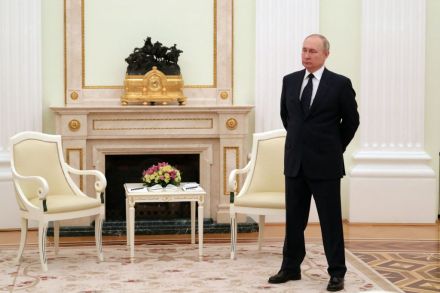
Some commentators have already noted the strange homology between Russia’s evocation of “secret bioweapon labs” in Ukraine and the US evocation of Saddam Hussein’s weapons of mass destruction, which in both cases were used to justify military attack. It’s not that the US was unsure if Saddam had WMDs; they positively knew he did not have them, which is why they risked a ground offensive in Iraq, rather than sticking to air bombing. The nonexistent Iraqi weapons of mass destruction perfectly fulfill the role of a “MacGuffin” in Alfred Hitchcock’s films. A MacGuffin is “an object, event, or character in a film or story that serves to set and keep the plot in motion despite usually lacking intrinsic importance,” per Merriam-Webster.

bioweapon labs

Fear thy neighbor

In an age of rancor, one thing we can all agree on is that it makes a certain amount of sense to fear the police. What other force in civil society is authorized to intrude on private life, and deny its benefits and freedoms, in quite the same way? It may be the law-abiding members of society who fear the police most palpably. While actual criminals carry knowledge of their own guilt, the innocent must live with the knowledge of how easily we could be wrongly accused, misidentified or railroaded. Alfred Hitchcock did more than any other popular artist in the last century to help form a certain image of the police in the public consciousness.

hitchcock