Alexander hamilton

How Trump’s Mexico and Canada tariffs could change trade history

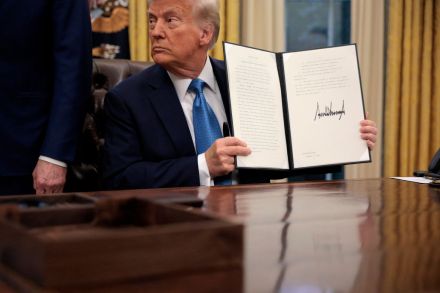
President Donald Trump has set Saturday as the deadline to impose 25 percent tariffs on Canadian and Mexican imports. From the Oval Office earlier this week, Trump explained that the move aims to push the US’s neighbors to take swift action to curtail illegal immigration and fentanyl, as well as to address growing trade deficits. The tariffs may or may not include oil, with Trump saying Thursday that determinations were still being made. Following Trump’s tariff feud with Colombian president Gustavo Petro Sunday, with the Trump forcing his Colombian counterpart to welcome deportees, his latest move signifies an expansion of his revamped “FAFO” foreign policy.
Why is James Madison so consistently forgotten?

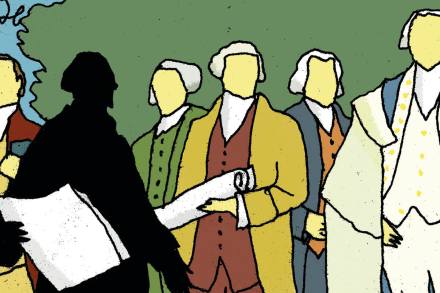
James Madison is consistently forgotten. Admittedly, many of the Founding Fathers are forgotten. The average American could probably name two of the forty or so founders in Howard Chandler Christy’s Capitol painting “Scene at the Signing of the Constitution of the United States.” But while Washington and Jefferson get imposing monuments in DC and Hamilton gets a musical, the father of our beloved Constitution hardly has a memorial. Asking Google why will pull up an article from the Harvard Law Bulletin quoting Professor Noah Feldman. “Unlike George Washington or Thomas Jefferson, no monument was built to honor Madison in the nation’s capital. You have to see the Constitution as his monument,” said Feldman. “His influence is hidden in plain sight.

Madison

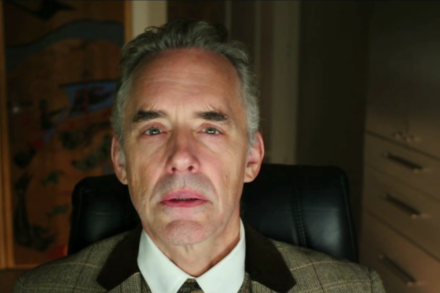
What Jordan Peterson gets wrong about anonymous Twitter accounts

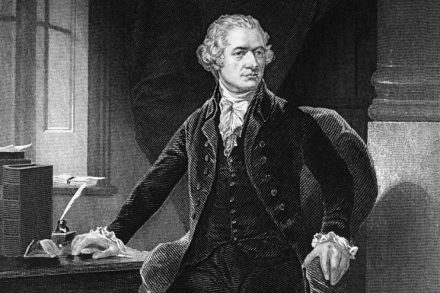
“The best we can hope for concerning the people at large is that they be properly armed.” So sayeth not Grendel69 on Twitter, but Alexander Hamilton, writing under the name Publius, the handle he adopted along with James Madison and John Jay when they were writing The Federalist Papers. But if Twitter had existed, well, Hamilton may well have been a shitposter, one who made Grendel69 look like a lightweight. Anonymity, pseudonymity, whatever you want to call it, is oft maligned, particularly in the digital square. The debate about it will likely always be with us, unless, somehow, the internet magically ceases to exist, forcing mankind up out of its sitting position. (As that wouldn’t be good for my income streams, I’m going to have to hope it keeps on keeping on.

jordan peterson

We must stand up for private rights

By disposition, conservatives distrust government. They are for “limited government” and worry about the coercive power of the state intruding upon individual liberty. But these days, some conservatives tell us that, when they finally get their hands on the levers of power, they will be energetic in exercising them to achieve their (presumably conservative) ends. Is that a contradiction or indication of hypocrisy? Maybe. Or maybe it is just a sign of how deeply anti-conservative sentiment has burrowed into the tissues of our society. No doubt I would prefer the policies promulgated by a conservative administration to the policies we are saddled with now. But my low opinion of human nature inclines me to distrust government power no matter who is in charge.

rights

In defense of the Electoral College

Though often lost in the debate over the Electoral College, Article II in our Constitution created a system in which the people of each state actually vote for a slate of electors representing each presidential candidate. The presidential candidate whose slate wins the popular vote in each state then gets to cast its ballots to elect the president. Each state gets electoral votes equaling the number of representatives and senators. That is why the only number that truly matters on Election Day is the number of electoral votes each candidate will receive when the electors meet and vote over a month later.

electoral college

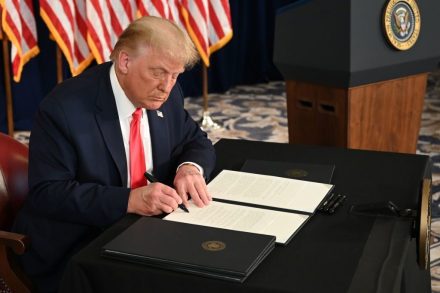
Trump’s Art of the Executive Order

The Executive Order is political weakness at its most powerful. The spectacle of Donald Trump adding his Sharpie-stroke to the catalogue of puissant signatures confirms the United States’ slow but steady drift from a Romanesque republic to Roman-lite empire. Trump was supposed to be better, or at least different.The wisdom of the day has it that the business of America is business, even when, as in healthcare, that business is thoroughly corporatized. Who better to negotiate through the paralysis of Congress than a commercial deal-maker, a splitter of the difference, a washer of one hand with the other?

executive order

The war of the statues is a battle for freedom

The war of the statues is no longer a battle over the memory of slavery, or the Confederacy, or the deployment of stone dead generals to reinforce Jim Crow. It is a battle over the legitimacy of the United States which, despite all the evils, is history’s greatest and possibly final experiment in human freedom.The struggle has turned from Confederate generals to the Founders: from those who seceded from the United States to those who laid its foundations. Students at the University of Missouri are petitioning for the removal of a statue of ‘racist slave owner’ Thomas Jefferson, whose statue at Birmingham, Alabama was damaged in an arson attack. Last week at George Washington University, Washington’s bust was toppled from its plinth.

statues

The Founding Fathers’ focus group on impeachment, 1787

We recently learned that House Democrats are concentrating their impeachment drive on ‘bribery’ because focus groups liked it better than other terms Democrats have floated. The term never appeared in previous testimony; no one accused President Trump of bribery or even mentioned it. That omission is only a minor obstacle, apparently.Focus-group testing is widely recognized as the best way to deal with grave constitutional matters, as well as marketing breakfast cereals and e-cigarettes. It is not surprising, then, that legal scholars are scouring focus groups throughout American history to see what light they shed on the Trump impeachment.The most important of these earlier focus groups was that of the Founding Fathers, secretly convened in Philadelphia in 1787.

founding fathers