Alex salmond

Alistair Darling: the flaws in Alex Salmond’s white paper on independence

From our UK edition

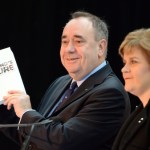
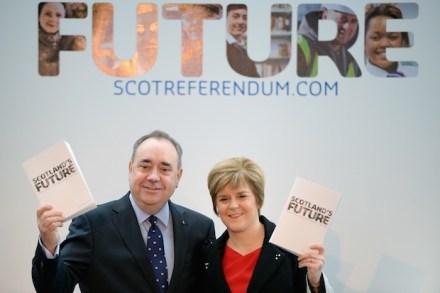
Nothing has changed as a result of today’s White Paper. There is nothing that we found out today that we didn’t already know. Yesterday Alex Salmond’s case for breaking up the UK was based on assertions. Today it is still based on assertions. The simple fact is that the nationalists have ducked the opportunity to answer any of the big questions about our country’s future. They promised us facts. What they have given us is a wish list with no prices attached. If this White Paper was going to be credible, it had to address the fundamental issues that people are concerned about. They didn’t. We still don’t know what currency we use if we vote to go it alone. We don’t know who would set our mortgage rates.
Scottish independence is a little more likely today than it was yesterday

From our UK edition

The argument about Scottish independence which, it should be said, is not a new one is best understood in terms of the Overton Window. James Overton, an American political scientist, suggested that the general public is only prepared to contemplate a relatively narrow range of political opinions and policies. Those that fall outwith this window of plausibility are discounted; the task for politicians and other advocates is to shift the window so that ideas once considered heretical now appear orthodox common-sense. Overton suggested there were six phases to this process. A idea would move from being unthinkable to radical to acceptable to sensible to popular before, finally, becoming policy. Scottish independence is currently somewhere between acceptable and sensible.

A funny argument for independence

From our UK edition

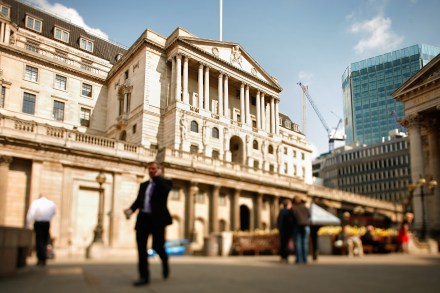
Is today's Scottish independence White Paper really an argument for independence? I ask only because the section on currency and monetary policy is essentially arguing for the union. It says: 'The Commission's analysis shows that it will not only be in Scotland's interests to retain Sterling but that - post independence - this will also benefit the rest of the UK. 'Under such an arrangement, monetary policy will be set according to economic conditions across the Sterling Area with ownership and governance of the Bank of England undertaken on a shareholder basis.

Is Boris Johnson the Man to Save the Union?

From our UK edition

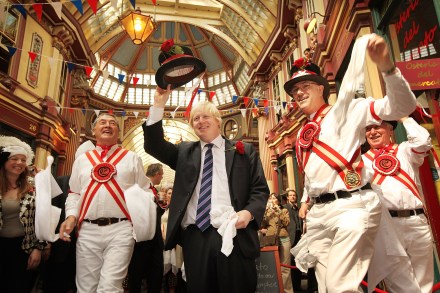
This is not as obviously a Question to Which the Answer is No as it may initially seem. The Mayor of London is, in fact, well-placed to play a significant part in the campaign to persuade Scots their interests still lie within the United Kingdom. In the first place, as the titular leader of europe's greatest city he has no obvious or immediate dog in the fight. Neither Boris's reputation nor his future will be dented by a Scottish vote for independence. His Prime Ministerial plans - for we all still assume he has such plans - will not suffer if Alex Salmond wins next year's referendum. They might even benefit from such a result, not least because David Cameron's reputation - and legacy - will be crippled by a Yes vote.

Alex Salmond’s economic policies would drive an independent Scotland into the ground

From our UK edition

Within the white paper on economic policy in an independent Scotland that was published by Alex Salmond’s government this week there is a liberal economic manifesto trying to get out. The First Minister speaks about using new ‘levers and instruments’ to revive Scotland and that, freed from Westminster control, he might lure businesses by slashing corporation tax, reducing national insurance contributions and cutting air passenger duty. Unfortunately, none of these ideas is likely to get off the page because the SNP has a much more prominent agenda which could not have been better designed to promote economic stagnation.

Scottish independence: the Union is endangered by premature and misguided complacency

From our UK edition

Somehow I managed to miss Iain Martin's praise for the manner in which David Cameron has "handled" the referendum on Scottish independence. Happily, John Rentoul has prompted me to take a keek at Iain's article which, somewhat uncharacteristically, concludes that the Prime Minister has "played a blinder". This, as Mr Rentoul cautions, is premature praise. We are asked to believe that Cameron has pursued a policy of masterly inactivity. It is also suggested that securing a single-question referendum was a masterstroke rather than, well, the obvious outcome of a negotiating process between Edinburgh and London that was much less dramatic, and much less important, than everyone agreed at the time to pretend it was.

How to make money from the Scottish referendum

From our UK edition

The best time to buy an asset is when no one else can stomach it. Great fortunes are made in uncertainty. The self-made rich aren’t the ones who hung around on the edge of an iffy situation thinking about the possible disasters. They’re the ones who calculated the odds and bought before anyone else was sure of the answers. So where is there uncertainty in the UK today? Most English people are utterly uninterested in the prospect of Scottish independence — or in Scotland generally. But if they were actually to look up north they’d see pretty serious turmoil. It is less than a year until every resident of Scotland gets to vote on whether they want to live with the devil they know or the devil they don’t.

Why won’t the SNP embrace the shale gas revolution?

From our UK edition

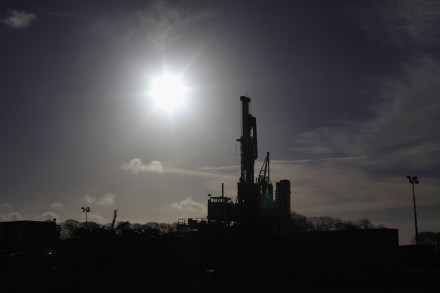
One of the odder elements of the current energy debate at present is that the political party that spends the most time talking about energy - that's the SNP by the way - is strangely reluctant to chase the opportunities afforded by the imminent shale gas revolution. It's a subject I consider in a column for The Scotsman today: Scotland’s oil resources are a vital national asset. Everyone, I think, knows this. If there were no remaining oil reserves waiting to be exploited in the North Sea, the economic case for independence would be severely weakened. Oil is a cushion and a comfort blanket.

Making it Happen: the staggering story of the RBS downfall

From our UK edition

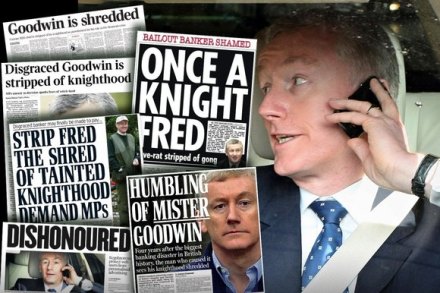
For political junkies, autumn is bringing a fix of three big books. Damian McBride’s expose of Gordon Brown has come out, Matthew d’Ancona’s inside story of the Cameron government will be serialised tomorrow. But I’ve just finished the other biggie: Iain Martin lifting the lid on RBS. Finally, Britain has an answer to Andrew Ross Sorkin’s  Too Big To Fail – except it’s set in Edinburgh rather than Manhattan, and the story is if anything even more mind-boggling. You have as much greed, ego and testosterone as there were in Wall St. But you have, thrown into the mix, the no-less-maniacal ambitions of Gordon Brown whose greed for tax revenues was as great as any banker’s greed for bonuses.

David Cameron ducks a debate with Alex Salmond. This makes sense but is still depressing.

From our UK edition

A novice poker player quickly learns - or had better quickly learn - that strength often connotes weakness and weakness is a reliable indicator of strength. But as the stakes increase and the level of play becomes more sophisticated such elementary tells can be misleading. They are false friends in the land of the double and triple bluff. So a novice poker player might conclude that David Cameron's refusal to debate against Alex Salmond is a sign of weakness. A slightly more experienced player would think this weakness too obvious to be true and conclude that Cameron is holding better cards than he is indicating. And it is true: with the polls indicating a No vote Cameron has little need to risk a debate the outcome of which must be uncertain.

A Cheap Parcel of Rogues

From our UK edition

What price a Scotsman's vote? About £500 apparently. Beneath a headline claiming 'New poll gives Yes campaign hope' The Scotsman reports that support for independence, as measured by ICM, rises to the giddy heights of 47 per cent if voters are told that they will be £500 a year better off in an independent Scotland. If this seems a disappointingly mercenary reason for voting Yes the same poll finds that many supporters of independence have their price. Only 18 per cent favour independence if, hypothetically, it were to leave you £500 a year worse off. The Incorruptible 18 per cent! Almost everyone else, it seems, has a price. Upon such things does the fate of nations hang.

Alex Salmond’s selective history lesson

From our UK edition

The First Minister of Scotland is masterful at mixing anti-English rhetoric, rose-tinted recollections of Scottish history and no gloves politicking. When he does it right, it can be devastating. History is at the heart of his campaign for Scottish independence in the run up to the referendum, so I was surprised to see how quiet he is today over an important point in his nation’s heritage. How come the Scottish government are silent over today’s anniversary of the Battle of Flodden. Where is the usual fanfare? Could it be because the invasion of England cost James IV of Scotland his life in 1513, taking with him most of the Scottish aristocracy? The 30,000 invading Scots were not enough to defeat the smaller English army, and the ruling class of Scotland faced a near wipe out.

A Game of Numbers: Pollsters Go To War in Scotland

From our UK edition

On Sunday an opinion poll was just a poll. Nothing to be too excited by. Unreliable too. The real poll - the one that counts - is still a year away. So put not your faith in numbers. Disappointment that way lies. On Monday the mood in the Scottish nationalist camp changed. Opinion polls now offered a persuasive and necessary reminder that Scotland's on the march. A march that ends in freedom and liberty and whisky next September as an ancient country reasserts her prerogatives  and takes here rightful place in the family of nations once again. Polls are pure dead brilliant, don't you know? From which you will gather that two opinion polls have been released in Scotland these past few days and they cannot both be accurate.

The Closing of the Nationalist Mind

From our UK edition

A paper with the title Scottish Independence: Issues and Questions; Regulation, Supervision, Lender of Last Resort and Crisis Management is not one liable to set pulses racing on the streets of Auchtermuchty. Or anywhere else, for that matter. Nevertheless it is a matter of some importance. The paper, published by the David Hume Institute, was written by Professor Brian Quinn and reported upon by Bill Jamieson in today's Scotsman. According to Quinn, who is an expert of some standing in these matters, a currency union between Scotland and the remainder of the United Kingdom would - or at least has the potential to be - sub-optimal.

The answer to the West Lothian Question is to stop asking it

From our UK edition

Here we go again. It's time for an English parliament! Actually, it's time for a new Act of Union! Says who? Says Michael Fabricant in today's Telegraph. Mark Wallace at ConservativeHome agrees.  English votes for English laws!  Well, fine. It's a respectable, even laudable, view. But, as we shall see, it is not a very conservative view at all. It may be rational but that alone should be make Tories sceptical of its merits. At best the creation of an "English parliament" within Westminster solves one small anomaly at the cost of creating another, much larger, one. In any case, Fabricant has his history wrong.

Back off, nimbyists, or fracking will benefit Beijing more than Balcombe

From our UK edition

The fracking debate has been brought to a new heat by David Cameron’s message to Home Counties nimbyists and eco-crusties that he wants ‘all parts of our nation’ to share the shale gas bounty, not just lucky northerners. But the argument is proceeding in almost total ignorance of how the controversial extraction technique works and how soon it’s likely to happen. So I asked one of Britain’s top energy executives this week whether shale is really the game-changer it’s fracked up to be. It certainly looks that way in the US, he said, because gas-based energy costs have been cut by two thirds, energy representing 10 per cent of all production costs.

Nate Silver on Scottish independence: Alex Salmond has “no chance”

From our UK edition

Nate Silver, in Edinburgh to punt his new book, appears to have annoyed some Scottish nationalists today. The "polling guru" (according to all newspapers everywhere) has told the Scotsman that he thinks Alex Salmond's merry bunch of nationalists have 'no chance' of prevailing in next September's independence referendum. It is true that Scottish politics is not Mr Silver's area of special expertise. It is also true that I am not sure his views are necessarily all that important. They do not carry top-weight in this handicap. I am not sure they merit being treated as some sort of Oracular revelation.

Alex Salmond Drives into a Muirfield Bunker

From our UK edition

Unlike some politicians who profess an interest in sporting matters, Alex Salmond's enthusiasm for golf, tennis and horse racing is genuine. He even supports the right football team. Nevertheless, the First Minister has bunkered himself this week. This is the subject of my latest Think Scotland column: Which brings me to the summer stramash of Alex Salmond and the Honourable Company of Edinburgh Golfers. The First Minister has let it be known - nay, has trumpeted – the fact that he will not attend this year's Open Championship because it is being held at Muirfield and Mr Salmond will not break bread with an organisation that excludes the good women of Scotland from membership.

Hail Caledonia: Fantasy Justice and Offensive Behaviour at Football. The Horror Continues.

From our UK edition

Two years have passed since the SNP won its landslide election victory, leaving Alex Salmond master of all devolved territories. Two years notable for the absence of significant legislative achievement. Given the consequences of government legislation this is not necessarily something to be regretted. Nevertheless, Mr Salmond is no FDR or LBJ (again, a good thing too you may say). The exception to this record of legislative lethargy is, of course, our old friend the Offensive Behaviour at Football and Threatening Communications Act. Readers may recall that I am no fan of this illiberal, pernicious, dismal piece of legislation (my most recent post on it is here). Nothing that has happened since it was pushed through Holyrood has persuaded me to grant it a second chance.

Prime Time for Nationalists: STV screens a 60 minute advert for the SNP

From our UK edition

Until now, television coverage of Scotland's independence referendum has largely been confined to news bulletins and specialist, late night, political programmes unwatched by most of the general public. In that sense, then, the campaign has hardly actually begun. It has not yet found a mass audience. But it will and moving the campaign to prime-time will change it too. That process began last night as STV broadcast the first episode of a three part documentary titled Road to Referendum (viewers in England can watch it here). It offered a potted political and social history of Scotland from 1945 to 1974. (The next episode will focus on the Thatcher Dragon and the final part, one supposes, upon Holyrood's short history.