Albums

Skates on the edge of parody: The 1975’s Notes on a Conditional Form reviewed

Grade: B+ Just what you wanted. An opening track that matches banal piano noodling to an address by Greta Thunberg. Followed by a hugely unconvincing stab at tuneless industrial metal on a song called ‘People’, in which the aforementioned — me and you, not them, of course — are cautioned to ‘WAKE UP!!’ Leafy Wilmslow’s middle-class skag-head prophet, Matty Healy, is back, then, with a series of injunctions for us all, spread over interminable length and always skating on the very edge of parody. The 1975 are probably Britain’s biggest ‘rock’ band — those quote marks are needed — and this vast slab of pretentious, gullible, vacuous commendations to us

The musical benefits of not playing live

Glenn Gould considered audiences ‘a force of evil’. ‘Not in their individual segments but en masse, I detest audiences.’ He retired from public performance on 10 April 1964, at the age of 31, having given fewer than 200 public recitals. The Canadian classical pianist had longstanding philosophical objections to the ritual of performing live. He found applause automatic and insincere, and often asked spectators not to bother. He even wrote a (partly) tongue-in-cheek manifesto, the Gould Plan for the Abolition of Applause and Demonstrations of All Kinds, in which he called for clapping to be banned. Gould believed that the most useful and honest response to music came following a

Haunting and beautiful: Revolutionary Army of the Infant Jesus’s Songs of Yearning reviewed

Grade: A It has taken 33 years — during which time this decidedly strange Liverpool collective have put out only three albums and done virtually no interviews — for the Revolutionary Army of the Infant Jesus to become sort of au courant. Which is perhaps why they have suddenly, in a wholly unforeseen bout of activity, put out two in the same week. The other is the limited edition Nocturnes. Given our current predicament, the simple iron church bell that tolls here and there on this album should be resonant enough. But musical fashion has swung around a little to this band, too. Whereas once they would have been filed

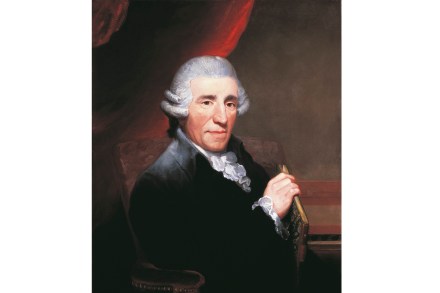
The joy of Haydn’s string quartets – here are the best recordings

As Joseph Haydn was getting out of bed on the morning of 10 May 1809, a cannonball landed in his back garden. Napoleon’s armies were closing on Vienna, and Haydn’s suburban home was in the line of fire. His valet recorded that the bedroom door blew open and every window in the house rattled. Shaking violently, the 77-year-old composer’s first thought was for his household, which at that point comprised six servants and a talking parrot who addressed him as ‘Papa’. ‘Children, don’t be afraid, for where Haydn is, nothing can happen to you,’ he shouted. This was nothing particularly new. Over a long life Haydn survived smallpox, saw his

Mick Hucknall on women, rejection and cultural appropriation

What makes someone become a pop star? Sometimes, it’s true, pop stardom arrives by accident, and its recipient responds not with joy, but horror. More often, though, pop stardom is sought, sometimes to make up for things that are missing in life, and the newly minted star embraces all the benefits fame brings, until those benefits — unlimited sex, unlimited drugs, unlimited drink — become more of a burden than a pleasure. Mick Hucknall appears to fall very much into the latter camp. What was missing was, first, a mother: she left his father when he was an infant, and records became some sort of surrogate as he grew older.

Woke slogans welded to incompetent grunge: Neil Young’s Colorado reviewed

Grade: B- Horribly woke boilerplate slogans welded inexpertly to the usual incompetent Crazy Horse grunge. Young and his pick-up band of now 50-years standing usually work well together — as on Zuma, Everybody Knows This is Nowhere and even Ragged Glory. But that’s when there were a few decent songs in the mix, stuffed with compelling ideas and interesting imagery. That sort of thing is in terribly short supply here. ‘She Showed Me Love’ staggers along for an unendurable 13 minutes: ‘I saw old white guys trying to kill mother nature.’ Just old white guys? How about you check out the Indonesian and Brazilian loggers for a second? Then the

Needed a shot of Stolichnaya: The Tchaikovsky Project reviewed

Grade: B+ I’m not sure about ‘Projects’. Aren’t those what ageing rockers produce, in a haze of sedatives, when their ego finally outgrows their talent? In classical music, there’s something unseemly about the idea of Maestro X condescending to bestow their attention upon music that is — or should be — bigger than they’ll ever be. Still, the conductor here is the Russian-born Semyon Bychkov, unambiguously one of the good guys, who, after decades spent paying his dues, has recently hit the sweet spot where every note speaks, every gesture ignites, and — crucially — critics actually notice. This Tchaikovsky box celebrates his relationship with the Czech Philharmonic, an orchestra

The Flaming Lips: King’s Mouth

Grade: B- So a queen dies as her giant baby is being born. The baby grows very big indeed and soon everything in the universe is inside his necessarily large head. One day he sacrifices himself to save his subjects from a deluge of snow. The townspeople cut off his head and preserve it in steel so that it will last for ever. Some of them climb inside his mouth to have a look around. They see thunderstorms and stars, apparently. Exactly what you’d expect from another Flaming Lips concept album, I suppose, this time narrated by a bemused Mick Jones of the Clash. Everything else is in place, too

Bruce Springsteen: Western Stars

Grade: B– The first Springsteen song I ever heard was ‘Born To Run’, back when I was 14. I clocked the impassioned, overwrought self-mythologising, the grandiosity of the opening riff, the strange lack of a chorus given the promise of the verse. Well, OK, interesting, I reckoned — maybe even good. But great? Never. I shifted my judgment only once over the following 45 years. Born in the USA had the tunes and stories and the sheer heft that for once matched the chutzpah and the looks. The rest has been either just good or, more often than not, quite a bit less than good. I always reckoned that perpetual

King of rock

‘Invest in your hair,’ advises David Coverdale, a man with a shag of the stuff glossier than a supermodel’s and as big as a guardsman’s bearskin, even at the age of 67. (He won’t say that number. He insists his age is ‘three score and seven’.) ‘People say to me: “Do you colour your hair?” And I say: “Absolutely not.” ’ He pauses for half a beat. ‘ “I have a super hairdresser who does it for me.” Some guy came on Instagram, telling me: “Come on, David, it’s time to get rid of the wig.” It’s not something I bought from Frederick’s of Hollywood, you silly bastard! It’s a

Morrissey: California Son

Grade: B Rock stars who utter something a little gamey, something a tad right-wingish, are usually coerced by the lefties into a cringing apology before you can say a-wop-bop-a-lu-bop. This is not a new thing — it happened to Eric Clapton after his ‘Enoch’s right’ outburst in 1976 (which very quickly spawned the Socialist Workers Party-led Rock Against Racism movement). The message has always been: get with the programme, right-wing scum, or we’ll hate you and your career will be over. Credit, then, to Morrissey for refusing to resile from his belief that England is ceasing to be the England he knew and loved and that there are too many

Mumford & Sons: Delta

Grade: D+ I promise you this isn’t simply class loathing. Yer toffs have contributed to British rock and pop and it hasn’t all been unspeakably vile. There were moments when Kevin Ayers held our interest, for example, and even Radiohead. And then there’s that man of the people, Joe Strummer. So let’s excuse Mumford & Sons their weighty class baggage and just concentrate on the music, which is irredeemably awful and makes Coldplay sound like the MC5. Someone has given them beats, cute little digital beats, to set beneath the faux folk which once irritated and now just bores one into a stupor. There is also that thing beloved by

Cypress Hill: Elephants on Acid

Grade: A+ Easily album title of the year, maybe album of the year. A true bravura offering from these supposedly tired old men. Cypress Hill are now in comfortable middle age, almost as old as me, ffs. But they were ever ludicrously inventive and idiosyncratic, right back to that first album in 1991, which wrote the template for many lesser and even more profane hip hop gods. This one is mired in psychedelia, as even Charles Moore might have guessed from the title. There are very knowing nods to, especially, early Jefferson Airplane — although the guitar sounds more like Barry Melton than Jorma Kaukonen — and Sly and the

The legend of Lawrence

‘I could still be a pop star,’ says Lawrence, sitting on a footstool in his council flat, high up in a tower block above London EC1. ‘I know I’m not going to be a person who has a million hits on the internet. Do they call them hits? Views, or streams, whatever they are. I’m not going to be that person, but I still think I could have a hit record. For me a song like “Relative Poverty” is a song for this generation, and I don’t know why it shouldn’t be an anthem for today.’ Lawrence is now 57, and he has been trying (and failing) to become a

Neil Diamond: Hot August Night III

Grade: C+ Mumrock. A lucrative genre, dating from the beginning of the 1970s, when Mums suddenly wanted something a little bit hip. My own mother briefly succumbed to the inane imagery and kindergarten melody of ‘Song Sung Blue’, sometime in 1972, before she moved on to more sophisticated stuff (Gilbert O’Sullivan, as I recall). This is Diamond’s 40th anniversary collection of hits, live or otherwise, and his third Hot August Night containing the same songs. Hasn’t everybody got all this hideous dross by now? Is the only selling point this time that he’s singing them at 71, the voice still throatily pompous, the medallion still on display? Was he ever

‘I’ve got dementia in reverse’

‘I like your shirt today,’ Sir Ray Davies says to the waiter who brings his glass of water to the table outside a café in Highgate. ‘How’s your girlfriend?’ It turns out the girlfriend is no longer the girlfriend. ‘You broke up? You know, that happens. It’ll be OK. You’ll meet somebody else.’ He pauses and then says something that runs through my head for days after our interview. ‘She’ll meet somebody else.’ It’s true, of course; she will. And it’s a human thing to say: both parties to the relationship will move on. But it’s also delivered with a hint of claws. Who wants to be told, fresh from

Father John Misty: God’s Favourite Customer

Grade: A+ While the young bands plunder the 1980s for every last gobbet of tinny synth and hi-hat, the singer-songwriters remain happily anchored in that much more agreeable decade which came directly before. The 1970s was the era of the introspective, self-pitying, prolix, hairy and winsome singer-songwriter — both the good ones (Young, Martyn, Buckley) and the, ahem, less gifted (Taylor, Forbert, Stevens). Father John Misty, aka Joshua Tillman and once the drummer in the most boring and epicene band I have ever seen (Fleet Foxes), is all of those adjectives I mention above. On this album the production values are purloined from mid-1975, right down to the occasional spasm

Go West

Kanye West is more than halfway in to the Rock’n’Roll Hall of Fame — if his politics don’t block the way. This extraordinary rapper-producer first won over a worldwide audience with the 2004 anthem ‘Jesus Walks’, disrupted hip-hop’s bling-bling materialism with the us-vs-them challenge of his Jay-Z collaboration Watch the Throne, and then released the confounding My Beautiful Dark Twisted Fantasy, which rightly became the most highly acclaimed hip-hop album this century. He went on to make controversial public art with his ‘New Slaves’ video, which was projected in 66 locations around the world (called Orwellian by admirers and dumbfounded detractors). With news-making political statements occasionally interspersing that résumé, West

Arctic Monkeys: Tranquility Base Hotel & Casino

Grade: B+ Oh, terrific — a concept album about a 1970s hotel somewhere in space, plus an attack on our over-technologised world. Just what I wanted. There is no restraint on self-indulgence if you have a sufficiently remunerative back catalogue. This is also a Bowie tribute album, which fits in nicely with all that outer-space business. I have never heard any performer clamber so comprehensively into the skin of a dead rock star as Alex Turner does with Bowie here, in the writing and even more so in the mannered singing with its characteristic falsetto swoops. This is pure Bowie from the era between The Spiders of Mars and David

Belly: Dove

Grade: B+ One of my favourite songs from the 1990s was about a Chinese adulteress forced to walk around town with a decomposing dead dog on her back. ‘Slow Dog’, from Belly’s debut album Star, was mental and frenetic and possessed the kind of berserk and glorious chorus most bands would kill for. The rest of the album wasn’t bad either — the sincerely odd ‘Gepetto’ and the lowering, nagging almost-hit ‘Feed The Tree’ the best of a very good bunch. How would you define Tanya Donelly’s oeuvre, other than as delightfully idiosyncratic? Alt-rock, obvs. Maybe neo-psychedelic post-grunge shoegazey power pop. Either way, it was too good to last. After