Albums

An intense slab of religiosity: Nick Cave’s Seven Psalms reviewed

From our UK edition

 Grade: B There has always been a seriousness and intelligence about Nick Cave quite at odds with that which usually attends to the rancid, tottering, old tart that is rock music, so there should be no surprise that he’s left it completely behind. This is a collection of seven spoken word prayers to that entity with which the Australian has had a long and not always straightforward relationship, God. They are accompanied by minimalist synth and piano compositions – kind of three-note fugues – from collaborator Warren Ellis and none of them clocks in at more than two minutes.

Humour, sweetness and sincerity: Father John Misty’s Chloë and the Next Twentieth Century reviewed

From our UK edition

 Grade: A– In which Josh Tillman reimagines the whole back catalogue of 20th-century American pop music (except for rock), tilting heavily in favour of the 1930s-1950s. Lush strings, polite jazz and sometimes cocktail piano, big band stuff etc., plus the expected Tillman mordant humour and some unexpected sweetness and sincerity. There’s the country torch of Patsy Cline on ‘Kiss Me (I Loved You)’, the cabaret samba of ‘Olvidado (Otro Momento)’, Rodgers’ and Hart’s ‘My Funny Valentine’ homage on ‘Funny Girl’, and what we’re told is an attempt to kind of rewrite Fred Neil’s ‘Everybody’s Talkin’’ on ‘Goodbye Mr Blue’. The problem?

The awfulness of the Red Hot Chili Peppers has always felt weirdly personal

From our UK edition

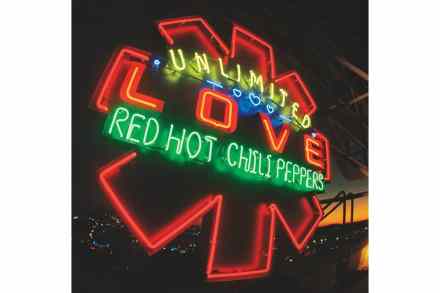
Squaring up to the prospect of a new Red Hot Chili Peppers album, I’m reminded of a vintage quote by Nick Cave: ‘I’m forever near a stereo saying, “What… is this garbage?” And the answer is always the Red Hot Chili Peppers.’ I can empathise. I don’t habitually harbour animus against artists I dislike, but something about the sheer scale of the Red Hot Chili Peppers’ awfulness has always felt weirdly personal. Despite the kind of success that looks mightily impressive in a Wikipedia stat dump – 100 million record sales, multiple Grammy wins, numerous number ones – the Californian rock band have always been tricky to tolerate, let alone love. The reasons for this are manifold.

No one should be doing indie rock at 43: Band of Horses’s Things Are Great reviewed

From our UK edition

Grade: B That thing, ‘indie rock’, is so well played and produced these days, so pristine and flawless, that it has become almost the antithesis of what it was back at the end of the 1970s, when the term was invented. Then it referred to bands who released stuff on small independent labels because the big labels wouldn’t take them on. Shouty, angsty and angular, or just weird and beloved by the befringed dolorous yoof, in their anoraks or donkey jackets, the whole thing had a pleasing DIY feel to it, even if it sometimes grated. These days ‘indie’ just tends to mean anodyne power pop played by whining blokes who haven’t had a shag for ages. So it is, I think, for Seattle’s Band of Horses.

See this Russian hip hop star before they arrest him: Oxxxymiron’s Beauty & Ugliness reviewed

From our UK edition

Grade: A+ I was going to review hyperpop chanteuse Charli XCX’s album this week, but it was such boring, meretricious, grandstanding 1980s retread electropop vacuity that I thought, nah, even if it is headed to the top of our ravaged charts. So have this instead. Oxxxymiron is Russia’s No. 1 hip-hop artist. Yes, Russian hip hop is indeed an oxxxymiron, much as would be Serbian reggae or Iranian gospel, but never mind. He’s a youngish Jewish bloke born in Leningrad, with a degree in Middle English from Oxford University, and is hugely popular in his home country. Is it any good, this album released late last year? It’s darker and nastier than US hip hop, full of menace and those icy synths the Russians seem to adore even more than their Iskander missiles.

Fabulously boring: Weather Station’s How Is It That I Should Look at the Stars reviewed

From our UK edition

Grade: C– Anyone remember that TV advert for Canada from the 1980s – a succession of colourful images, including a delicious pink donut, downtown T.O. and soaring mountain peaks, displaying the beauty, vitality and vibrancy of the country? It made me want to visit. Wild horses wouldn’t drag me there now – that glorious, vast expanse now the sine qua non of smugness and condescension. It has become a terminally precious country and we should withdraw our ambassador, or invade (that being the fashion). Weather Station, led by the fabulously irritating Tamara Lindeman, were once okayish indie folkies who have now become pretentious, half-assed purveyors of somnambulant fake jazz, like the very worst of Joni Mitchell without the melodies or ability.

Too neat but it has hooks aplenty: Avril Lavigne’s Love Sux reviewed

From our UK edition

Grade: B Yay, life just gets better and better. World War Three and now this. More petulant popcorn pre-school punk in which Avril spells words stupidly and tells ‘bois’ how much she weally, weally hates them but acksherly weally loves them. This was momentarily captivating on the magnificently catty glam-rock thrash of ‘Girlfriend’ 15 years ago. Trouble is, Avril is now 37, older than the Prime Minister of Finland – and there’s something a little unbecoming in a mature woman still hanging around the school bike sheds and shrieking at those bois: ‘When I think of you I wanna throw up!’ Shouldn’t she be writing about pre-nups, the onset of the menopause and the spiralling cost of divorce lawyers?

Pretty astonishing: Black Country, New Road’s Ants From Up There reviewed

From our UK edition

Grade: A+ It is not true, fellow boomers, that there is nothing new under the sun nor no good new music being made. Just almost nothing new and almost nothing good. The majority is indeed toxic landfill, rehashes of that least appealing of decades, the 1980s, and performed by pasty-faced, limp-wristed, deluded woke idiots whose chief concern is to tell you their gender. But there are yet pockets of brilliance, just as there were in 1975 and 1995 — and this youngish Cambridge band (the only other place they could have come from is Oxford) inhabit one of those pockets. Upon completion of this, their second album, the lead singer Isaac Wood left the band because, so far as I could tell from his confused message on the band’s website, he was going round the bend.

Has the whiff of Spinal Tap: Jethro Tull’s The Zealot Gene reviewed

From our UK edition

Grade: C+   I bought the ‘seminal’ Jethro Tull double album Thick as a Brick from a secondhand shop when I was nearing my 13th birthday. I played it once and then wrote off the £1.85 of my pocket money with buyer’s grave remorse. Sometimes, when the yearning for that much better decade, the 1970s, overwhelms me I take it out of my vinyl collection as a salutary corrective: remember those ten years also gave us Baader-Meinhof, Idi Amin, the IRA and Jethro Tull. If folkish prog is on offer, I prefer the Strawbs, even if Dave Cousins is clearly a lot dimmer than Jethro’s idiosyncratic and likeable Ian Anderson. The Strawbs had one or two songs, though. Jethro had just one: ‘Life is a Long Song’, with its affected vocals. And its bloody flute.

A story of reflection and self-discovery: Anaïs Mitchell’s new album reviewed

From our UK edition

Any artist who has habitually written or performed in character — from David Bowie to Lady Gaga — eventually arrives at their Mike Yarwood moment: ‘And this is me!’ With the release of her sixth solo record, Anaïs Mitchell has reached the point of personal revelation. ‘I’ve spent a lot of time trying to write in the voice of other characters,’ she says. ‘It felt like after so many years of working on telling other stories — now here are some of mine.’ In 2020 Mitchell was named one of Time magazine’s 100 most influential people. Nevertheless, she requires an introduction.

Lovely and wistful: Neil Young and Crazy Horse’s Barn reviewed

From our UK edition

 Grade: A I have persisted in buying everything Neil Young releases since I first heard On the Beach as a callow but pretentious 13-year-old. To tell you the truth, the past 27 years have somewhat tested this commitment. There has been a fatal laziness in the songwriting, lyrically and melodically, since 1994’s Sleeps with Angels and the preaching has become ever more tiresome. But I continued forking out in the increasingly forlorn hope that he’d turn out something if not wonderful, then at least reminiscent of wonderful things past. And for lo, the grizzled old troubadour has done exactly that. This is a subtler incarnation of Crazy Horse, helped incalculably by the presence of Nils Lofgren on flowery bar-room piano and sweet guitar.

Truly godawful: Ed Sheeran’s =

From our UK edition

 Grade: C= My wife’s ill with Covid and demanding inexhaustible libations and difficult meals, which she will leave uneaten. The dog thinks it deserves a walk in the filthy sleet. The kitchen is a tip and the bins need emptying. I have a headache, a runny nose and the ghost of a ticklish cough. Can things get worse? Yes, yes they can. It’s The Spectator on the phone. Can you please review Ed Sheeran’s new album? As in: look, you’re feeling rough and put upon at the moment. So can we come round and smash your spectacles and rub human excrement in your hair? And all this a few weeks after they foisted on me the woke caterwauling exoskeleton that is Adele. Oh, he seems a nice enough bloke, Ed.

In praise of seasonal chart fodder

From our UK edition

Christmas: the most vulnerable time of the year. I heard ‘A Winter’s Tale’ by David Essex on the radio the other day and, oh boy. It was Noël Coward who wrote, in Private Lives, that smart little line about the strange potency of cheap music. It is a truism never more apparent than at Christmas, when we allow the gaudy and sentimental access to our hearts with only the most cursory of security checks. Songs that would never make it past the bouncers in May are whisked directly into the VIP area come December. A quick google confirms that ‘A Winter’s Tale’ was released in the run-up to Christmas 1982, which means I was nine years old when it was first released.

Reprehensible – but fun: Orpheus Chamber Orchestra’s Complete DG Recordings reviewed

From our UK edition

 Grade: B It must have been an interesting day in the Orpheus Chamber Orchestra’s press office when Blair Tindall’s memoir Mozart in the Jungle hit the bookshops in 2005. ‘He sat in the desk chair, pushed aside the first oboe part of Rossini’s Italian Girl in Algiers and tapped a pile of cocaine on the glass’ runs a typical anecdote. Even in 2005, it wasn’t really what anyone expected to hear from a former member of Orpheus — a youthful, conductor-less New York outfit who used to pose for album covers dressed in spotless white.

Cheap schlock has now become expensive schlock: Adele’s 30 reviewed

From our UK edition

Grade: C The problem I have is that I thought she was pretty awful before — when she was just fat and from Tottenham. Now that she has been marinated in SoCal for six years, she seems to have become even worse: a kind of Meghan Markle with a larynx. It was cheap schlock all the way back then; it’s expensive schlock now — that’s the only difference. This is her divorce album, her ‘Hollywood’ album, her mature album, her BRAVE album according to her adoring… critics is obviously the wrong word. OK, it starts off with words — ‘I’ll be taking flowers to the cemetery of my heart’ — on the song ‘Strangers By Nature’. If that doesn’t make you blush embarrassedly for her, then what will?

The quiet radicalism of the Chieftains

From our UK edition

Pop quiz time: which act was named Melody Maker Group of the Year in 1975? The answer is not, as you might expect, some testosterone-fuelled blues-rock outfit or a hip gang of proto-punk gunslingers, but a gaggle of semi-professional Irish musicians who performed trad tunes sitting down, dressed for church in cardigans, sensible shoes, shirts and ties. The Chieftains were so far from rock and roll they met it coming back the other way. On the cover of Irish Heartbeat, a later collaboration with Van Morrison, they could be mistaken for a loose affiliation of farmers, minor office clerks and earnest ornithologists waiting for a bus outside the town hall. It was a brilliant disguise. The Chieftains wore their radicalism lightly, but radical they were.

Decent dream pop: Beach House’s Once Twice Melody reviewed

From our UK edition

Grade: B+ Everything these days devolves to prog — and not always very good prog. Where once synths were vastly expensive, difficult to master and hell to maintain they are now in a place beyond ubiquity; every sound you want conjured by the press of a key, your song suddenly washed over with sonics that make it sound more important than it really is. It almost makes you yearn for Yes and ELP — at least they knew they were pretentious dullards using electronic wizardry to elevate the slightest of compositions. Dream pop and its self-harming kid sister shoe-gazing — both genres dating from the mid-1980s and the likes of the Cocteau Twins — were always going to lend themselves to prog’s grandiosity.

Oh dear, Abba’s new album is a bit of a dog: Voyage reviewed

From our UK edition

I assume that somewhere on the guided ‘Piers and Queers’ walking tour of Brighton, the participants are enjoined to regard, in awe, the Dome — the venue at which Abba, on 6 April 1974, won the Eurovision Song Contest, thus both launching themselves as a wildly successful band and establishing the town (as it was then) as a mecca (probably the wrong choice of word there) for the UK’s swiftly growing gay community. Hitherto it had been a rather frowsy, Tory-voting seaside resort, best known for dirty weekends and petty villains. The Swedes won with ‘Waterloo’, of course, which may have provided our nation with some much-needed succour. A remembrance of good things past.

The death of the live album

From our UK edition

Next week The The release The Comeback Special, a 24-track live album documenting the band’s concert at the Royal Albert Hall in June 2018. Meanwhile, Steely Dan’s last man standing, Donald Fagen, has just released two live albums recorded in 2019. Their musical qualities notwithstanding, these releases feel like relics from a lost world. Much like the fondue set, the live album is much reduced from its 1970s and 1980s heyday, when a pretty blonde sideman-turned-solo artist called Peter Frampton could somehow shift eight million copies of the anodyne Frampton Comes Alive! The stand-alone contemporary live album is now an endangered species; MTV’s Unplugged series in the 1990s offered a final down-home twist on the format.

The best recordings of the Goldberg Variations

From our UK edition

I sometimes think the classical record industry would collapse if it weren’t for the Goldberg Variations. Every month brings more recordings of Bach’s monumental, compact and rhapsodic keyboard masterpiece. And that’s impressive, given that nowhere else does the composer demand such sustained technical brilliance from the performer, who must execute dizzying scales and trills that wouldn’t sound out of place in one of Liszt’s fantasies. If the Goldberg Variations are an ordeal for harpsichordists, they’re a bloody nightmare for pianists, because they have to tackle music written for two manuals on just one. Their fingers tumble perilously over each other; it looks a bit like high-speed knitting.