Album

What went wrong with the Madonna biopic?

Madonna Louise Ciconne has had one of the more eventful American lives of the past half-century, and it is little wonder that she might wish to depict it on screen in a big-budget film. After all, as the recent success of the Queen and Michael Jackson biopics have shown, it doesn’t matter how good the pictures are, as long as they include the best-known songs that made the artists household names and a smattering of the drama that led to their current eminence. Even if, as in Michael, it was the decision to omit most of the really interesting events that led to cries of whitewashing. Yet there’s been no Madonna biopic, and this is not because she has refused to cooperate. Far from it.

Madonna

Seductive Debussy and Ravel from the RLPO

From our UK edition

Grade: A It’s a cliché that the best Spanish music was written by Frenchmen but it’s mostly true nonetheless, and here to prove the point is Domingo Hindoyan and the Royal Liverpool Philharmonic Orchestra. Debussy’s Iberia and Ravel’s Rapsodie Espagnole form the balmy, orange-scented heart of this Franco-Spanish album, featuring not a single note by an actual Spaniard. It’s a beaker full of the warm south; summer holiday music for these bleak, damp days. Four Spanish-themed French miniatures fill out the programme, including Ravel’s spicy orchestration of Alborada del gracioso. I’ll be honest, though, they had me at Chabrier’s Espana, that shameless little burst of sunshine from a composer who spent two decades as a pen-pusher in the Ministère de l’Intérieur.

Nick Drake’s explosive creativity

Nick Drake’s debut album Five Leaves Left (1969) had so much going for it. Supported by tasteful string arrangements and a cast of noteworthy musicians, Drake (1948-74) sang with a delicate croon that sounded like Chet Baker if he’d gone to Eton, and he played some of the finest acoustic guitar this side of Segovia. Joe Boyd, the impresario who’d launched Pink Floyd and Fairport Convention, produced the album, and it bore the imprimatur of Island Records, London’s hippest label. On the cover, Drake cut a shy but handsome figure, nonchalantly clad in blue jeans and blazer, gazing wistfully out the second-story window of an abandoned house in Wimbledon.

Drake

A thrilling new recording of Messiaen’s Turangalila-Symphonie

From our UK edition

Grade: A Pierre Boulez once called Messiaen’s giant Turangalila-Symphonie ‘brothel music’. That was mean-spirited but you knew what he meant: a typical performance comes in at just under 80 minutes, much of it consisting of the B-movie sound of an ondes Martenot wailing over lush harmonies. There’s a constant zig-zag of polyrhythms, plus great towers of brass that represent ‘the heavy, terrifying brutality of old Mexican monuments’ – but, yes, it can hang around like cheap scent. But not in this recording by the Toronto Symphony Orchestra under its music director Gustavo Gimeno, who lingers only where he has to. The effect is not hurried but bouncy and clean-limbed, allowing us to hear the intricacy of the rythmic argument.

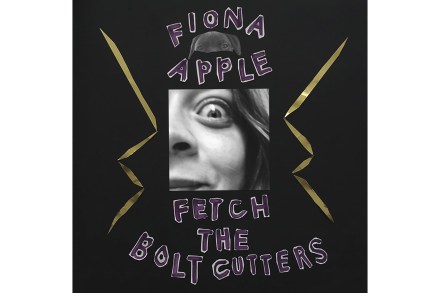
Beautiful voice, pretentious album: Fiona Apple’s Fetch the Bolt Cutters reviewed

From our UK edition

Grade: C+ Where did they all come from, the quirky yet meaningful rock chicks who don’t have a decent song between them yet put out albums by the bucketload? Back in the day it was just Joni Mitchell, who had four good songs, Laura Nyro who had two and Dory Previn who had one. Now there are thousands of these creatures, flaunting their intemperance without showing much brilliance. And all slavered over by the (still male) music press. Years of oppression, of being disregarded, they would argue. But disregarded for very good reasons, in almost all cases. Yeah, Carole King is ten times the songwriter James Taylor ever was. I will give you that. We got that wrong. But that doesn’t mean we have to be tormented for eternity by the likes of Laura flipping Marling, does it?