AIPAC

The outrageous cynicism of the Democrats on Iran

Given my longstanding disgust with America’s lawlessly interventionist and self-destructive foreign policy, I should be outraged by Donald Trump’s cavalier remarks justifying – and weirdly minimizing – his surprise attack against Iran in collaboration with Israel. After all, a president stupid enough to mock the new Supreme Leader as “damaged” and only “alive in some form” – while simultaneously urging sitting-duck oil tanker captains to “show some guts” by running the Iranian blockade of the Strait of Hormuz – is someone who logically should be rebuked in the firmest possible terms. But this wildly unstable solipsist is very different from other politicians.
war powers

The age of consultancy journalism

In a presidential campaign notable for its lack of substantive debate, a serious citizen needs to look far and wide to pierce Donald Trump’s blather and Kamala Harris’s bromides — or to find anything that might resemble real political information. So I quickly reached for my wallet last week when I happened upon the New Yorker’s newsstand edition. The first cover line and subhead caught my eye: “The Democrats’ Left Flank: in the swing state of Michigan, antiwar voters want a commitment from Kamala Harris on Gaza. Are their tactics a gift to Trump?” The Israeli-Palestinian conflict has been top of mind in the campaign press corps all year.

press fake news media consultancy journalism

What about ‘the Benjamins’ coming from the Gulf states?

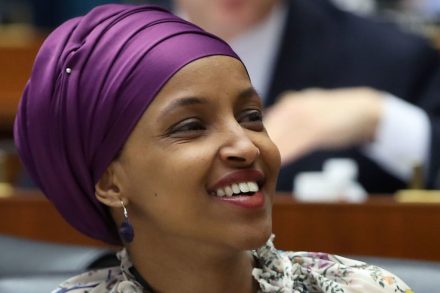
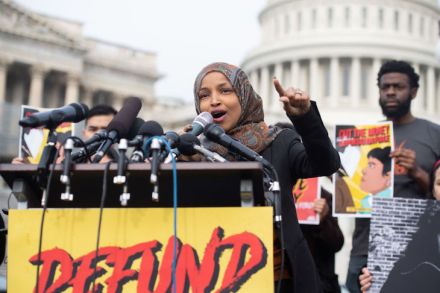
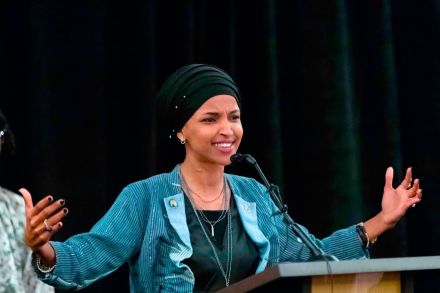
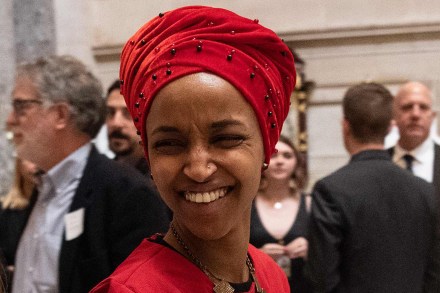
Freshman Rep. Ilhan Omar has received a lot of attention after she claimed that the relationship between the United States and Israel was ‘all about the Benjamins’ and that Israel supporters promote ‘allegiance to a foreign country.’ Omar apologized for her remarks, then doubled-down on them a few weeks later. The House proposed a toothless condemnation of anti-Semitism, then settled on a meaningless resolution condemning hate. While many have pointed out the dangerous insinuations behind Omar’s remarks, the nut of her accusation has remained more or less unexamined: do foreign nations and their money influence our policy, and is our foreign policy unduly influenced by money from Israel and Jews?

ilhan omar benjamins

Why the Democrats have gone off Israel

Not so long ago in America, immediately after a Democratic politician announced a run for president, he or she would make a series of public gestures supporting Israel. This would range from a major address before an American-Jewish audience, to the required visit to the Holy Land. In a way, even mild criticism of the Jewish state would have amounted to political suicide when it came to a Democrat running for high office. Historical, cultural, political and geo-strategic considerations – including the influence of a politically active American-Jewish community whose members resided in key electoral states and contributed money for the Democratic party – made it politically axiomatic to back Israel.

israel

The Democrats are becoming the party of the Jew-haters

When Ilhan Omar says that there’s too much money in American politics, she’s stating the obvious. That’s why I support her brave campaign against the US Chamber of Commerce, the National Association of Realtors, the American Medical Association, the American Hospital Association, the Pharmaceutical Research & Manufacturers of America, General Electric, Blue Cross Blue Shield, Business Roundtable, the AARP, and Boeing. These are America’s top 10 lobby groups, ranked by total spending over the last 20 years. In 2018, the US Chamber of Commerce spent $94.8 million on lobbying. Alphabet, Google’s parent company, spent $21.7 million and surged to Number Eight on the charts. The America-Israel Public Affairs Committee (AIPAC) ranked Number 157, and spent $3.5 million.

ilhan omar jew-haters
donald trump foreign policy

Donald Trump and the unreality of a two-state solution

The AIPAC conference, that annual celebration of the triangular romance between America, Israel and American Jews, concluded last night with the traditional protestations of undying love, democratic compatibility and common values. Meanwhile, AIPAC’s identity crisis deepens, and a redefinition of the goals of the American-Israeli relationship looms. AIPAC is studiously bipartisan, but the maladroit policies of the Bush and Obama administrations and the rightward turn of Israeli politics since the Second Intifada have made Israel a partisan issue in American politics. A recent Pew survey found more polarization than at any point in the last four decades: 79% of Republicans sided with Israel, but only 27% of Democrats.

Ilhan Omar is telling the truth. How is that anti-Semitic?

What moves the wheels of American politics? Is it a dedicated tireless commitment to public service? A strong desire to better the lives of constituents? A genuine ideology? Maybe sometimes, in the odd rare case. But more often that not, it’s money. Money funds elections, it funds events all over Washington, it funds lobbyists who work tirelessly to make their cause seem like the only thing worth caring about at any given moment. Single issue partisan groups like the NRA, J Street and Emily’s List spent over $300m in 2018, over $230m of which went directly to candidates. Call me naive, but it seems possible that those donations, often vital to win closely contested districts, could perhaps have an impact on those candidate’s views once elected.

ilhan omar anti-semitism