Friends again
From our UK edition
Hat-tip for video: ConservativeHome.
From our UK edition
Hat-tip for video: ConservativeHome.
From our UK edition
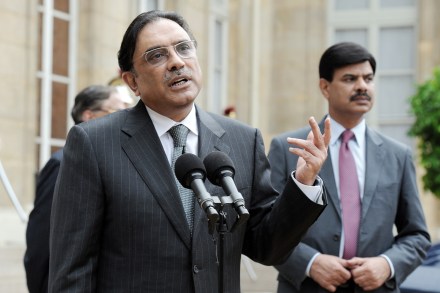
After his stark warning earlier, it's worth remembering that President Zardari can be quite cheerful in person.
From our UK edition
David Cameron isn't the only world leader who can lob rhetorical hand-grenades about the struggle in Afghanistan, you know. Speaking ahead of his visit to the UK, Pakistan's President Zardari has said that the "international community … is in the process of losing the war against the Taliban." Adding that, "And that is, above all, because we have lost the battle for hearts and minds." Given his pivotal, front-seat role in proceedings, it's got to go down as one of the most significant statements on the war so far. Is this intended as a riposte to Cameron's remark about Pakistan and terrorism? I'm not sure.
From our UK edition
Domestically speaking, it has been an encouraging week from the coalition. Internationally speaking, less so. And today we see the first real rush of fallout from David Cameron’s appearance on the world stage, as the Pakistani intelligence agency cancels a visit to London, “in reaction to the comments made by the British Prime Minister against Pakistan.” It’s not the kind of development that we should exaggerate –after all, it still looks likely that President Zardari will visit Cameron next week, even if officials in Pakistan have been wavering on that front. But we shouldn’t underestimate it either. The main reason to worry is, largely, one of personality.

From our UK edition
So what is Pakistan up to? Cameron has a point: it is playing a dangerous double game which I once outlined in a piece. But in today's Spectator, it is all spelled out by a writer who is - in my view - the best authority on this mess and by some margin. Ahmed Rashid, whose book Descent into Chaos is the definitive work on the Afghan war, explains that Karzai has effectively switched sides - he's given up on Nato (as, it seems, has Cameron) and now wants Pakistan to preside over talks with the Taliban: " A few months ago Hamid Karzai would have been thrilled to have confirmation that American officers are speaking openly about how divisions of Pakistani intelligence are helping the Taleban.

From our UK edition
Is it just me, or is there something deeply unsettling about Julian Assange's comments in the Times today? After the paper revealed yesterday that the leaked Afghan War files could easily put informants' lives at risk, the WikiLeaks founder sets about defending his decision to publish them – and he does so in dangerously complacent terms. Take his opening proclamation, where he says: "No one has been harmed, but should anyone come to harm of course that would be a matter of deep regret — our goal is justice to innocents, not to harm them. That said, if we were forced into a position of publishing all of the archives or none of the archives we would publish all of the archives because it’s extremely important to the history of this war.
From our UK edition
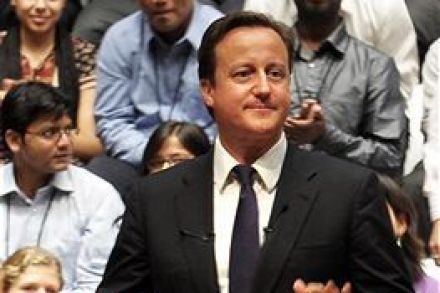
Oh for the days of inactive prime ministers. After yesterday’s hot-headedness about Gaza, comes an even more deliberately pointed statement. Cameron said: ‘[Pakistan] should not be allowed to promote the export of terror whether to India, whether to Afghanistan or to anywhere else in the world.’ I agree, providing of course it is established that the Pakistani state is fomenting terror and the Wikileaks revelations do not give that impression. That said, the Pakistan government is responsible for all of its agents, and they should curb S-Wing’s collusion with the Taliban and its affiliates in Waziristan. Cameron and Obama are right to press the Pakistani authorities. But a goodwill tour to India is plainly not the stage on which to do it.
From our UK edition
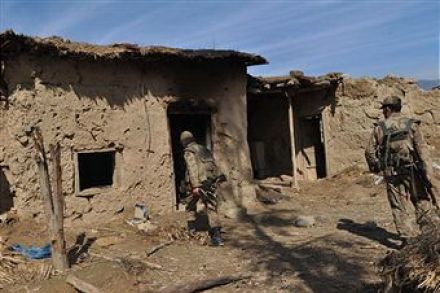
Courtesy of WikiLeaks, the Guardian and The New York Times have obtained classified documents pertaining to the killing of civilians in Afghanistan and the duplicity of Pakistani spies. The White House is furious, condemning the leaks for ‘endangering US and allied servicemen’ on active duty – a statement that seems reasonable until the White House added that the documents pre-dated President Obama’s assumption of office and that they ‘do not reflect current on-ground realities’. But that makes the allegations contained therein irrelevant or dated. Judging by the two newspapers' coverage, the leaks are vague and certainly not novel. It’s obvious that Pakistan is an unwilling ally, and one which has its own ambitions in the region.
From our UK edition
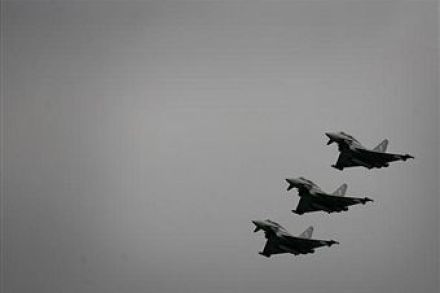
Liam Fox is anticipating the Strategic Defence Review, preparing the services for what will be extremely bad news. Britain will not engage in large scale operations in the immediate future. The Telegraph reports that officials intend to reduce the number of strike aircraft, warships and tanks. Future strategic emphasis will be on maximising firepower and range and minimising direct and associated costs. The service arms have mobilised their writers to prepare a defence. The Times have hosted a set-to between Air-Vice Marshall Tony Mason and Major General Julian Thompson. Mason’s argument is simple: warfare is determined by air superiority. He writes: ‘Since Dunkirk, British Armed Forces have usually fought beneath skies controlled by friendly aircraft.
From our UK edition
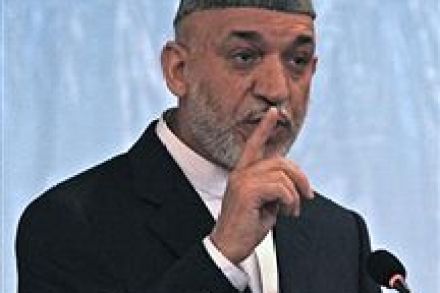
It remains a hope, but Hamid Karzai wants his country to control its own security by 2014. Karzai echoes the MoD’s stance - revealed at the weekend courtesy of a leaked internal communiqué. Surely this is more than coincidence? 2014 would seem to be NATO’s preferred withdrawal date. At last, the politicians have dispelled some of the indecision which has marred operations recently. With politicians beginning to agree to stay until at least 2014 and having bolstered aid budgets, the military can now concentrate on ‘stabilising’ incendiary parts of the country. Whether it will receive the resources needed to protect reconstruction and secure lasting stability remains to be seen – and I’m not holding my breath.
From our UK edition
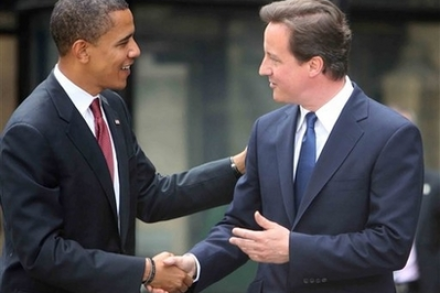
I’ve spent the morning contending with the WSJ’s Heath Robinson-esque subscription service so you don’t have to. Inside the paper, David Cameron explains what the Special Relationship means to him. 1). The Special Relationship is close and robust because British and American values are essentially the same, which explains why our national interests are often aligned: 'The U.S.-U.K. relationship is simple: It's strong because it delivers for both of us. The alliance is not sustained by our historical ties or blind loyalty. This is a partnership of choice that serves our national interests.
From our UK edition
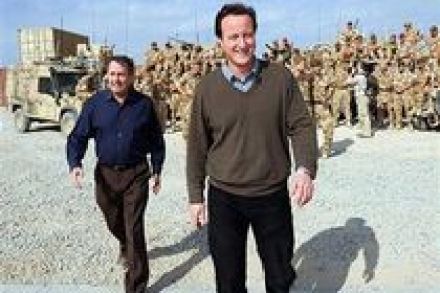
The leaked communiqué, obtained by the Independent on Sunday, stating that British troops will not be fighting in Afghanistan by 2014 has further confused the Afghan war at a time when clarity is necessary. There are now two deadlines, or aspirations of a withdrawal at any rate. Liam Fox is polluting the airwaves with specious waffle about 2015 being a ‘conservative assessment’, but of course the troops will probably be home earlier, but then again they might not, but then again we don’t really know. Well, Dr Fox, if that’s the case it's best to say nothing. Amid this disorder, Andrew Mitchell has announced that aid to Afghanistan will be increased by 40 percent.
From our UK edition
Andrew Mitchell’s decision to prioritise Afghanistan in the development budget is sensible. It demonstrates that Mitchell, a former soldier, understands that the Britain’s overseas aid needs to be in support of Britain’s foreign policy objectives. The Observer reports that Mitchell will announce a 40 percent increase in the Afghan aid budget. This will be paid for both by the increase in development spending and by reducing aid to countries in Eastern Europe and Latin America. I also understand that Mitchell has been emphasising to his department that it needs to work better with the military. For too long, there has been a culture at DFID that has seen it as distinct from the realities of foreign policy. That needs to change.
From our UK edition
Remember when David Cameron said that Britain "cannot be [in Afghanistan] for another five years"? Since then, the coalition has expended a good deal of energy trying to clarify this statement. The latest formulation was something like that given by William Hague to the Telegraph a couple of weeks ago: "By the time of the next election, [Cameron] hopes we won't still be fighting on the ground ... but there is 'no strict or artificial timetable'." But now Cameron has brought up the 2015 date again, and this time it sounds a lot more like a pledge than a hope. Here's what he said at a PM Direct event today: "I don't think we should set lots of short term deadlines .... I've set, if you like, a long term cut off point of 2015.
From our UK edition
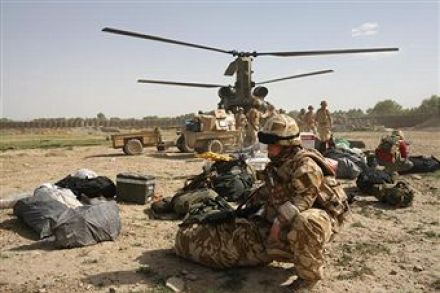
There is a difference between a withdrawal and a retreat. Through no fault of its own, the British army was defeated in Basra and retreated. British troops will withdraw from Sangin in October to be re-deployed to bolster Britain’s main presence in central Afghanistan. Any attempt to present this decision as politically motivated, heralding the start of a British retreat from Afghanistan, should be rejected. British forces have not ‘lost’ in Sangin, or been deemed too ‘soft’ for the task. This is a military decision, inaugurating the surge’s next phase. The logic is flawless. Troops in Helmand have been spread to thin; the Americans and British are concentrating their forces under their own leadership.
From our UK edition
When General Petraeus called for a "united effort" on Afghanistan earlier, he might as well have been addressing our government. Between David Cameron's and Liam Fox's recent statements, there's a clear sense that the coalition is pulling in two separate directions. And it's left William Hague explaining our Afghan strategy thus, to the Times today: "'The position on combat troops is as the Prime Minister set out last weekend. By the time of the next election, he hopes we won’t still be fighting on the ground. We are working towards the Afghan national security forces being able to stand on their own two feet by 2014,' but there is 'no strict or artificial timetable'. 'Five years is a long way ahead. There is a lot more work to be done.
From our UK edition
For a man of such rhetorical talents, William Hague’s foreign policy speech was strikingly bland. His eloquence escaped him and he sounded like David Miliband - earnest, conscientious and often unintelligible. The similarity didn't end there. Hague was very pleased with his observation that a multi-lateral world requires bi-lateral relationships; but even David Miliband had grasped that – who could forget his stable shin-dig in India? Hague’s speech was dominated by the expression ‘network world’ and he said that Britain’s diplomacy must address new strategic needs. In fact, Hague said very little that was new.
From our UK edition
Ming Campbell’s comments today show that some Liberal Democrats do believe in Fox hunting. Responding to Fox’s speech in Washington yesterday and his remark that Britain would be among the last to leave Afghanistan, Campbell told the Daily Politics that the “intervention was unhelpful, indeed the government thought it was unhelpful.” “It would have been better if these remarks had not been made.” Dr Fox’s allies are less than pleased by Ming’s grandstanding. They take the not unreasonable view that the Secretary of State for Defence has every right to express his views on a war that this country is fighting without being second guessed by a backbencher from the junior Coalition partner.

From our UK edition
An inventive article from Ben Brogan this morning, arguing that a new vigorously Tory foreign policy is emerging. I can be a little slow sometimes, but I haven’t noticed anything new or Tory about Britain’s foreign policy. Brogan records that the Prime Minister has let it be known that British troops will withdraw from Afghanistan by 2015. Cameron said nothing of the sort; he said he wanted British troops out of Afghanistan by 2015, something quite different. Contrary to expectations, relations with Europe are flourishing under the coalition, as pragmatic government has superseded bellicose opposition. William Hague hopes to influence the EU closely.
From our UK edition
“The Foreign and Commonwealth Office requests the honour of your company at a major address by the Secretary of State for Foreign and Commonwealth Affairs, The Rt Hon William Hague MP,'Britain's Foreign Policy in a networked world'.” Thus reads the invitation from the Foreign Office. If emails could be gold-embossed, this one probably would be. The speech on Thursday is the Foreign Secretary’s first major speech in London. Colleagues like Liam Fox and Andrew Mitchell have already kept their speech-writers busy, but until now the Foreign Secretary has only done the odd interview, and one address (in Sarajevo).
