Addiction

How iPhones became birth control

A new study has found that smartphones are a likely cause of falling American birth rates. Economists Caitlin K. Myers and Ezekiel Hooper tracked the rollout of the iPhone across the country and found that the more people used smartphones, the further birth rates fell. This was especially true for the youngest cohort of women. Between 2007 and 2011, use of the iPhone was correlated with between 33 to 52 percent of America’s fertility decline. There’s been a lot of discussion about smartphones and falling fertility rates lately. Most arguments go something like this: smartphones and social media are linked to rising rates of anxiety and depression, less sex and less in-person socializing.


iphones birth control

Portrait of an addict: Keshed, by Stu Hennigan, reviewed

From our UK edition

In the tradition of literary lowlifes and lushes as conceived by Charles Bukowski or Jean Rhys, Keshed is a story about an alcoholic, with a distinctive 21st-century, northern English working-class setting. Formally inventive, the ‘now’ sections of the novel are not sentences but strings of words, effective and short: ‘Rancid liquid squirting chin soggy torso peristaltic rush rapid.’ One such section opens the book, setting the uncompromising tone. The protagonist, Sean (‘He was pissed when I met him and he hasn’t changed’), a bright, charismatic lad from an unnamed small Yorkshire town, has been to university in Manchester where he drank heavily. He then moved back home, and we meet him working as a plasterer, living to get smashed.

Whatever happened to the stiff upper lip?

From our UK edition

At some point in the past ten years, trauma became a joke in my household. Should any Ditum suffer a minor mishap, the correct reaction is to adopt a wounded expression, bob your head to the side and whimper: ‘My trauma!’ Not because trauma is funny, but because what Darren McGarvey refers to as the ‘trauma industrial complex’ has become so consuming, the only option is to laugh about it. By ‘trauma industrial complex’, McGarvey means the culture that treats trauma, and those who have been traumatised, as commodities. He’s a good person to write this book because he personally has been commodified in this way. His first book, 2017’s Poverty Safari, detailed his working-class background in Glasgow – a story of alcoholism, addiction, abuse and homelessness.

A shining light in San Francisco

Alex Byrd was shooting meth in his wife’s bathroom while looking up a rehab center to check into. Before his most recent stint in prison, he’d been a major player in the drug trade, controlling distribution at every strip club on San Francisco’s Broadway Street and dealing all over the Bay Area from Oakland to San Jose. But while he was locked up, a leader in Nuestra Familia, his prison gang, offered Alex the chance to retire. When he got out, Alex promised his wife he’d never go back to prison again. But he was still an addict — and now it was a lot harder than it had been before, since he no longer had a constant supply of drugs. Now he had to work for his drug money, which is to say to engage in petty crimes like robbing Amazon stores. “It was a burden,” Alex says.

San Francisco

Why I quit poker

I played my last hand of poker on an innocuous Saturday afternoon in October. My pocket Kings lost to 4-7 offsuit. They shouldn’t have been in the hand at all, but I still did everything wrong at the end, and there went $500 to some sweaty moron directly to my right. “Clock me out,” I said to the dealer, my hands shaking. They’d seated me at the table right by the door, so I at least was able to contain my temper tantrum until I got outside. “FUCK,” I screamed loudly enough so they could hear me inside — and also probably down the block. “SHIT SHIT GODDAMN IT FUCK!” I bashed my lunchbox against the wall. It tore at the handle. I kicked a post. It bent my toenail back. And I kept screaming, cursing my luck, damning the gods, destroying my lunchbox.

poker

What do we mean when we say we are ‘giving up’?

From our UK edition

Oscar Nemon’s statue of Sigmund Freud at the Tavistock Clinic glares out with such a contemptuous look of superior knowledge that Freud’s housekeeper told him it made him look too angry. ‘But I am angry,’ replied Freud. ‘I am angry with humanity.’ Meanwhile, the cover image of Adam Phillips’s new book on psychoanalysis is a detail of a figure from Michelangelo’s ‘Last Judgment’, cast down to damnation, face in hand, his eyes wracked with fear and regret, his muscular ring finger grinding anxiously into his muscular forehead. If you didn’t recognise him from the Sistine Chapel you could imagine an angry Freud, not an impassive Christ, glaring at him just out of shot. Phillips, while he can possess a contemptuous glare, is at least not angry with humanity.

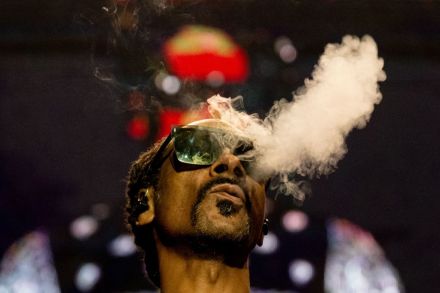
Snoop Dogg really quitting weed would be a huge public service

My phone screamed on the bedside table at 4:30 a.m. I’d been playing poker at a home game in Culver City until late in the night, so I didn’t answer, and I also didn’t answer the other six times it rang in the next two hours. When I finally woke up, I had a text from the “BBC OS” asking if I could talk. “What is the BBC OS?” I wondered. Then I realized it was the actual BBC’s Overnight Service. Still, why were they calling me at dawn? And then when I went online, I realized they wanted to know my thoughts about the fact that Snoop Dogg had announced, on his Instagram, that he, “after much consideration and conversation with my family ... decided to give up smoke.” He accompanied this announcement with a photo of himself, hands in prayer, looking quite plaintive.

What do sugar and cocaine have in common?

From our UK edition

Stephen Fry is a national treasure whom half the nation can’t stand. He drops his façade of loveability mid-chortle as soon as Brexit is mentioned. He threw a spectacularly pompous Remainer wobbly a few weeks ago and I remember thinking: is he determined to make the people he disdains actively hate him? If so, it’s working. Last weekend Fry was on John Cleese’s GB News chat show, talking about his former cocaine habit and its connection to his adolescent consumption of sugar. He mentioned the sweets in the shape of cigarettes that were sold at his school tuck shop. As he put it: ‘When I was a teenager, I had this vast empty hole in me that said, “Feed me, I need this sugar, I need it.

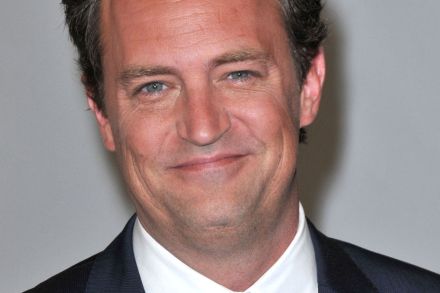
Rest in peace Matthew Perry

Everyone had their favorite character in Friends, although I’m not entirely sure who liked Monica most. For me, the best one was always Chandler Bing: sarcastic, ironic and perpetually outraged at some unexpected or unwelcome development. Naturally, in the safe and unchallenging world of Friends, there had to be an explanation for the character’s sardonic demeanor, and so his cutting sense of humor is explained to be a defense mechanism, derived from the hurt he underwent after his flamboyant parents’ divorce. But thanks to the peerless comic skills of Matthew Perry, the actor who played Chandler, any suggestion of laborious cod-Freudianism was swiftly dispelled. The character was, above all things, very, very funny.

They call me the ‘problem teetotaller’

From our UK edition

My guts went on strike last July. I was staying in a hotel and I spent several days sprawled on the bed, vomiting occasionally, eating and drinking nothing and barely able even to wet my lips with water. Meanwhile, a bottle of Prosecco offered by the management stood untouched next to the widescreen TV. I started to wonder if this was my Frank Skinner moment. My farewell to booze. In his memoirs, Skinner describes how he gave up drinking by accident in his twenties when a virus confined him to his bed for a week and destroyed his interest in alcohol. Restored to health, he went back to the pub to meet his friends but he shunned drink because he’d realised it was superfluous. As rehab stories go, Skinner’s is bizarre because it’s so quiet and unassuming.

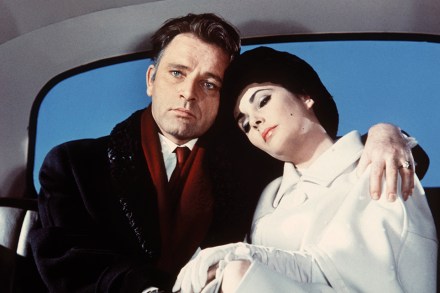
‘We are stuck like chicken feathers to tar’: Elizabeth Taylor’s description of the fabled romance

From our UK edition

‘To begin at the beginning,’ intones Richard Burton with a voice like warm treacle at the start of the 1971 film Under Milk Wood. It’s hard to imagine an actor more obviously influenced by his own beginnings. The epigraph to this double biography is ‘The damp, dark prison of eternal love’, a line borrowed from Quentin Crisp. And if that’s an accurate assessment of Burton’s on-off-on-again relationship with the actress Elizabeth Taylor, it’s an even better summary of his childhood in Wales. Born Richard Walter Jenkins to a barmaid mother and a coal miner father (a ‘12-pints-a-day man’ who sometimes disappeared for weeks on end to drink and gamble), as a teenager he attempted a fresh start by moving in with a teacher named Philip Burton.

Are hallucinogenic drugs losing their stigma?

From our UK edition

We are in the midst of a ‘psychedelic renaissance’. Not since the 1950s and early 1960s has there been so much interest in researching the therapeutic potential of psychedelics. The FDA approved a ketamine derivative for medicinal use in 2019, and has given both MDMA and psilocybin (the psycho-active ingredient in magic mushrooms) ‘breakthrough therapy’ status, putting the drugs on a fast track to approval in the US, with the UK likely to follow suit. Professor David Nutt is a neuropsycho-pharmacologist (say that three times fast) and head of the Centre for Psychedelic Research at Imperial College, London. He was the UK’s ‘drug tsar’ before getting sacked in 2009 for claiming that LSD and Ecstasy are less dangerous than cigarettes, alcohol or horseback riding.

‘I disliked him intensely’: Richard Lewis on first meeting Larry David

From our UK edition

Richard Lewis has died at the age of 76. Ben Lazarus interviewed him for the magazine last year: Richard Lewis first met Larry David at a summer sports camp, aged 12. ‘I disliked him intensely. He was cocky, he was arrogant,’ Lewis says. ‘When we played baseball I tried to hit him with the ball: we were arch rivals. I couldn’t wait for the camp to be over just to get away from Larry. I’m sure he felt the same way.’ Eleven years later they met again on the New York stand-up scene – but didn’t recognise each other. One evening, as they drank into the night, it dawned on them. ‘I looked at his face and I said, “There’s something about you, man, that spooks me.” Just saying that spooks everyone!’ It clicked. ‘“You’re Richard Lewis!

Social media is killing our girls

America’s girls are in a serious crisis. Mental health maladies are becoming more common among all teens, but the problem is particularly acute for young women. A report from the Centers for Disease Control and Prevention found that almost 60 percent of US girls said they felt persistently sad or hopeless. More than twice as many girls as boys reported experiencing poor mental health in the past thirty days. And 30 percent of high school girls in America said they were seriously considering suicide, while 13 percent have already made an attempt on their life, almost twice the rate of boys.

girls social media

The Premier League’s sleeping pill problem

From our UK edition

The footballer Dele Alli was applauded recently after he spoke of his sleeping pill abuse. ‘It’s a problem not only I have. It’s going around more than people realise in football,’ he said during a filmed interview with Manchester United’s former captain Gary Neville. It’s not the first time we’ve heard this. Footballers are ‘taking too many sleeping tablets and painkillers’ and addiction is becoming a ‘big issue’, former pro Ryan Cresswell warned last year. (He said his own addiction left him ‘gripping on for dear life’.) He claimed the problem is affecting stars at the very top level: ‘For me, it started with one after every game… to one a day to two a day and then I knew I was addicted.

My life as a meth addict

From our UK edition

I’ve spent most of my adult life addicted to amphetamines, including crystal meth. I first tried speed when I was 17 at a techno party while visiting Germany. I had been struggling with my A-levels and always found school hard because I was constantly exhausted, sleeping for 12 hours a day and still falling asleep during lessons. I was depressed and sometimes felt like I didn’t want to live any more. Speed changed all that. For the first time ever, I was motivated, I could concentrate and I felt that I could deal with life. I went from failing school to becoming a straight-A student, and I honestly don’t think I would have graduated without speed. I took it like people drink coffee. On meth, you feel like you’re having an epiphany every minute.

How not to live a life

When Thomas de Quincey wrote Confessions of an English Opium-Eater in 1821, he could not possibly have guessed what he would set in motion. Over two hundred years later, the addiction memoir looks different: less subversive, more sentimental, undeniably more commercial. Since the advent of Alcoholics Anonymous in Akron, Ohio, in 1935, the formula of the recovery memoir now yokes the moral to the medical: alcoholism may be a moral disorder, but it is underwritten by a chemical condition marked by incessant craving — in recovery parlance, an “allergy,” a state of “dis-ease.” For Matt Rowland Hill, the two are inextricably combined. Original Sins is the debut memoir from a writer whose two great loves, “Jesus and heroin,” never quite slip out of one another’s grasp.

original sins

Has gambling become the great British addiction?

From our UK edition

When I was 14 my father took me to a bookmaker’s and encouraged me to place a bet. He wanted to show me the futility of gambling, I think. Big mistake. I picked a horse called Maroof at 66/1 in the Queen Elizabeth II stakes at Ascot. My father put on 50p each way. Maroof romped to victory, no problem. ‘I think I’ve just ruined your character,’ said my father, not entirely joking, as he handed over the winnings. He had. I’ll forever associate betting with that triumph – the rush of joy I felt jumping up and down on the cruddy red carpet surrounded by Irish drunks and cigarette smoke. Heaven. We should have put more on. That was 1994. Britain changed a lot in the years that followed.

William Hurt — a life in two acts

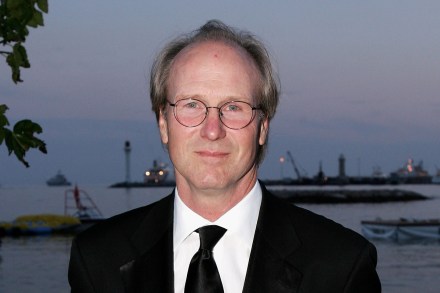
It is a depressing statement on the banality of the film industry that the death of actor William Hurt, at the age of seventy-one, was marked by at least one obituary stating, “Avengers star dies.” Hurt, who appeared in several Marvel films as the military character Thaddeus Ross in his latter-day career, did indeed appear in the mega-grossing Avengers films Infinity War and Endgame, and I very much hope that he received some tiny portion of the films’ enormous box office receipts in recognition of his appearance. But to describe Hurt’s life and work as defined by his Marvel roles reminded me of the great Alan Bennett line about his sexuality: “It’s like asking a man who has just crossed the Sahara whether he would prefer Perrier or Evian water.

william hurt

‘Harder than heroin’: America’s silent benzo epidemic

“Imagine taking a pill that makes you instantly feel relaxed, and then imagine that when you stop taking it, you feel worse than when you first started.” That's how one user describes benzodiazepines, a psychoactive drug prescribed to treat insomnia, anxiety and seizures. But while “benzos” can have some short-term benefits, habitual use can cause long-term damage. Another user writes that his benzodiazepine addiction was “harder to overcome than heroin.” A young professional I interviewed said she'd never had addiction issues before trying benzodiazepines, which were prescribed by her doctor.