United states

The curse of the jet-ski

From our UK edition

An F. Scott Fitzgerald biographer by the name of David S. Brown refers to America’s promotion of deviancy (my words) as ‘the great post-Appomattox launch toward materialism’. I liked that line and was thinking about it as I left the boat in the early morning and walked into an almost perfect Greek village square for a coffee. There were some French people blabbing away with their usual hand gestures, Greeks discussing politics at high volume, and then an American couple, both quite attractive, each with a Mac in front of them and absolutely impervious to anyone or anything in their immediate surroundings. Talk about a launch towards materialism. The two of them never once looked up from their screens.

The healing power of the Hamptons

From our UK edition

Southampton, Long Island These are peripatetic times for the poor little Greek boy, up to the Hamptons for some sun-seeking among Wasp types, and then down to the nation’s capital for the memorial service of that wonderful humorist P.J. O’Rourke. By all means take the following with a grain of salt, but even 800 million years ago, when only micro-organisms slithered around the beaches, belonging to a private club was all-important, especially in the Hamptons. Never have I seen more chest-thumping, bandy-legged, bearded louts trash-talking as they pollute the beaches in this beautiful town. Southampton was once a luminous little village that served as a seaside refuge for New York’s civilised rich during the unbearable heat of urban summer.

The folly of Nato enlargement

From our UK edition

If western universities were not brimming with leftist professors, the present situation in Ukraine would surprise no one. History would have taught us that the complete defeat of Nazi Germany was bound to clear the way for Soviet Russia’s domination of the Eurasian continent, although not going for total victory would hardly have been a vote-getter back in 1945. Gen. George Patton, for one, wanted to fight the bear right there and then, but cooler heads prevailed. The H-bomb, needless to say, has encouraged aggressive types to wage war knowing full well that opponents might feel reluctant to commit suicide. In fact, the bomb has increased limited wars, as they are now called.

The crazy, corrupt world of the Beijing Olympics

From our UK edition

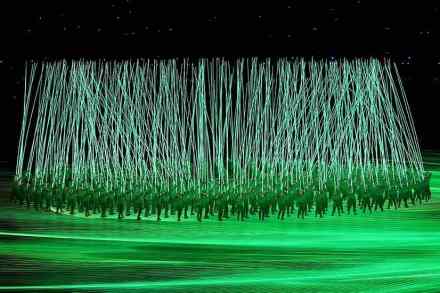
Gstaad OK sport fans, have you been enjoying the concentration camp Olympics? I’m sure the Uighurs in the Chinese gulag are riveted, especially watching the downhill, the trouble being that most of the one million Muslim prisoners have been issued with Equatorial Guinea-made TV sets, apparatuses that only show crocodiles swallowing humans. Joe Biden, in the meantime, has steered clear of the Games and has sent a message via pigeon to the Chinese: ‘You’re way out of line as far as King Kong is concerned and unless you sign the Schleswig-Holstein agreement do not expect any Americans to attend the première of Madame Butterfly.

The Kushner conundrum

From our UK edition

Gstaad I have two special girlfriends, Lynne and Fiona, the ladies who guard The Spectator’s entrance against the outraged #MeToo gels and woke lackeys who occasionally take umbrage against the poor little Greek boy’s scribbling. My guardian angels recently sent me some personal letters posted long ago, which I will eventually answer, especially one from Lady Mary Gaye Curzon, a very old friend, whose beautiful daughter Cressida — a Spectator Notebook contributor — dodged a bullet when Harry Halfwit went Hollywood. Although months in arrears, please accept my apologies, Helen Holland, Mary Ruskin and Anthony Johnson; such are the joys of the mail during and after a pandemic.

Boris is a mini-Biden

From our UK edition

It’s been said far too many times that Boris Johnson and Donald Trump have a lot in common. Trump himself called the Prime Minister ‘Britain Trump’ – to Donald’s mind, the greatest compliment any man could give. Others use the Trump-Boris analogy to pour scorn. French newspapers have called him ‘mini-Trump’. Or ‘Trump with a thesaurus,’ is how Nick Clegg, the former deputy prime minister who now works for Facebook, put it. To most international media, Brexit and Trump, and therefore Boris and Trump, were part of the same horrid phenomenon. Both men were called populists, nationalists, demagogues, liars – yet they kept winning.

The real reason France was excluded from Aukus

From our UK edition

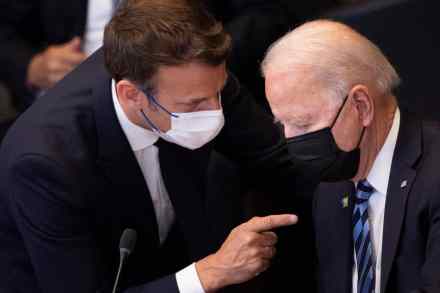
The fallout from Australia’s cancellation of its submarine contract with France and the new trilateral Indo-Pacific security pact between Australia, the US and the UK continues. France has recalled its ambassadors from Canberra and Washington (though significantly not from London) for ‘immediate consultations’; the well-worn diplomatic gesture of discontent. This is the first occasion ever in over two centuries of Franco-American friendship.  Last night in another outburst of petulance, the French embassy in Washington cancelled the gala to celebrate Franco-American friendship. The festivities were to mark the 240th anniversary of the crucial Battle of the Capes when the French navy defeated its British counterpart in defence of American independence.

Australia and the new special relationship

From our UK edition

The awkwardly-named AUKUS agreement reflects Washington’s escalating concern about China’s dominance in the Indo-Pacific. It signals London’s determination to be more, not less, involved in the global community after Brexit and the retreat from Afghanistan. Ultimately, however, this deal is about Australia. Few countries are as pivotal to regional security yet so poorly understood as such, at home and abroad, among commentators, politicians and policymakers. Australia’s standing in security terms is intimately linked to its alliance with the United States, but this relationship is not as one directional as some Australian critics believe.

I loved prison

From our UK edition

Memories for me are like beautifully edited copy: all cleaned up and retaining only the good parts. The wife tells me that I’m quite lucky in choosing to remember just pleasant things, and of course I agree. Actually it’s not really a choice; it is almost automatic. Bad things are tucked away immediately, never to return. I suppose many idiots enjoy such forgetfulness, but then I’d rather be called an idiot than a surly grouch, complaining and finding fault with everything and everyone. Needless to say, I cannot forget Pentonville. Looking back, I recall only fun times among my fellow convicts. There was Warren, the large black man whose appeal I had to draw up because he was illiterate.

The folly of American imperialism

From our UK edition

Gstaad Mercedes Benz heir Mick Flick and I have been friends for more than half a century. We both married Schoenburgs, both like the odd drink, both adore the fair sex, and we are now both candidates for a visit from the man in the white suit, yours truly first in line. Mick gave a wonderful dinner the other evening for around 30 of us. It was in his upper chalet, the one that’s half art gallery and half live-in space. He also has a lower chalet for his two sons and daughter. The dinner was seated and the wine was Latour. I think I had two bottles before the wife dragged me away using all sorts of excuses. The last thing I remember was Mick laughing as I was being led out. I had hosted a somewhat similar shindig the previous week, and Mick sat on my wife’s right.

How the fight against terror in Afghanistan will change

From our UK edition

In the aftermath of the 9/11 attacks, the West entered a new age: it was the era of the 'shadow war', in which American – and Western – might was ranged at preventing the export of terrorism from the Middle East. That was, of course, before the futile exercise of 'nation building' in Afghanistan and Iraq. Twenty years on, we are back where we started: Afghanistan is in the grip of a radical Islamist regime. Again it is likely to become a launch pad for Al Qaeda (and Isis) attacks in Europe and America. So how can the West defend itself from the threat? Amidst the debacle of the hasty American withdrawal from Afghanistan, there is some good news: weapons technology has moved on considerably.

Iran is an immediate winner of the Taliban takeover

From our UK edition

A staple of observing politics is watching rhetoric curdle into reality. Operation Enduring Freedom, thought up and slapped together in the wake of 9/11, was supposed to put down the ‘global terror threat’ and bring freedom to the subjugated peoples of Afghanistan and the Middle East. It ended last week with images of despairing Afghans tumbling to their deaths from the undercarriages of fleeing US planes. The rights and wrongs of leaving are sundering US foreign policy elites, but leaving the United States is most certainly doing. So what next? When the United States high-tails it out of the region you can be sure that everyone around is watching — no more so than in neighbouring Iran. Iran has a peculiar relationship with the Taliban.

Boris Johnson’s G7 Afghanistan summit ends in failure

From our UK edition

As expected, the emergency G7 leaders’ summit on Afghanistan has broken up without agreeing an extension to the 31 August deadline for evacuations from Kabul. Boris Johnson tried to put a positive spin on the virtual meeting, which he had convened, when he gave a pool clip after, saying the group had set a condition for the Taliban to ‘guarantee, right the way through, through August 31 and beyond, safe passage for those who want to come out’. He added that while some might not accept that, it was worth noting that ‘the G7 has very considerable leverage – economic, diplomatic and political’. But he conceded that the deadline extension wasn’t going to happen.

New York’s vaccine passport scheme could have a nasty side effect

From our UK edition

The latest French export to the United States is a requirement that people show proof of vaccination to visit indoor bars, concert venues, restaurants and gyms. But will it work? On Tuesday, Mayor Bill de Blasio announced that New York City will be the first American metropolis to import the French health pass. Marketed like an upscale perk, the 'Key to NYC Pass' program will begin on 16 August and become mandatory on 13 September. De Blasio is doing his best to sell the pass as a carrot, rather than the stick it really is. But his rhetoric is still ominous. He said: 'It is so important to make clear that if you are vaccinated, you get to benefit in all sorts of ways. You get to live a better life. Besides your health in general, you get to participate in many, many things.

Why Haiti’s president was assassinated

From our UK edition

There was a time when Haiti was at the centre of the New World. It was one of the richest islands on the globe, producing cane sugar for the sweet tooth of Europe. It cultivated coffee, cotton and rice, and it produced rum. The Pearl of the Antilles, the island stood at the gateway to all the resources of South and Central America. Mexico, with all its gold, lay just beyond Haiti’s northernmost cape. Great powers of the era — France, Britain, Germany, and the United States — vied for political and military control. Now Haiti is failed state. Failed by the West after centuries of violence and resource extraction and failed by its own leaders who have also enriched themselves off the backs of their compatriots.

Britain’s golden diplomatic opportunity

From our UK edition

‘The world’s changed quite a bit,’ was Domic Raab’s fitting, if somewhat understated, opening remark at the G7 meeting of foreign secretaries this week. The first in-person meeting of the alliance in two years saw masked dignitaries, elbow bumps and distanced discussions behind plexiglass screens. But two members of the Indian delegation still ended up testing positive for Covid. Beyond the immediate challenges of the current crisis, Raab’s words seemed prescient. Quite a bit has changed since the G7 last met in France in 2019. Britain has left the EU and is no longer paralysed by parliamentary deadlock. President Biden has replaced Donald Trump in the White House.

The school that made an American century

From our UK edition

New York With the Karamazovian hangover now only a weekly occurrence, the healthy life rules supreme. Well, most of the time. Up early, I go for a brisk 30-minute walk, then it’s breakfast in the park that stretches out two blocks away. I finish off with two sets of 20 push-ups on a park bench, a few kicks and punches using leaves as targets, then cross Fifth Avenue going east. (Karate is now a three-night-a-week activity, and I’ve given up Judo as it takes up too much time and needs too many partners.) I then buy the papers from a friendly Indian, get my first coffee of the day from a friendlier Greek, and return to my flat in the 1928 art-deco marvel that is my Park Avenue abode.

Florida bans vaccine passports

From our UK edition

The ethical case against domestic use of ‘vaccine passports’ was made with some passion in Britain before Boris Johnson’s change of heart. Matt Hancock repeatedly assured people that Britain is 'not a papers-carrying country'. Vaccine Minister Nadhim Zahawi said vaccine passports would be 'discriminatory'. Michael Gove promised that there were 'no plans' to introduce them. In a Westminster Hall debate, MPs from all parties lined up to say that out of principle, the minority who chose not to take the vaccine should suffer no penalty. We have not been told the reason for the u-turn. In theory, the government is taking soundings.

The dark history of dance marathons

From our UK edition

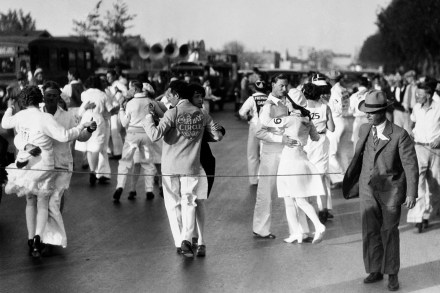
On 31 March 1923, Alma Cummings put her feet into a bowl of cold water. Then, tired-eyed but smiling obligingly for the photographer, she held up her dancing shoes. There were holes in both soles. Cummings had just finished a 27-hour stint of waltzing at a Manhattan ballroom, wearing out not just her shoes, but six male partners in the process. The dance instructor was one of the Americans responsible for a strange cultural phenomenon that swept the United States over the next two decades — dance marathons. Cummings’s record was soon beaten and within a few years promoters were organising public competitions across the States in which couples danced for hours, days, months even, to win prize money. Some collapsed and even died in the process.

Is it time to cancel Sophocles?

From our UK edition

Gstaad The sun has returned, the snow is so-so, and exercise has replaced everything, including romance. What a way to go. After a wasted year that has done wonders for my health, the diet is about to kill the patient. That is the good-bad news; the really great news is that Shakespeare has been cancelled by some woke American teachers because they think his classic works promote ‘misogyny, racism, homophobia, classism, anti-Semitism, and misogynoir’. That is a direct quote. All I can say is that, although I am perhaps overly attached to the past, it’s no wonder that so many people love Shakespeare. In old Europe people can be arrested for saying mean things. But America is in a league of its own.