1980s

Good moaning: the subversive sitcoms of the 1980s revisited

From our UK edition

The foundations of all British situation comedy were laid by Charles Dickens. If you were to remove that tiresome fun-sponge Little Nell and her wholly meaningless death from The Old Curiosity Shop, for instance, you would have before you, in more pleasing proportions, a rich array of recurring comic characters in a variety of scenarios. There are Kit Nubbles and his oyster-adoring family; Abel Garland and his anarchy-prone pony; the preposterous boulevardier Dick Swiveller; and of course the monstrous Daniel Quilp, at war with his wife, his mother-in-law, and the boy who walks on his hands outside the wharf window. The point is that you look forward to seeing them all; it’s not so much about wit as about foibles.

Who let Men Without Hats make a new album?

From our UK edition

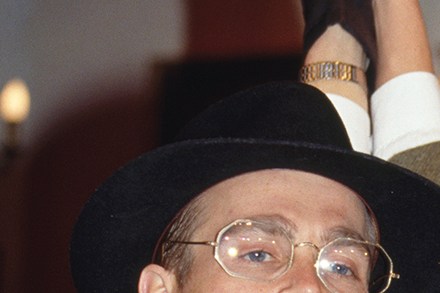
Grade: D A Montreal band led by a Ukrainian/Canadian called Ivan Doruschuk, with a histrionic baritone, famous solely for having had the most ludicrous hit of that ludicrous decade, the 1980s, with ‘Safety Dance’. Perhaps more famous still was the hilarious video that accompanied the song: Mr Doruschuck in medieval gear cavorting in fields with peasants, throttling a dwarf and entrancing a very pretty blonde woman who looked well up for it. Status Quo, bizarrely, covered ‘Safety Dance’, but the band had no more hits. Why on earth are they still going? Who gave them the advance for a new album? And is it any good? No, of course not. It’s portentous synth pop-by-numbers, with the kind of execrable lyrics you got back then.

A lovely album: Saint Leonard’s The Golden Hour reviewed

From our UK edition

Grade: A+ The kids with their synths and hip producers, dragging the 1980s back: I wish they would stop. It was, in the main, an awful decade for music, the bands trite yet portentous, the stupid burbling bass guitars, hubris-stricken vocals and tinny drums. The kids retread all the dross. Yet if you were actually around and sentient in that avaricious decade, as was Saint Leonard, you could find a certain chill beauty in hidden corners. Not the New Romantics, not Japan, not SAW. Just small niches here and there of inventiveness and clever pop.

Recollections of a 1980s indie kid

From our UK edition

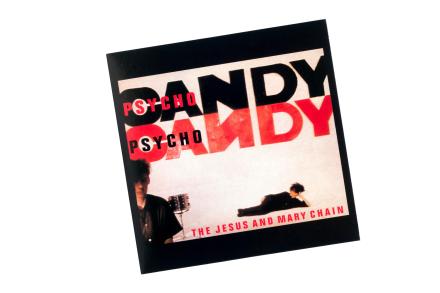
It is the evening of Monday 23 September 1985. A band called the June Brides are playing a free gig in the bar of Manchester Polytechnic’s Students Union, the Mandela Building (of course) on Oxford Road. I find myself among the audience of freshers’ week first-year undergraduates. I am 18, a small-town boy who’s been living in a big city for just 48 hours.  The place is half empty, the audience awkward. But I am quite taken with the band and the following day go to Piccadilly Records to buy their just-released mini album, There Are Eight Million Stories. The US novelist Dave Eggers would later recall being a teenage Anglophile indie fan in the suburbs of Chicago and cycling 20 miles to get this record that autumn. I could just get the 85 bus from Chorlton.

A blast: Leigh Bowery!, at Tate Modern, reviewed

From our UK edition

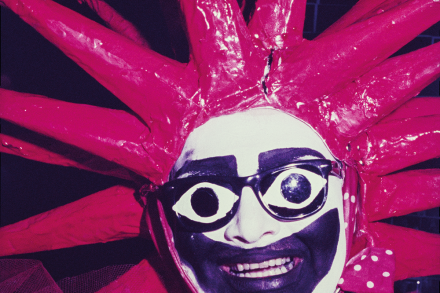
Tate Modern’s latest exhibition is a bizarre proposition on so many levels. Its subject, the Australian designer, performer, provocateur and club scenester Leigh Bowery, was by all accounts inescapable in London for much of the 1980s and early 1990s. Standing at well over 6ft and weighing 17st, he would have been a conspicuous presence on the capital’s streets even had he not adopted the berserk sci-fi drag attire that became his signature aesthetic. He appeared on TV, at Sadler’s Wells and in a ponderous suite of portraits by Lucian Freud. His life could be read as a kind of Gesamtkunstwerk, but he was not an artist in any conventional sense and there’s no explicit evidence here to suggest he ever identified as such.

The individualistic talents of the Pet Shop Boys

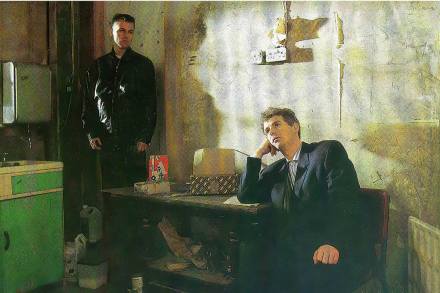
In April, the Pet Shop Boys, pop music’s most influential and beloved synth-pop duo, returned with a new album, Nonetheless. The British pair could hardly be described as wildly prolific, having released a comparatively meager fifteen albums since their debut Please in 1986. (Their one-word titles usually contain some oblique joke or other; the act’s singer Neil Tennant once remarked that the idea for the first LP was that it amused him that a record buyer would ask for the “Pet Shop Boys, please.”) Yet one reason for this relatively sparse output is that they take a painstaking amount of time to ensure not only that each of their albums is polished to perfection, but that it is existentially different from their previous release.

Pet Shop Boys

Legend of the Fall: Mark E. Smith and me

From our UK edition

He was one of the most unlikely pop stars this country has ever produced: extraordinarily badly dressed and famously contrarian, with a voice that sounded more like an angry man shouting than anything recognisable as singing. But Mark E. Smith, front man of the Fall, became one of the most recognisable and eventually revered figures on the music scene. And five years on from his death at 60, his stock is higher than ever – his influence heard in the sound of newer bands such as Sleaford Mods and Idles, his name regularly evoked on the likes of BBC Radio 6 Music, and a giant tribute mural an unlikely tourist attraction in his hometown of Prestwich.

Diaries from Eighties New York

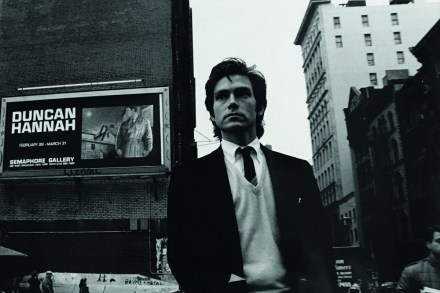
Duncan Hannah, wild child of Andy Warhol’s 1970s, matured to the art world of Eighties New York. The following is an exclusive excerpt from his as-yet-unpublished diaries that chronicle a decade of growing up and getting down — of painting, writing, reading, heroin, AIDS, infatuations, sobriety, Reagan and more. February 15, 1984: Semaphore Gallery sold the painting “Christmas” that I painted on Christmas. Hooray! I was in a cab coming down Broadway with Greg Crane and Simon Lane. We stopped for a red light at Houston Street. Crane said “Oh my God, LOOK!” and pointed to the south side of the street. Above the New-Wave fruit-stand, illuminated in the darkness, was a giant billboard advertising my upcoming show at Semaphore.

Hannah

The mystery and romance of the cassette tape

From our UK edition

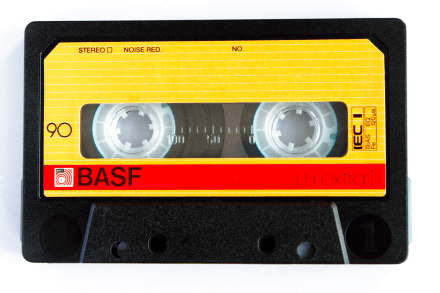
May the gods of Hiss and Compression bless Lou Ottens. As head of new product development at Phillips, the Dutch engineer invented the compact cassette in 1963 and changed music for ever. Ottens died last week at 94. A good age, and a good number. You could get a full album on each side. For many of us born in the 1970s, who came of age musically in the 1980s and 1990s, the blank cassette has an unkillable romance. We measured our lives in spools of magnetic tape: C60, C90, the occasional C46. Inside those hard plastic shells we surfed the thin end of the aural wedge, composing scrappy love letters in the medium’s notoriously tinny register — no bass, all treble. Tapes were desirable not for their audio quality, which was sub-prime, or aesthetic appeal.

You’ll wish you were gay: Channel 4’s It’s a Sin reviewed

From our UK edition

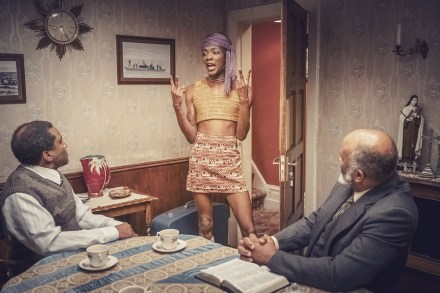
To promote his new drama series about Aids in the early 1980s, Russell T. Davies insisted in an interview that gay characters should be played only by actors who are actually gay. This was maddening for a number of reasons, starting with blatant hypocrisy. One of the things that made Davies’s Queer As Folk so watchable was Aidan Gillen’s mesmerising performance as the smirking, predatory, cocksure queen of the Mancunian gay scene Stuart Alan Jones. It was the making of Gillen, who went on to star as Petyr ‘Littlefinger’ Baelish in Game of Thrones. But Gillen, who has a girlfriend and two children, almost certainly fails Davies’s gay authenticity test.